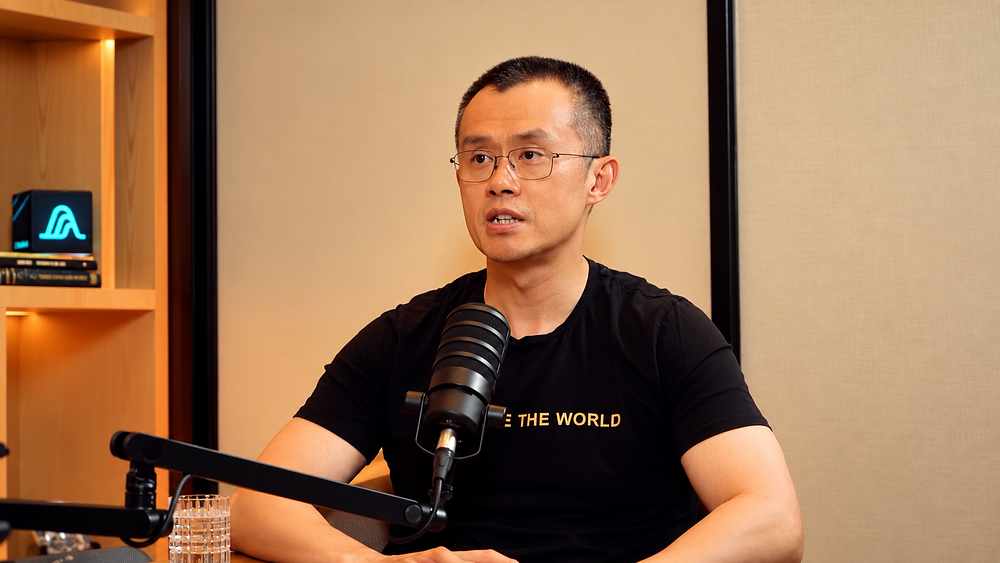
Binance’s Co-Founder Looks Back — and Forward
TREE NEWS reports: Changpeng Zhao, the co-founder of Binance, offered a wide-ranging reflection on the exchange’s early rise, the collapse of FTX, the emergence of Hyperliquid, and the market turmoil surrounding the “1011” event. His remarks centered on a familiar theme: execution speed, a tightly aligned team, and an unwavering focus on protecting users were the pillars that carried Binance from an upstart to a global force.
Execution as the Founding Edge
CZ described the early days as a race defined less by capital than by the ability to ship. A small, highly coordinated team moved quickly to list assets, harden infrastructure, and respond to user needs in real time. That operational discipline, he argued, mattered more than any single product feature — a lesson that still shapes how the industry’s leading platforms compete today.
FTX, Bybit and the Lessons of Contagion
Reflecting on FTX’s dramatic implosion, CZ framed it as a cautionary tale about governance, transparency, and the dangers of opaque balance sheets. He also touched on Bybit and the broader competitive landscape, suggesting that the post-FTX era has forced exchanges to prioritize proof of reserves, risk controls, and regulatory engagement. The takeaway: trust, once broken, is extraordinarily expensive to rebuild.
Hyperliquid and the Rise of On-Chain Venues
CZ acknowledged the momentum behind Hyperliquid, the on-chain perpetuals exchange that has captured significant volume and attention. Its rise underscores a structural shift: decentralized venues are increasingly competing with centralized exchanges on speed, liquidity, and user experience. Rather than dismiss the trend, CZ appeared to welcome it, positioning healthy competition as a catalyst for the entire sector.
The 1011 Event and Market Resilience
The “1011” episode — a period of acute market stress — served as a reminder of how fragile leveraged markets can be. CZ’s commentary implied that such shocks test not only liquidity but also the operational and risk frameworks of every major venue. Platforms that invest in resilience before the storm tend to survive it.
Regulation, Education and an Unsaturated Market
On US regulation, CZ emphasized long-term engagement over confrontation, arguing that clarity benefits builders and users alike. He reiterated a commitment to education, noting that most of the world’s population has yet to meaningfully participate in crypto. That gap, he suggested, means the market is far from saturated and that collaboration — not zero-sum rivalry — will shape its future.
Forward Outlook
CZ’s message is ultimately one of building through cycles. As centralized and decentralized venues converge, and as regulators slowly define the rules, the winners will likely be those that combine speed, transparency, and genuine user protection. The industry’s next chapter will be written by teams that treat trust as infrastructure, not marketing.