Vatican vs. Anthropic: Pope Leo’s AI Ethics Blueprint and What It Means for Markets
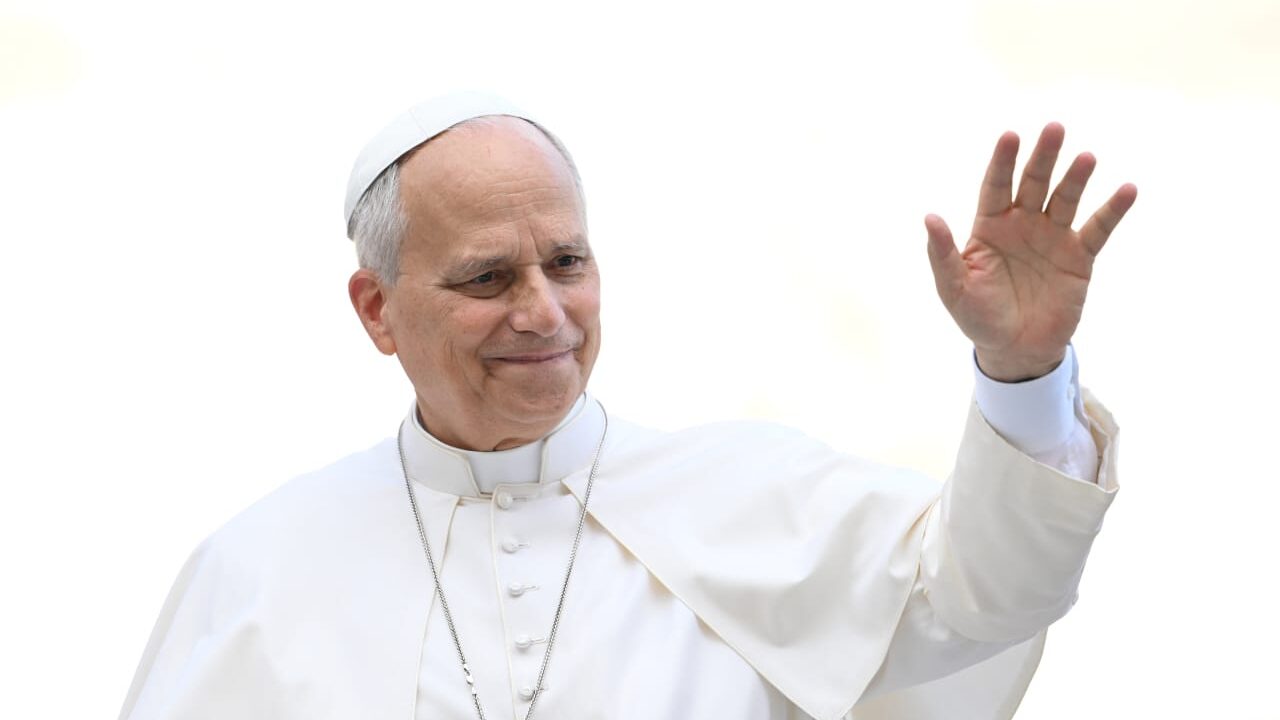
TREE NEWS reports: The Vatican has issued a sweeping moral framework for artificial intelligence, with Pope Leo declaring that “algorithms lack the spark of humanity” — a direct philosophical challenge to the AI industry’s most ambitious players, including Anthropic, the safety-focused AI lab that has staked its brand on building “harmless” models. The clash is not a regulatory action, but it lands at a moment when governments, investors, and the public are all asking who gets to define the limits of machine intelligence.
The document does not carry the force of law. It carries something arguably more potent for markets: moral authority. The Vatican’s interventions on climate, labor, and finance have historically shaped institutional behavior — from sovereign wealth funds to ESG mandates — and AI is now firmly on that list.
Why the Vatican Is Weighing In Now
Pope Leo’s framing is theological, but the subtext is industrial. The Vatican is effectively arguing that AI development cannot be self-governed by the labs building it. That position echoes a growing chorus from regulators in Brussels, Washington, and Beijing, who are drafting rules on model transparency, data provenance, and liability. Anthropic, which has positioned itself as the “responsible” alternative to more aggressive competitors, now finds itself in an awkward spot: its core marketing claim — safety — is being questioned by an institution with global moral reach.
The timing matters. AI capital expenditure is at record levels, with hyperscalers committing hundreds of billions to data centers, custom silicon, and energy contracts. Any narrative shift that raises the cost of compliance, slows deployment, or dents public trust can ripple through valuations.
Market Implications
- AI and semiconductor equities: The Vatican’s critique alone is unlikely to move Nvidia, Microsoft, or Alphabet. But it adds to a broader narrative risk — regulatory friction, ethical backlash, and litigation — that could compress multiples if it gains traction with institutional investors.
- AI-adjacent crypto: Decentralized compute networks, on-chain AI agents, and inference marketplaces often pitch themselves as “transparent” and “community-governed” alternatives to closed labs. A moral critique of centralized AI could be a tailwind for that narrative, even if fundamentals remain thin.
- ESG and faith-based capital: Catholic asset managers and religious endowments control tens of billions. If the Vatican’s framework becomes a screening tool, it could nudge capital toward — or away from — specific AI names.
- Bonds and macro: Limited direct impact. The story is a slow-burn governance signal, not a rate or inflation event.
- Commodities: Indirect. If AI capex faces political or ethical headwinds, marginal demand for power, copper, and cooling infrastructure could soften at the margin — but not this quarter.
Anthropic’s Bind
Anthropic’s entire pitch is that safety and capability are not opposites. Being singled out by the Vatican — even implicitly — undercuts that. The company will likely respond with engagement, publishing principles, and perhaps a dialogue with the Holy See. For investors in private AI markets, the episode is a reminder that reputational risk in AI is now a first-order variable, not a footnote.
Key Takeaways for Investors
- No immediate trade — but a durable narrative risk for AI mega-caps.
- Watch whether Catholic and ESG-linked funds adopt the Vatican’s framework as a screening standard.
- Decentralized AI and on-chain compute projects may use this as a marketing wedge; treat the narrative with skepticism until adoption metrics follow.
- The real signal is institutional: moral authority is becoming a soft regulatory force in AI, just as it was in climate finance.
The Pope is not going to reprice Nvidia. But the questions he is asking — who governs AI, who is accountable, and what counts as human — are increasingly the same questions regulators and large asset owners are asking. That convergence, not the encyclical itself, is what markets should watch.