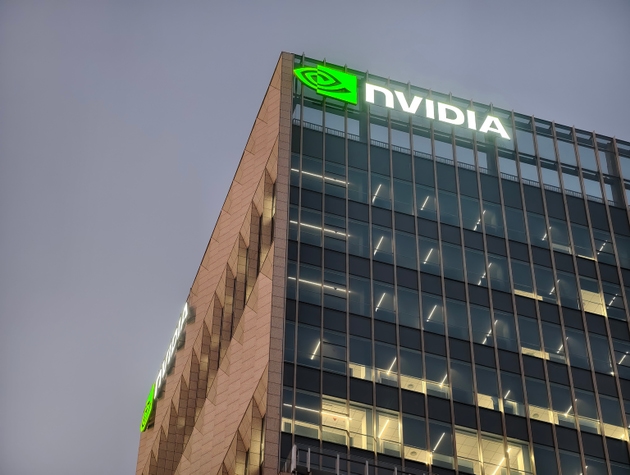
BNP Paribas Raises Targets on Nvidia and Intel
TREE NEWS reports: BNP Paribas analysts raised their price targets on Nvidia and Intel, citing a strengthening outlook for artificial intelligence demand. The move places the French bank alongside a growing list of sell-side institutions recalibrating their models for the two chipmakers, which sit at opposite ends of the AI supply chain: Nvidia as the dominant supplier of AI accelerators, and Intel as a legacy chipmaker attempting a foundry-led turnaround with an AI angle.
The revisions reflect a view that enterprise and hyperscaler spending on AI infrastructure will remain elevated through the forecast horizon, supporting demand for high-end GPUs, networking silicon, and advanced packaging capacity. For Intel, the upgrade implies that its foundry ambitions and AI-adjacent product roadmap may be gaining credibility with analysts who had previously taken a more cautious stance.
What the Analysts Are Signaling
Price-target increases are not the same as outright buy recommendations, but they carry weight because they signal where analysts see fair value after updating their earnings models. When a major European bank raises targets on both the clear AI leader and a challenged incumbent, it suggests the AI capex cycle is being viewed as broad enough to lift multiple names rather than a single winner-take-all trade.
- Nvidia: Continued data-center GPU demand, networking attach rates, and software moat underpin the higher target.
- Intel: Foundry progress, government-backed fab incentives, and AI PC momentum are the likely drivers.
- Sector read-through: Positive for semiconductor equipment, memory, and advanced packaging suppliers.
Market Implications
Equities
The most direct impact is on semiconductor equities and the broader Nasdaq-100, where Nvidia carries outsized index weight. Analyst target hikes can reinforce momentum in AI-linked names, particularly if they are followed by peers. Intel’s inclusion matters because it broadens the AI trade beyond a handful of mega-caps, potentially benefiting value-oriented and turnaround-focused portfolios.
Secondary beneficiaries could include chip-equipment makers, memory producers, and companies exposed to AI server supply chains. Conversely, any disappointment in upcoming earnings or guidance could expose the gap between analyst targets and realized results.
Bonds and Rates
Equity analyst notes rarely move Treasuries on their own, but the underlying theme — sustained corporate capex on AI — feeds into the growth and inflation narrative that shapes rate expectations. Persistent AI-driven investment supports economic activity, which can keep yields supported at the margin and complicate the case for near-term rate cuts.
Crypto
AI enthusiasm has become a secondary driver for crypto markets, particularly for tokens tied to decentralized compute, GPU networks, and AI agent infrastructure. A stronger AI demand outlook can spill over into sentiment for these assets, though the linkage is indirect and often driven by narrative rather than cash flows.
Commodities and Currencies
Semiconductor demand has upstream implications for industrial metals, specialty gases, and electricity consumption — a theme increasingly relevant as data-center power needs grow. In FX, chip-sector strength supports the dollar via tech-driven equity inflows into U.S. markets, though the effect is modest relative to macro drivers.
Key Takeaways for Investors
- AI capex remains the dominant equity narrative. Analyst target hikes reinforce that the cycle is being modeled as multi-year, not a one-quarter spike.
- Breadth matters. Upgrades spanning both Nvidia and Intel suggest the trade is widening beyond a single name.
- Watch the follow-through. Targets are only useful if earnings and guidance confirm them; upcoming reports are the real test.
- Second-order plays. Equipment, memory, packaging, and power infrastructure may offer diversified exposure to the same theme.
- Don’t ignore valuation risk. Higher targets can also mean higher expectations, and any AI spending pause would be felt acutely.
For investors, the signal is less about any single price target and more about the direction of consensus: the street is increasingly treating AI infrastructure spending as a durable, economy-wide investment cycle rather than a speculative bubble.