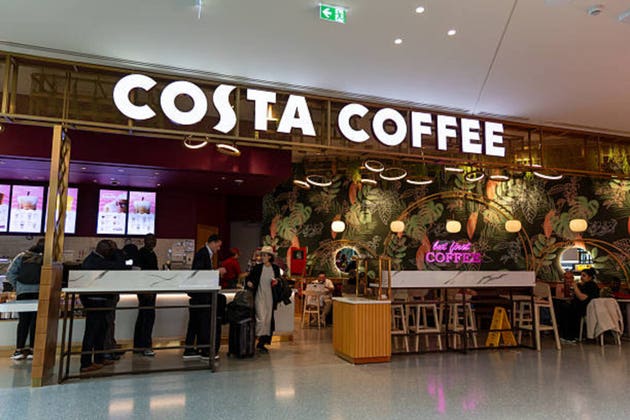
Coca-Cola Explores Another Exit From Costa Coffee
TREE NEWS reports: Coca-Cola is reportedly looking to sell Costa Coffee, the UK-based coffee chain it acquired for roughly $5.1 billion in 2019, marking a potential reversal of one of the company’s largest non-carbonated bets. The move would come just a few years after the beverage giant took full control of the brand from Whitbread, and it signals a renewed strategic focus on core soft-drink and sparkling categories amid a tougher consumer spending environment.
The news points to a broader reassessment inside Coca-Cola’s portfolio: management has been under pressure to sharpen capital allocation, defend margins against input-cost inflation, and show investors that non-core acquisitions are generating adequate returns. Costa, which operates thousands of stores globally and has a sizable packaged-coffee and self-serve vending business, has not delivered the scale of synergies some analysts originally expected.
Why the Timing Matters
A sale process would unfold against a mixed macro backdrop. Global consumer confidence remains uneven, with discretionary coffee spending particularly sensitive to unemployment and real wage trends. In the UK and Europe, coffee chains face higher labor costs, elevated energy expenses, and soft foot traffic in some urban centers. In China, where Costa has expanded aggressively, competition from domestic value players has intensified, compressing margins across the sector.
For Coca-Cola, divesting Costa would free up capital for share buybacks, debt reduction, or reinvestment in higher-margin concentrate and ready-to-drink categories. It would also simplify the equity story at a time when investors are rewarding companies with cleaner, more predictable earnings streams.
Market Implications
Equities
Shares of Coca-Cola could react positively if the market interprets a sale as evidence of disciplined portfolio management. A clean exit at a reasonable valuation would remove a drag on returns on invested capital and reduce exposure to retail-operations risk. However, a sale at a discount to the 2019 purchase price would revive questions about capital allocation and could weigh on sentiment.
Potential buyers — private equity firms, sovereign wealth funds, or large restaurant and retail groups — could see Costa as an attractive cash-generating asset with brand recognition. Any listed acquirer announcing a deal would face scrutiny over leverage and integration risk. Meanwhile, peers in the coffee and quick-service restaurant space, including Starbucks and UK-focused operators, may see modest read-across effects as investors reassess sector valuations.
Bonds and Credit
Coca-Cola carries high-grade credit ratings, and a divestiture is unlikely to move its spreads materially. If proceeds are used for debt reduction, the company’s leverage metrics could improve slightly, a mild positive for bondholders. For any leveraged buyer, new issuance in the high-yield or syndicated loan market could emerge, adding supply to credit markets.
Commodities
Coffee prices have been volatile, driven by weather disruptions in Brazil and Vietnam, shipping costs, and speculator positioning. A change of ownership at a major roaster and retailer does not directly alter global supply-demand balances, but it could shift hedging behavior and long-term sourcing contracts. Traders will watch whether Costa’s new owner alters purchasing strategies, which could have marginal effects on futures curves.
Crypto and Digital Assets
There is no direct crypto link, but the story fits a broader theme: large corporates streamlining portfolios and returning capital to shareholders. In a market where digital-asset investors track liquidity conditions and risk appetite, corporate actions that signal confidence in cash generation can support risk assets at the margin. Conversely, if the sale reflects weakening consumer demand, that could feed into the macro narrative that influences bitcoin and other risk-sensitive tokens.
Currencies
The deal, if consummated, would likely involve sterling-denominated assets and could generate cross-border flows. A large inbound investment into UK assets would be a modest positive for the pound, while repatriation of proceeds by Coca-Cola could create offsetting dollar demand. FX markets are more focused on rate differentials, but M&A flows can matter around announcement dates.
Key Takeaways for Investors
- Portfolio discipline is the story: Coca-Cola’s willingness to exit Costa suggests management is prioritizing returns over empire-building, a theme investors have rewarded across consumer staples.
- Watch the valuation: Whether Costa sells above or below the 2019 purchase price will shape the narrative on capital allocation and could move the stock.
- Consumer discretionary sensitivity: Coffee chains are a proxy for discretionary spending. Weak demand in the UK, Europe, or China would be a warning sign for broader consumer-facing equities.
- Credit and M&A supply: A leveraged buyout would add paper to loan and high-yield markets, worth monitoring for spread direction.
- Macro crosscurrents: Coffee commodity prices, sterling flows, and global risk appetite all interact with this story, making it a useful lens on the consumer and corporate strategy cycle.
For now, the takeaway is clear: Coca-Cola appears to be cleaning up its portfolio, and investors should judge the move by the price it ultimately fetches and what management does with the proceeds.