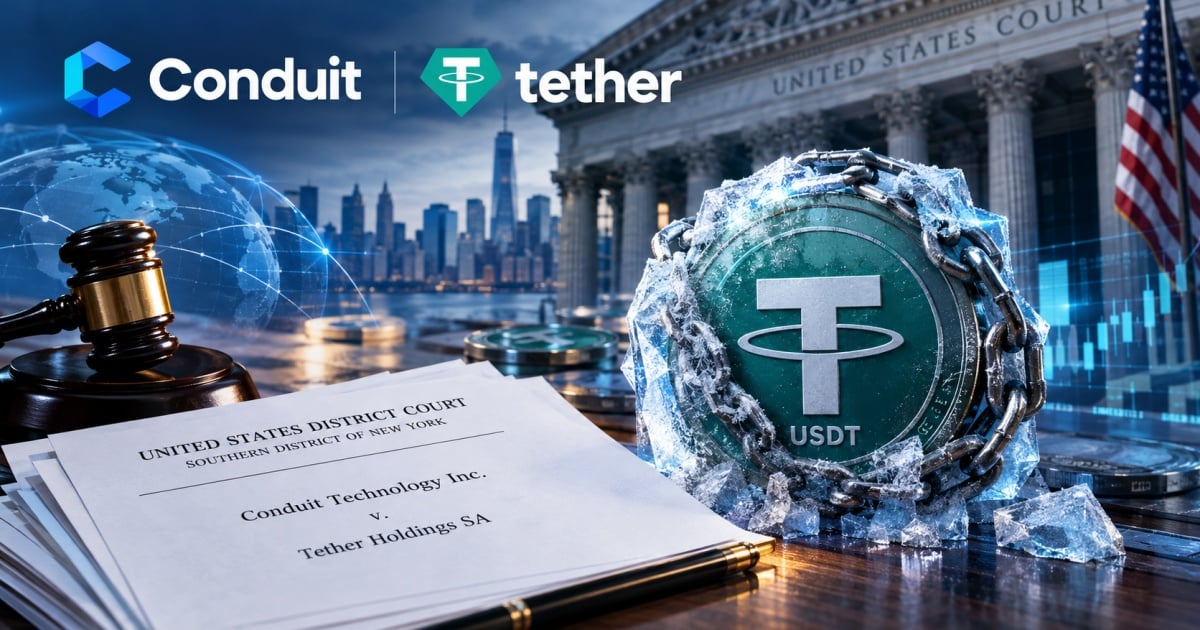
A Cross-Border Payments Firm Takes On the World’s Largest Stablecoin Issuer
Cross-border payments company Conduit has filed a lawsuit against Tether, alleging that the stablecoin issuer froze approximately $2.76 million worth of USDT held in its corporate treasury starting in September 2025 and has since failed to restore access to the funds. Conduit claims Brazilian police never requested the freeze on the wallets in question, and is asking a court to order the assets unfrozen and to hold Tether liable for related losses. The case is pending, but its implications reach far beyond a single corporate dispute.
Why This Case Matters for Every Stablecoin Holder
Stablecoins like USDT are marketed as digital dollars — bearer instruments that move peer-to-peer, 24/7, across borders. Yet they are issued by centralized entities that retain the technical ability to blacklist addresses and freeze balances at will. That power is typically justified as a tool for sanctions compliance, law enforcement cooperation, and combating illicit finance. The Conduit case tests the limits of that justification: what happens when a freeze is applied without a clear legal request, and what recourse does a business have when its operating capital is locked on-chain?
- Business continuity risk: For payment firms, stablecoin balances are working capital. A freeze can halt settlements, payroll, and vendor payments within hours.
- Due process questions: If no formal law enforcement request exists, on what basis does a private issuer restrict access to customer funds?
- Precedent potential: A ruling could define the evidentiary and procedural standards Tether and peers must meet before freezing addresses.
The Broader Stablecoin Governance Gap
Tether has long argued that its freeze authority is essential to maintaining trust and regulatory goodwill. But as stablecoins become embedded in global payment rails, the absence of a transparent, auditable appeals process becomes a systemic vulnerability. Competing issuers such as Circle have faced similar questions, and regulators in the EU and US are increasingly focused on redemption rights and issuer obligations. The Conduit lawsuit may accelerate calls for standardized freeze procedures, mandatory disclosure of frozen balances, and independent arbitration mechanisms.
What to Watch Next
The court’s treatment of the evidentiary record — particularly whether Brazilian authorities made any informal or formal request — will be pivotal. A ruling against Tether could force changes to how all major issuers handle blacklisting, while a ruling in Tether’s favor could entrench the status quo. Either way, the case highlights a structural tension at the heart of the stablecoin boom: the promise of censorship-resistant money issued by companies that can, and do, censor.