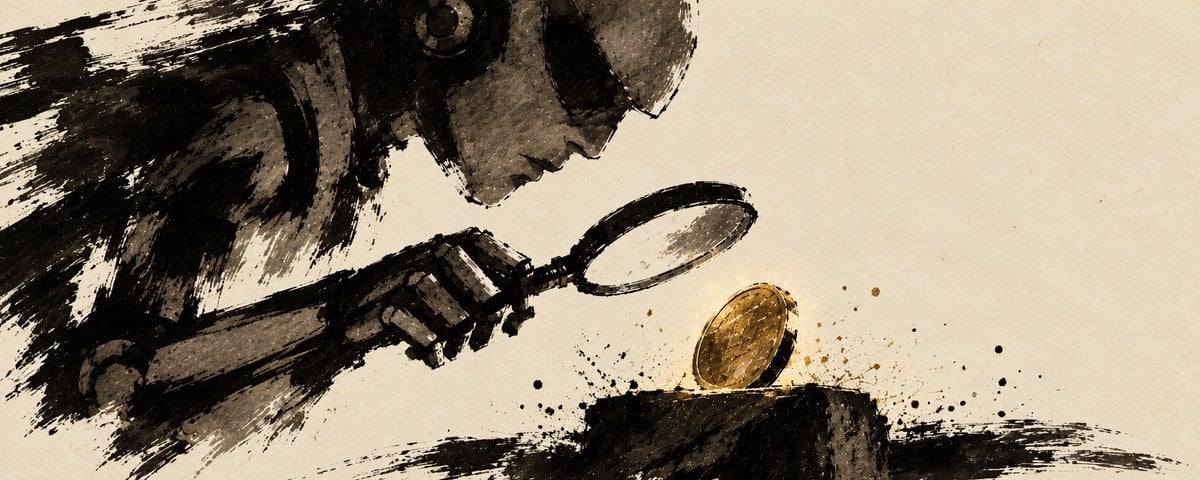
The Looming Cryptographic Threat
TREE NEWS reports: OpenAI recently released 722 mathematical manuscripts, claiming it as “the most important moment in the history of mathematics.” Century-old foundational problems were solved in just three hours of compute each. Mathematicians are stunned — they can no longer predict what comes next. Now, cryptography may be the next target.
Scott Aaronson has indicated that OpenAI is turning its attention to breaking cryptography. The crypto industry must seriously confront the possibility of a “math doomsday”: what happens when superintelligent AI clusters target foundational cryptography?
Not Quantum, But Something Worse
To be clear: this is not about AI accelerating quantum computing. Quantum computing requires massive physical engineering and cannot be solved overnight. The path to quantum readiness is relatively clear and publicly visible. The real concern is an unexpected mathematical breakthrough — something that overturns the foundational assumptions of classical cryptography, allowing ordinary computers to compute discrete logarithms and break modern public-key cryptography. That would be a catastrophe of existential proportions.
Justin Drake recently called for the blockchain industry to calmly begin planning a “bunker mode,” suggesting a controlled migration of assets to new addresses where public keys remain hidden behind hashes. But bunker mode has a fatal flaw: your coins are frozen. If the entire chain collapses, individual safety is meaningless.
The Probability Problem
We cannot know the probability of a fundamental weakness in public-key cryptography. It may be low, but it is not zero. Suppose it is 5%. That means a 95% chance everything is fine. But cryptographers measure security by failure probabilities as low as 2^-128 — “virtually impossible to fail,” not “probably won’t fail.”
Some argue that if ECDSA is broken, society faces bigger problems than blockchain — banks, TLS, certificate authorities. But banks can recover through KYC and new standards. Crypto cannot. If public-key cryptography fails, anyone can compute anyone else’s private key. We won’t know who owns what. It won’t be cryptocurrency anymore — just a graffiti wall.
Governance Must Change
Historically, our confidence in cryptography was built on social processes: cryptographers spend years trying to break a structure, and if it survives a decade, we trust it. But we are about to face cryptanalysts stronger than any human, reviewing schemes with unprecedented rigor. Work that took a decade could be done in months — or overnight.
Blockchain governance must adapt:
- Speed over decentralization in crisis. Chains that can coordinate quickly will have an advantage. Governance mechanisms must adjust, even if it means relaxing decision rules or giving validators more power.
- Whole-ecosystem mobilization. Not just protocol developers — wallets, exchanges, RPC providers, applications, asset issuers, and end users must move in lockstep.
- Plans must be pre-made. If things break before a plan exists, it’s too late.
A Cryptographic Recovery Mode
I propose that every major blockchain implement a “cryptographic recovery mode” — a nuclear-war-level contingency. The idea: in the next protocol upgrade, add a new, extremely simple hash-based public-key system (hash-based signatures rely on minimal cryptographic assumptions). It would be slow, expensive, and cumbersome — but it would work.
Every user would create a backup key using this scheme, initially optional, then mandatory. An emergency switch could be activated by validators without a protocol upgrade. If ECDSA is broken, all addresses enter cryptographic recovery mode. The chain becomes nearly unusable, but balances remain safe.
Those who haven’t migrated face a countdown. They would need to generate an ECDSA signature and solve a proof-of-work hash puzzle to unlock their address. The difficulty scales with the amount of native tokens held — 100 ETH means 100N, doubling each day. In a real attack, the true owner only needs to solve the proof-of-work, while an attacker must first break the key. This makes mass theft difficult.
The Path Forward
I want to be clear: most likely nothing will happen. AI will spend massive compute and conclude that cryptography is secure. But we must ensure that even in the worst case, blockchain remains safe. This requires faster reactions, more trust in protocol teams’ judgment, and more honest acknowledgment of trade-offs.
The “math doomsday” is approaching. We must be prepared.