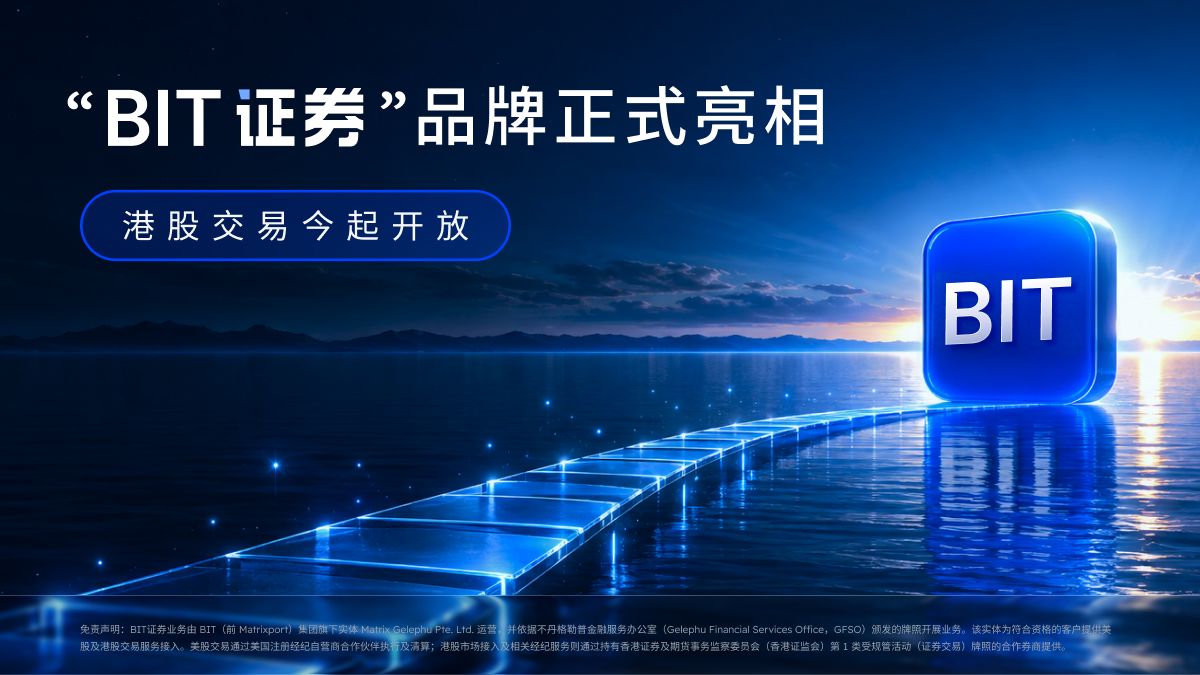
BIT Securities Brand Officially Launches, Hong Kong Stock Trading Opens Today
BIT Securities has officially unveiled its brand and commenced Hong Kong stock trading services, marking a significant step in the convergence of traditional finance and digital assets. The platform’s initial offering includes full support for trading all individual stocks on the Hong Kong Stock Exchange Main Board and GEM, IPO subscriptions, and margin financing. Notably, users can access these services without opening a bank account or exchanging for Hong Kong dollars—USDT or USDC can be used for 7×24 hour deposits and withdrawals, with settlements reaching accounts in seconds.
Industry Analysis: Bridging TradFi and DeFi
This development represents a major milestone in the tokenization of real-world assets (RWA) and the integration of stablecoins into mainstream financial infrastructure. By allowing stablecoin-based settlement for traditional equities, BIT Securities effectively lowers the barrier to entry for crypto-native investors seeking exposure to Hong Kong’s equity markets. The elimination of fiat on-ramps and banking hurdles addresses a long-standing pain point: the friction between digital asset holdings and traditional investment opportunities.
Hong Kong has positioned itself as a progressive regulatory hub for digital assets, and this move aligns with its broader strategy to attract crypto capital while maintaining robust oversight. The ability to trade GEM stocks—often smaller, growth-oriented companies—could inject liquidity into a segment that has historically struggled with volume. Moreover, the 7×24 settlement feature challenges the traditional T+2 cycle, hinting at a future where blockchain-based rails could redefine market operations.
Implications for the Broader Market
- Stablecoin Utility Expansion: USDT and USDC gain another real-world use case, reinforcing their role beyond crypto trading.
- Competitive Pressure: Traditional brokers may need to adopt similar crypto-friendly features to retain younger, digitally native clients.
- Regulatory Scrutiny: The seamless conversion between stablecoins and equities could draw attention from regulators concerned about capital controls and anti-money laundering.
- RWA Narrative Boost: This exemplifies how tokenized assets can interoperate with legacy systems, potentially accelerating institutional adoption.
Forward-Looking Perspective
If successful, BIT Securities could pave the way for similar offerings in other jurisdictions, particularly in Asia where crypto adoption is high but access to traditional markets remains fragmented. The integration of stablecoins into equity trading might also spur innovation in cross-border payments and asset custody. However, challenges remain: regulatory clarity on stablecoin reserves, cybersecurity risks, and the need for robust market surveillance. As the lines between DeFi and TradFi blur, the coming months will reveal whether this model can scale sustainably or remains a niche solution for crypto enthusiasts.