Musk Says U.S. Military and Trump Control Ukraine’s Starshield Access
TREE NEWS reports: Elon Musk has publicly stated that access to Starshield — the military-grade version of SpaceX’s Starlink satellite network — for Ukraine is controlled by the U.S. military and the Trump administration, not by him personally. The remark comes amid ongoing debate over the extent of U.S. support for Kyiv and raises fresh questions about the politicization of critical communications infrastructure in a war zone.
Starshield, a secured satellite communications service built by SpaceX for government and military use, has been a lifeline for Ukrainian forces since the early days of the Russian invasion. Ukraine has relied on Starlink terminals for battlefield communications, drone operations, and artillery targeting. Musk’s latest comments suggest that decisions about who can use the network — and under what conditions — now rest firmly with Washington.
Why This Matters
The statement injects geopolitical risk directly into the commercial satellite and defense technology sector. SpaceX is privately held, but its influence spans public markets: defense contractors, satellite operators, and telecom equipment makers are all exposed to shifts in U.S. policy toward Ukraine. Any signal that support could be curtailed or conditioned on political considerations introduces a new layer of uncertainty for investors in aerospace and defense.
The broader implication is that critical infrastructure — from satellite communications to undersea cables — is increasingly treated as a strategic asset rather than a neutral commercial service. That trend has profound consequences for global markets, as governments assert control over networks that were once purely private.
Market Implications
- Defense and aerospace stocks: Companies supplying satellite communications, missile systems, and battlefield technology could see volatility as investors reassess the durability of U.S. support for Ukraine. A perceived pullback could weigh on European defense names while potentially benefiting U.S. primes if spending shifts to domestic priorities.
- Bonds: Geopolitical escalation typically drives safe-haven demand for U.S. Treasuries and German bunds. However, if the news is read as a de-escalation signal — reduced U.S. involvement — risk premiums could compress, pushing yields higher in the short term.
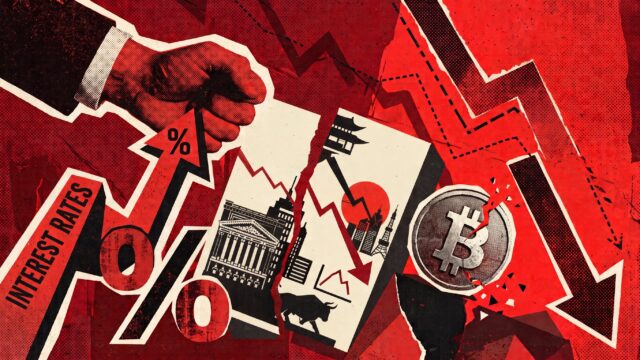
- Crypto: Bitcoin and other digital assets often trade as a barometer of geopolitical risk and dollar liquidity. A perception of reduced U.S. commitment abroad could weaken the dollar and support crypto as an alternative store of value, though the reaction may be muted unless the situation escalates.
- Commodities: Energy markets are highly sensitive to Ukraine-related developments. Any hint that U.S. support is wavering could be read as bullish for Russian leverage, pressuring European natural gas and crude oil prices upward. Wheat and grain markets could also react, given Ukraine’s role as a major exporter.
- Currencies: The euro is particularly exposed. If U.S. backing for Ukraine is seen as conditional, European security concerns could weigh on the single currency, while the dollar may benefit from safe-haven flows — or weaken if the news is interpreted as a broader U.S. retreat from global leadership.
Investor Takeaways
This story is less about a single company and more about the intersection of technology, politics, and national security. For investors, the key takeaway is that geopolitical risk is no longer confined to traditional defense names — it now touches satellite communications, energy, currencies, and even digital assets.
Portfolios with exposure to European equities, energy, or defense should stress-test for scenarios in which U.S. support for Ukraine becomes politically conditional. Meanwhile, the growing entanglement of private infrastructure with state interests suggests that companies operating in strategically sensitive sectors may face higher regulatory and reputational risk — a factor that markets have historically underpriced.
Finally, watch the dollar. If the U.S. is perceived as stepping back from its role as a global security guarantor, the long-term implications for dollar hegemony — and for assets that benefit from a multipolar world, including gold and crypto — could be significant.