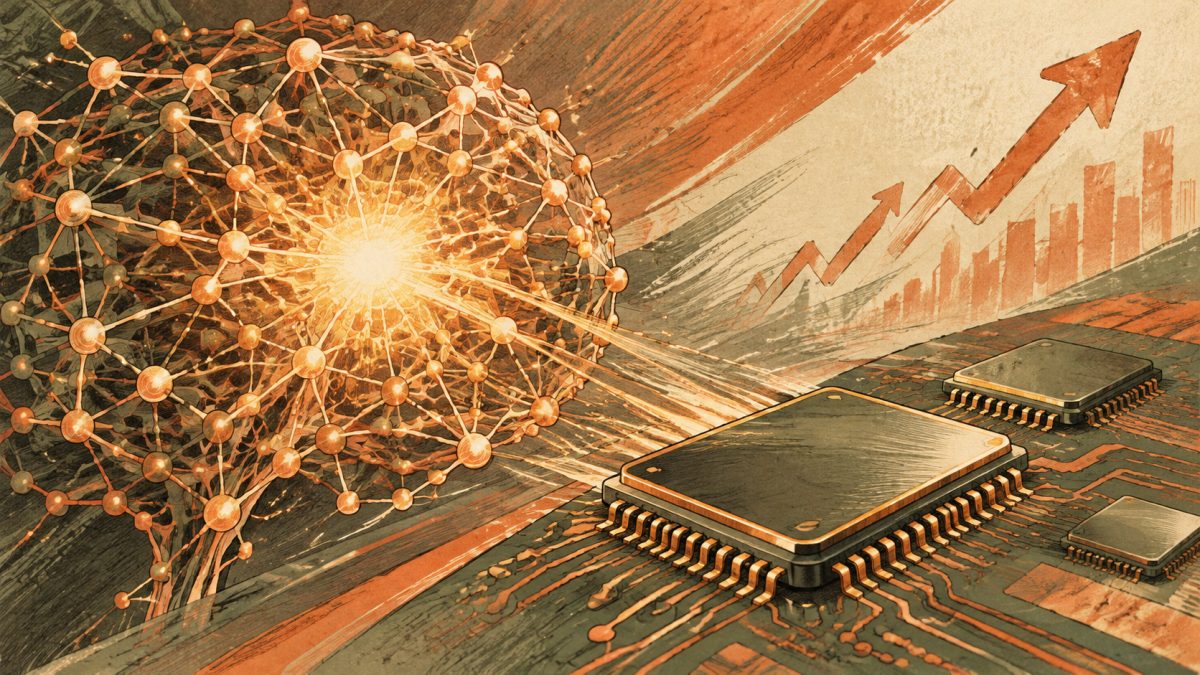
Memory Sector Outperforms Broader Market
TREE NEWS reports: U.S. stocks opened mixed on October 19, with the Dow Jones Industrial Average slipping 0.05% while the S&P 500 gained 0.54% and the Nasdaq rose 0.9%. The standout performer was the memory chip sector, which surged on optimism over artificial intelligence demand. SK Hynix (SKHY.O) jumped 4.5%, SanDisk (SNDK.O) climbed 4.6%, Micron Technology (MU.O) advanced 3.7%, and Western Digital (WDC.O) added 3.1%. Nvidia (NVDA.O) rose 1.4%, continuing its steady ascent.
AI-Driven Demand Reshapes Memory Market
The rally in memory stocks reflects growing investor confidence that the AI boom will drive sustained demand for high-bandwidth memory (HBM) and advanced storage solutions. As AI models grow larger and more complex, the need for faster, denser memory has become a critical bottleneck. SK Hynix and Micron are key suppliers of HBM, which is essential for Nvidia’s GPUs. The market is pricing in a multi-year upcycle for memory, driven by data center buildouts and the proliferation of AI inference at the edge.
SanDisk and Western Digital, meanwhile, benefit from the rising demand for NAND flash storage in AI servers and consumer devices. The sector had been cyclical and prone to boom-bust cycles, but the AI narrative is providing a structural tailwind that could smooth out volatility.
Implications for Crypto and Blockchain
While the news is squarely in the traditional equities space, it has indirect implications for the crypto and blockchain industry. AI-related tokens and decentralized compute networks have gained traction as investors seek exposure to the AI theme. The strength in memory stocks could spill over into sentiment for AI-focused crypto projects, particularly those building decentralized GPU networks or data marketplaces. However, the correlation is not direct, and crypto markets remain driven by their own fundamentals and liquidity conditions.
Forward-Looking Perspective
Investors will be watching upcoming earnings reports from memory makers for confirmation of the AI demand narrative. Guidance on HBM pricing and capacity expansions will be key. Additionally, macroeconomic factors such as interest rates and global trade dynamics could influence the sector’s trajectory. For now, the memory rally appears to have legs, but valuation concerns and potential supply responses warrant caution. The broader market’s resilience, with the S&P 500 and Nasdaq posting gains, suggests a risk-on sentiment that could persist if economic data remains supportive.