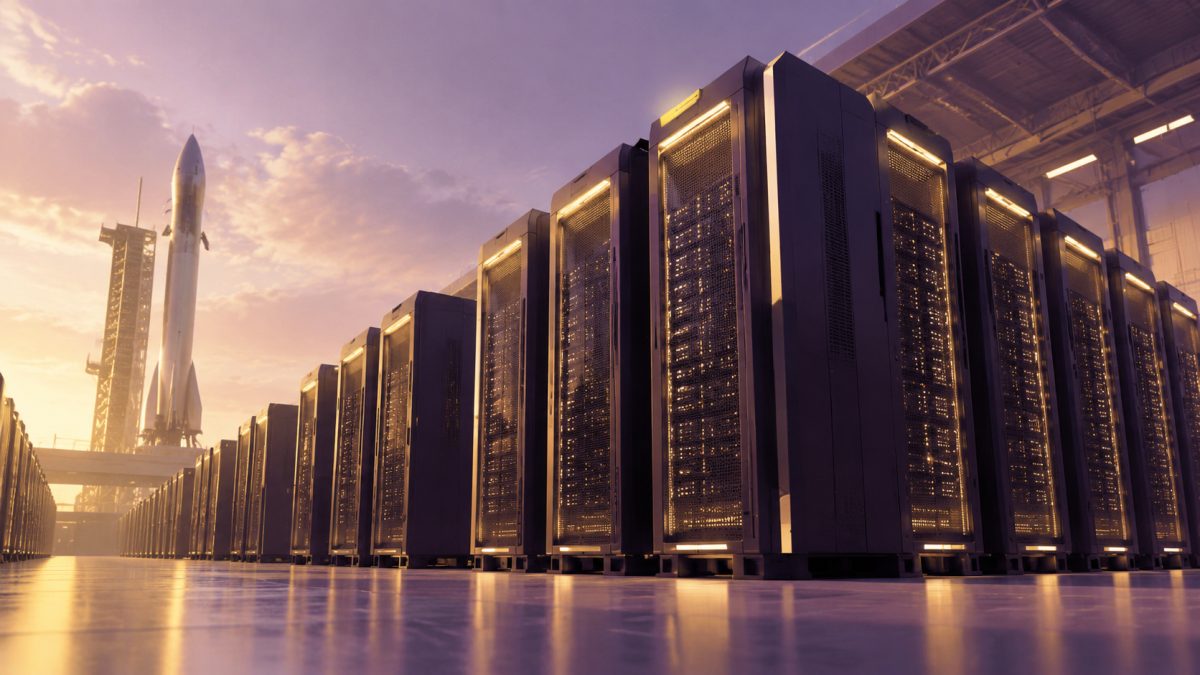
SpaceX Secures $40 Billion GPU Financing Lease with Apollo
TREE NEWS reports: SpaceX has entered into a binding master financing lease commitment with Apollo Global Management, under which Apollo will purchase GPU clusters and related equipment and lease them to SpaceX. Total principal payments under the lease arrangement are expected to reach $40 billion. The deal marks one of the largest known financings for AI infrastructure and underscores the growing capital intensity of advanced computing.
Why SpaceX Needs GPUs
SpaceX’s core business—rockets and satellite internet—increasingly relies on AI for autonomous flight control, real-time image analysis, and network optimization. The company’s Starlink constellation generates massive data streams that require on-orbit and ground-based processing. GPUs are essential for training and inference of machine learning models that enhance satellite routing, collision avoidance, and broadband service quality. The lease structure allows SpaceX to access cutting-edge hardware without a hefty upfront cash outlay, preserving capital for launch operations and Starship development.
The Financing Structure
Apollo, a global alternative investment manager, will acquire the GPU clusters and lease them to SpaceX. This sale-leaseback-like arrangement is attractive for both parties: SpaceX gets immediate use of high-performance computing assets while spreading payments over time; Apollo gains a long-term, investment-grade-like cash flow stream backed by critical equipment. The $40 billion principal amount suggests a massive scale—likely tens of thousands of top-tier GPUs, including Nvidia’s latest data center chips.
Implications for the AI and Crypto Ecosystems
While this deal is not directly crypto-related, it highlights the insatiable demand for GPU compute that also underpins decentralized AI networks and tokenized compute marketplaces. Projects that aggregate idle GPUs for AI inference or training could face tougher competition for hardware, as large corporates lock up supply through innovative financing. On the other hand, the securitization of GPU assets—turning them into lease-backed instruments—could inspire similar structures in DeFi, where tokenized cash flows from hardware leases might become a new real-world asset class. Crypto lenders and RWA platforms may explore offering financing to smaller AI firms that cannot access Apollo-scale deals.
Forward-Looking Perspective
As AI models grow larger and more compute-hungry, financing innovation will be as crucial as chip design. SpaceX’s $40 billion lease signals that even the most capital-intensive aerospace companies are willing to leverage their balance sheets for AI capabilities. If successful, this model could be replicated across industries, further intertwining traditional finance, AI infrastructure, and eventually blockchain-based asset tokenization. For crypto, the key takeaway is that GPU scarcity is intensifying, making decentralized compute networks more valuable—but also more challenged to secure hardware at competitive prices. The convergence of AI and crypto may well be financed by Wall Street giants like Apollo, bridging the gap between legacy capital and the decentralized future.