Justin Sun Launches On-Chain Math Prize With Automated Payouts, Open to AI
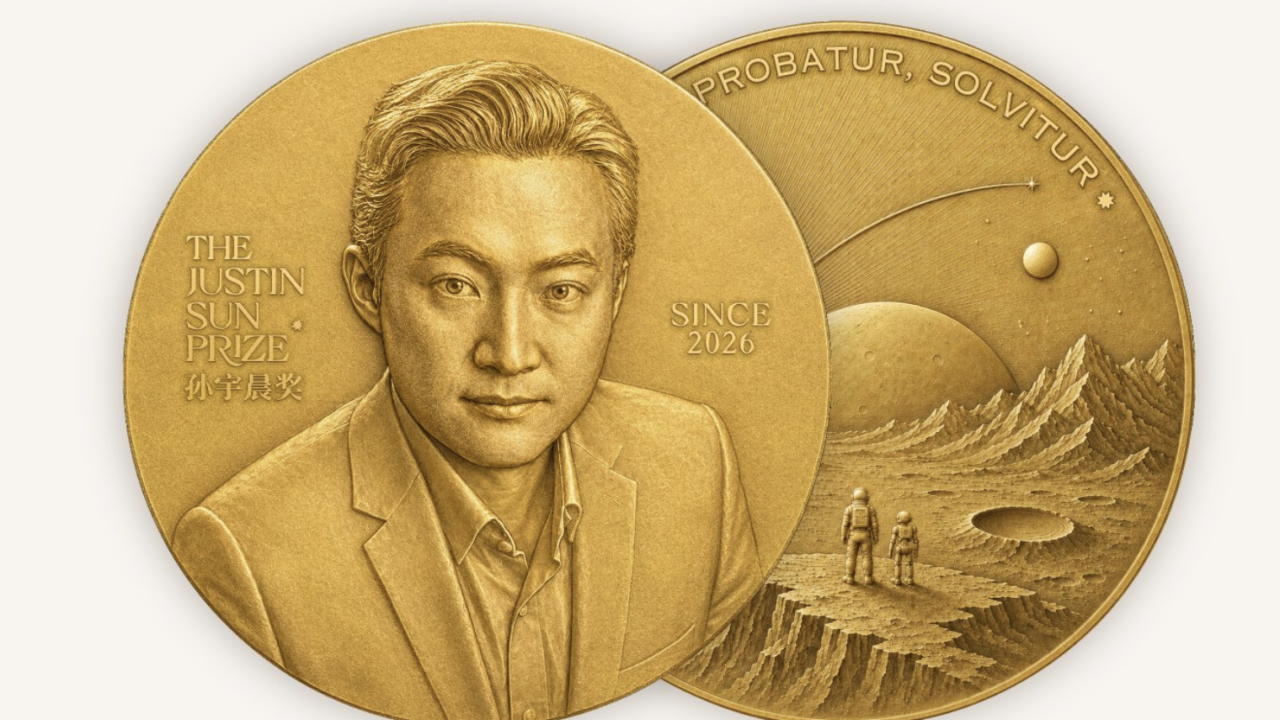
Justin Sun, the founder of TRON and a prominent figure in the crypto industry, has announced the creation of the “Justin Sun Prize,” a personal mathematics award with a prize pool recorded on-chain. The rules are transparent: after a machine verifies a proof, the prize is automatically disbursed. The award follows the problem, not the person, and is open to artificial intelligence.
News Summary
Sun’s initiative aims to incentivize mathematical research by leveraging blockchain’s transparency and automation. The prize pool is publicly visible on-chain, and smart contracts handle the distribution of funds once a solution is verified. This approach removes intermediaries and ensures that rewards are granted based on objective criteria. Notably, the prize is open to AI, reflecting the growing intersection of artificial intelligence and cryptographic verification.
Industry Analysis and Implications
This move is significant for several reasons. First, it demonstrates a novel use case for blockchain beyond finance: automating and democratizing scientific research funding. By putting the prize pool on-chain, Sun ensures that the process is auditable and tamper-proof, which could increase trust in academic awards. Second, the openness to AI participants aligns with the trend of AI agents operating on-chain. As AI systems become more capable of solving complex mathematical problems, such prizes could become a new form of incentivized computation. Third, the “follow the problem, not the person” principle emphasizes meritocracy and could attract a diverse set of solvers, including those from underrepresented regions.
However, challenges remain. The verification of mathematical proofs is non-trivial; while machine verification can handle formal proofs, many mathematical results are not yet formalized. Sun’s prize may require significant infrastructure for proof checking. Additionally, the legal and tax implications of cross-border, automated payouts are unclear. Regulators may scrutinize such arrangements, especially if AI entities are involved.
Forward-Looking Perspective
If successful, this initiative could inspire other crypto philanthropists to fund research via smart contracts. It also signals a step toward a future where AI and blockchain collaborate in scientific discovery. As Sun continues to push boundaries, the crypto community will watch closely to see if this experiment yields groundbreaking results or exposes limitations in on-chain governance of intellectual pursuits.