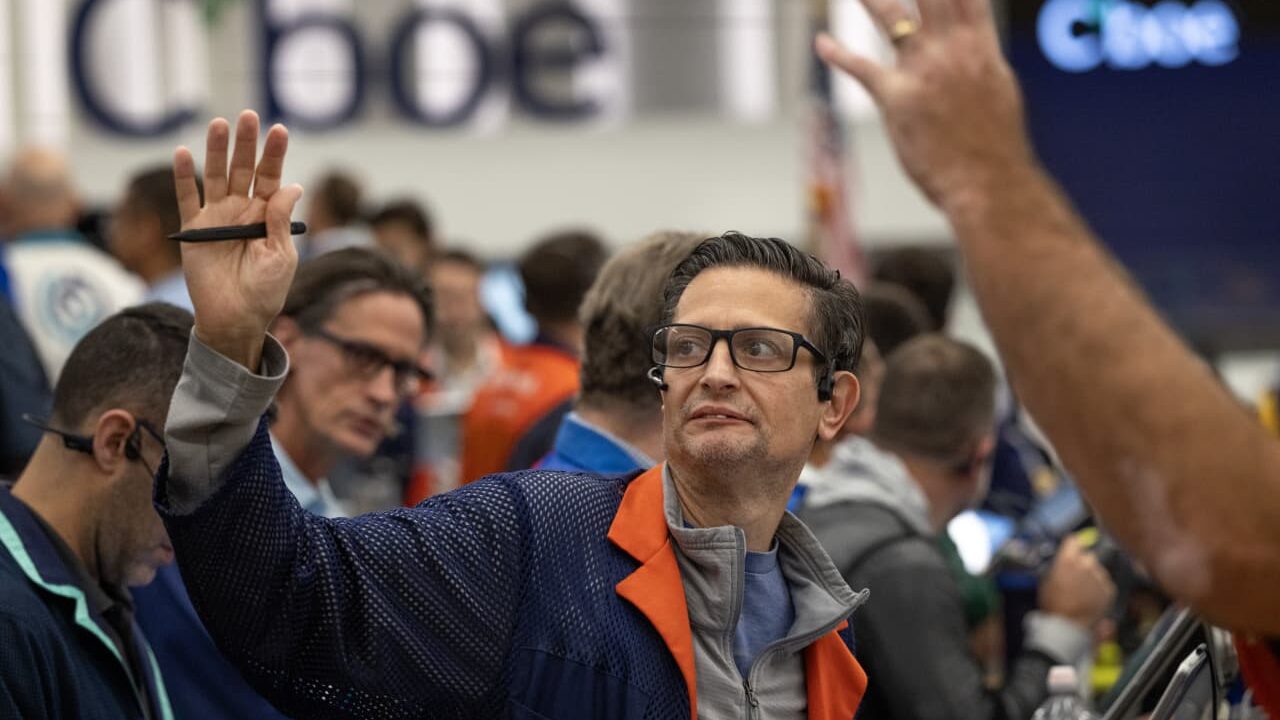
Options Traders Are Seizing Control of the S&P 500 — Here’s What It Means for Markets
TREE NEWS reports: Something unusual is happening in the S&P 500. Since June, the benchmark index has barely budged, and a team of strategists at UBS says the explanation lies not in fundamentals but in the options market. Options traders — particularly those dealing in short-dated contracts — have effectively seized control of the index’s price action, creating a feedback loop that suppresses volatility and keeps the S&P 500 pinned in a narrow range.
The mechanism is straightforward but powerful. When options dealers sell contracts to investors, they must hedge their exposure by buying or selling the underlying index. As options activity has exploded — particularly in zero-day-to-expiry (0DTE) options — dealers’ hedging flows have come to dominate intraday trading. The result is a market that mean-reverts quickly: rallies get sold, dips get bought, and the index stays range-bound.
Why This Matters for Markets
The rise of options-driven price action has profound implications across asset classes:
- Stocks: The S&P 500’s low-volatility regime may persist as long as options flows remain dominant. This favors volatility-selling strategies and could lull investors into a false sense of security. However, it also raises the risk of a sharp unwind if positioning becomes too one-sided.
- Bonds: A suppressed VIX and stable equity market reduce demand for Treasuries as a hedge, keeping yields elevated. But any sudden volatility spike could trigger a rapid flight to safety.
- Crypto: Bitcoin and other digital assets have shown increasing correlation with risk assets. A low-volatility equity market may dampen crypto volatility, but a regime shift could amplify moves in both directions.
- Commodities: Oil and gold are less directly affected, but a broader risk-on environment supported by stable equities could keep commodities range-bound.
- Currencies: The dollar may benefit from stable equity markets and higher yields, but any volatility shock could reverse that quickly.
The Bigger Picture
The UBS team’s analysis highlights a structural shift in market microstructure. Options are no longer a sideshow — they are a primary driver of price discovery. This has consequences for how investors should think about risk. Traditional fundamental analysis may be less useful in a market where dealer hedging flows dictate short-term price movements.
For long-term investors, the key takeaway is not to abandon fundamentals but to recognize that the market’s short-term behavior is increasingly driven by mechanical flows. This argues for disciplined risk management, diversification, and a willingness to look through short-term noise.
Key Takeaways for Investors
- Options flows, particularly short-dated contracts, are dominating S&P 500 price action and suppressing volatility.
- This regime can persist, but it creates fragility — a one-sided options market can unwind violently.
- Investors should monitor options positioning and dealer gamma exposure as a risk indicator.
- Diversification and disciplined risk management remain essential in a market where mechanical flows can override fundamentals.