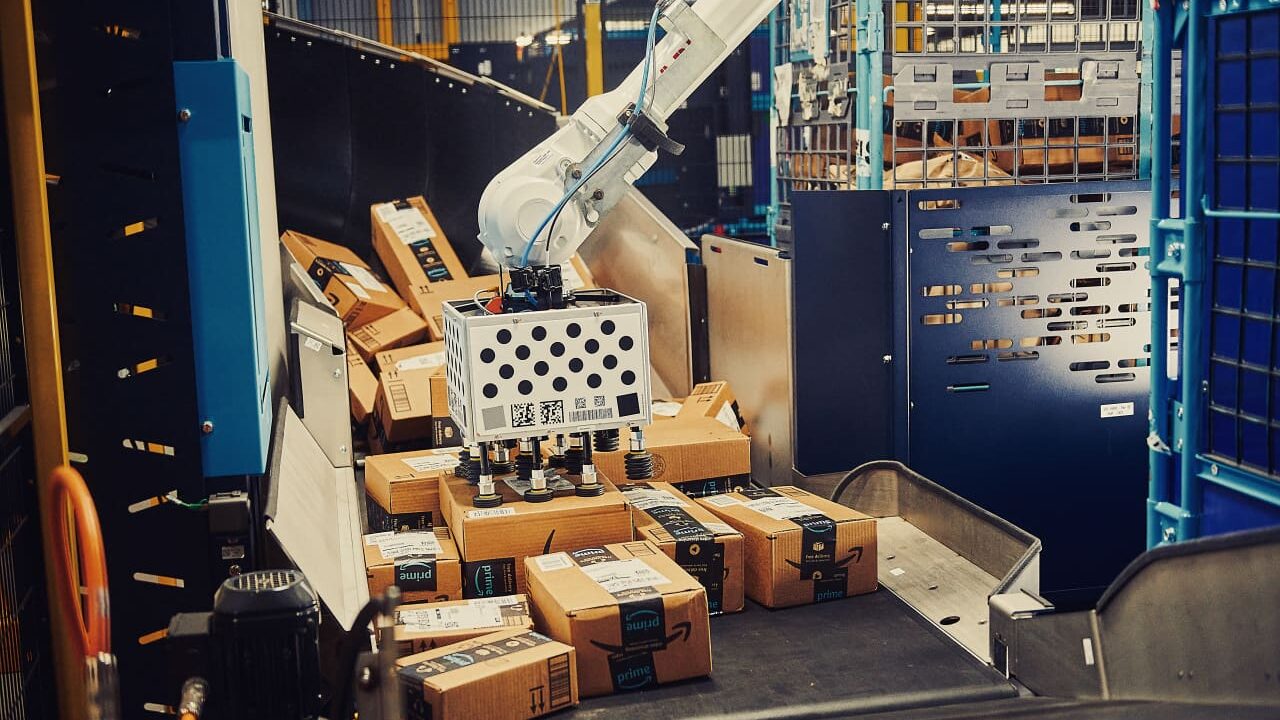
Amazon’s Warehouse Automation Is the Real AI Payoff Metric, Not AWS
TREE NEWS reports: Investors have been fixated on Amazon’s cloud computing unit, AWS, as the primary gauge of the company’s artificial intelligence ambitions. But a growing chorus of analysts argues that the most telling indicator of whether Amazon’s massive AI spending is actually paying off lies not in the cloud, but in its sprawling network of warehouses. The e-commerce giant has been quietly deploying AI and robotics across its fulfillment centers at an accelerating pace, and the efficiency gains—or lack thereof—from these efforts may soon become the clearest signal of AI’s return on investment.
What Happened
Amazon has invested billions in AI infrastructure, from training large language models to powering its Alexa devices and AWS services. However, the company’s core retail operation—still the largest contributor to revenue—is where AI could have the most immediate and measurable impact. The company has rolled out thousands of robotic systems, including its Sparrow and Proteus robots, and has been testing AI-driven demand forecasting and inventory management. Recent reports suggest that these initiatives are beginning to show tangible results in reducing fulfillment costs and speeding up delivery times. But the market has largely overlooked this, focusing instead on AWS’s AI revenue growth, which, while impressive, is subject to competitive pressures and capital expenditure concerns.
Market Implications
The distinction matters for investors. If Amazon’s warehouse AI is delivering real productivity gains, it could lead to margin expansion in the retail segment, which has historically been low-margin. This would provide a more durable earnings driver than the cyclical cloud business. Conversely, if the efficiency gains are marginal, it would suggest that Amazon’s AI spending is not translating into operational leverage, raising questions about the company’s capital allocation strategy.
- Stocks: Amazon shares could see a re-rating if warehouse AI proves to be a margin catalyst. Competitors like Walmart and Target, which are also investing in automation, may face pressure to keep up.
- Bonds: Amazon’s heavy capex spending has been funded partly through debt. If AI investments yield higher returns, credit metrics could improve, benefiting bondholders.
- Crypto: Indirectly, Amazon’s AI efficiency could accelerate the adoption of AI-driven supply chain solutions, potentially boosting blockchain-based logistics projects. However, the link is tenuous.
- Commodities: Increased warehouse automation could reduce demand for certain commodities tied to traditional logistics, but the net effect is unclear.
- Currencies: No direct impact, though a stronger Amazon could support the dollar through its global operations.
Why It Matters for Investors
The AI narrative has driven much of the market’s enthusiasm for Amazon, but investors need to separate hype from reality. The warehouse is where AI meets physical operations, and the efficiency gains there are harder to fake. As Amazon continues to scale its robotics and AI systems, the market will eventually demand proof that these investments are paying off. Watching fulfillment costs and operating margins in the retail segment could provide an early warning sign—or a bullish confirmation—for the stock.
For now, the focus on AWS is understandable, but the real test of Amazon’s AI strategy may be playing out on the warehouse floor. Investors who look beyond the cloud may gain a competitive edge in assessing the company’s long-term value.