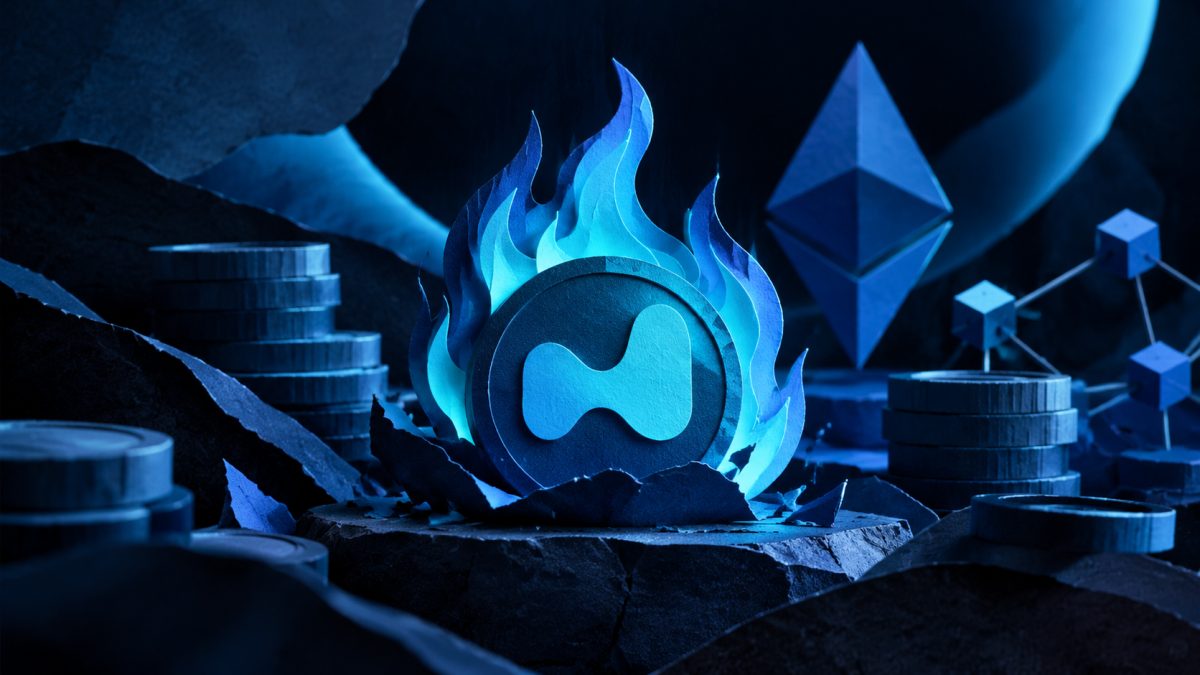
Hyperliquid’s Deflationary Engine Hits a Milestone
TREE NEWS reports: Hyperliquid has permanently destroyed 49.87 million HYPE tokens, representing 4.99% of the protocol’s 1 billion maximum supply. At current valuations, the burned tokens are worth approximately $3.89 billion. The burn is funded by protocol fee revenue, which has totaled $1.38 billion to date. In the past 24 hours alone, 19,700 HYPE (roughly $1.59 million) were incinerated, against estimated daily fees of $1.69 million.
How the Burn Mechanism Works
Hyperliquid’s tokenomics route a substantial share of trading fees into a buyback-and-burn program. As trading volume on its perpetual futures exchange rises, so does the pace of HYPE destruction. This creates a direct link between protocol activity and token scarcity — a structure that has become a hallmark of well-designed DeFi token models.
- Supply reduction: Nearly 5% of max supply is already gone, with the burn continuing daily.
- Revenue-backed: Burns are not arbitrary; they are funded by real fee income, making them sustainable as long as trading activity persists.
- Transparency: On-chain monitoring allows anyone to verify the burn rate and fee generation in real time.
Why It Matters for DeFi
Hyperliquid’s burn rate offers a template for how decentralized exchanges can align token holder interests with platform growth. Unlike inflationary yield farming, which dilutes holders, a fee-funded burn rewards long-term participants by shrinking supply. The $1.38 billion in cumulative revenue also underscores that Hyperliquid has captured meaningful market share in the highly competitive perp DEX arena.
Critics may note that burn rates are cyclical — they rise with market volatility and fall during quiet periods. But the structural mechanism remains sound, and the 4.99% milestone demonstrates that it works at scale.
Forward-Looking Perspective
If Hyperliquid sustains its current fee run-rate, the protocol could burn another 5% of supply within a few years, further tightening the float. The key risks are regulatory pressure on perpetual futures and competition from centralized and decentralized rivals. Still, the burn milestone cements Hyperliquid’s position as a leading fee-generating DeFi protocol and a case study in deflationary tokenomics.