Intel’s 14A Process Hits Milestone: Defect Density Improvement Best Since 22nm
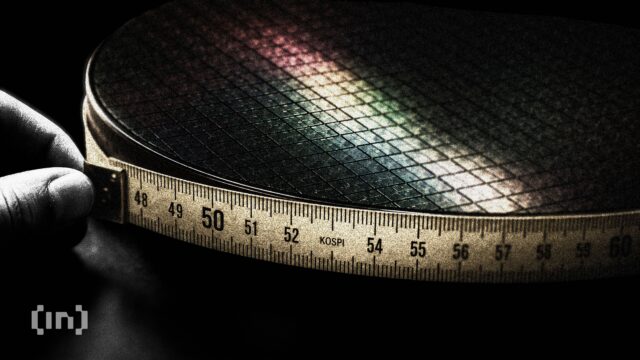
TREE NEWS reports: In a significant development for Intel’s manufacturing roadmap, CFO David Zinsner revealed at the Deutsche Bank 2026 Technology Conference that the company’s 14A (1.4nm-class) process node is achieving defect density reduction at a pace not seen since its highly successful 22nm node. ‘Since 22nm, we haven’t seen this kind of performance,’ Zinsner said, noting that defect density is improving faster than the company’s target curve. The 14A node is scheduled for risk production in the second half of 2027, with high-volume manufacturing expected in 2028.
What Happened
Intel’s 14A process, which incorporates second-generation gate-all-around (GAA) RibbonFET transistors, second-generation backside power delivery (PowerDirect), and High-NA EUV lithography, is showing defect density improvements better than any previous node at a comparable stage. Zinsner compared the trajectory to that of 22nm around 2010, two years before its production ramp. The 22nm node, Intel’s first FinFET process, was a landmark success, powering the Ivy Bridge processors and remaining in service for years.
Importantly, Intel’s internal design teams have already begun developing products on 14A, which Zinsner called ‘a big confidence boost’ given that internal customers are ‘probably the most demanding of all.’ External foundry customers are also shifting from evaluating technical data to asking about capacity allocation and supply timelines. CEO Lip-Bu Tan and his team meet with customers weekly, and Zinsner said, ‘We now have conviction on external customers for 14A.’
Market Impact Analysis
This news is a positive signal for Intel’s turnaround efforts, which have been under intense scrutiny after years of manufacturing missteps. The 14A node is critical to Intel’s foundry ambitions, as it aims to compete with TSMC and Samsung in advanced logic. If the defect density improvements translate into strong yields, Intel could regain credibility with potential foundry clients, including major tech companies seeking alternative supply chains.
- Stocks: Intel (INTC) shares may see a modest boost as investors view this as evidence that the company’s process technology roadmap is on track. However, the impact is likely limited in the near term, as 14A is still two years from production. Rival TSMC (TSM) and Samsung could face increased long-term competitive pressure, but their current dominance remains unchallenged.
- Bonds: The news has minimal direct impact on bond markets, but could slightly improve Intel’s credit outlook if it signals a stronger competitive position, potentially narrowing credit spreads on Intel’s debt.
- Crypto: No direct impact on cryptocurrency markets.
- Commodities: No direct impact on commodity prices.
- Currencies: No direct impact on foreign exchange markets. However, a stronger Intel could support US tech sector sentiment, indirectly benefiting the US dollar.
Why It Matters for Investors
Intel’s 14A progress is a key indicator of whether the company can execute on its ‘five nodes in four years’ strategy and become a credible foundry player. The foundry business is capital-intensive but offers high margins if successful. For investors, this news reduces the risk of another node delay or failure, which has plagued Intel in recent years (e.g., 10nm, 20A). The fact that external customers are asking about capacity suggests early demand, but the real test will be the production ramp in 2027-2028.
Investors should monitor: (1) further defect density data as 14A approaches production, (2) announcements of external foundry customers for 14A, (3) yield metrics during risk production, and (4) Intel’s ability to maintain this trajectory against TSMC’s N2 (2nm) and Samsung’s 2nm GAA processes.
Key Takeaways
- Intel’s 14A defect density improvement is the best since 22nm, a positive sign for its foundry strategy.
- Internal and external customer interest is shifting from evaluation to capacity planning.
- The node is still two years from high-volume production; execution risks remain.
- Investors should view this as a positive but not definitive signal for Intel’s turnaround.