Nvidia’s Founder Era Ends After 33 Years
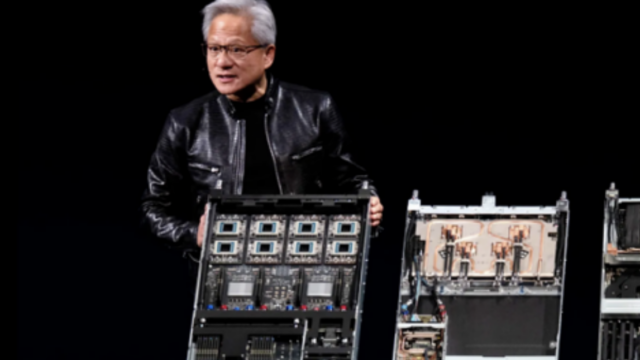
Nvidia’s board of directors has removed CEO Jensen Huang, ending his 33-year tenure at the helm of the world’s most valuable chipmaker. The decision, which sent shockwaves through Silicon Valley and beyond, is being framed by some observers as a political purge tied to Huang’s perceived lack of support for the losing side in the last U.S. election. Others see it as a cold-blooded sacrifice driven by intensifying AI competition and shifting narratives around data center dominance.
A Political Purge or Strategic Sacrifice?
The circumstances surrounding Huang’s departure remain murky, but the timing is undeniable. The move comes amid heightened political polarization in the United States, where corporate leaders are increasingly expected to align with prevailing political winds. Huang, a Taiwanese-American who built Nvidia into the undisputed king of AI hardware, may have found himself on the wrong side of a power struggle that extends far beyond the boardroom.
Yet politics alone does not explain the ouster. Nvidia faces mounting competition from AMD, Intel, and a wave of custom silicon from hyperscalers like Google, Amazon, and Microsoft. The AI boom that propelled Nvidia to a trillion-dollar valuation is maturing, and the narrative is shifting from raw GPU dominance to integrated data center solutions. In this context, Huang’s removal could be a board-level attempt to reset strategy and appease investors demanding diversification beyond AI chips.
Implications for the Crypto-AI Nexus
For the crypto industry, the shakeup at Nvidia carries significant weight. Decentralized GPU networks and AI-focused blockchain projects have often looked to Nvidia as both a bellwether and a partner. A leadership change could disrupt existing collaborations and alter the supply chain dynamics for AI compute. Projects that rely on Nvidia hardware for decentralized inference or training may need to reassess their hardware roadmaps.
Moreover, the political dimension raises uncomfortable questions about the intersection of AI, crypto, and governance. If a figure as influential as Huang can be removed for political reasons, what does that mean for the broader tech ecosystem? Crypto projects championing decentralization and censorship resistance may find renewed relevance as a hedge against centralized corporate control.
Forward Outlook
Nvidia’s next move will be closely watched. The board must appoint a successor capable of navigating both geopolitical tensions and technological disruption. For Huang, the future is uncertain, but his legacy as the architect of the AI hardware revolution is secure. For the crypto-AI space, the event serves as a reminder that centralized power structures remain fragile, and decentralized alternatives may yet have their moment.