AI Claims Breakthrough on 167-Year-Old Riemann Hypothesis
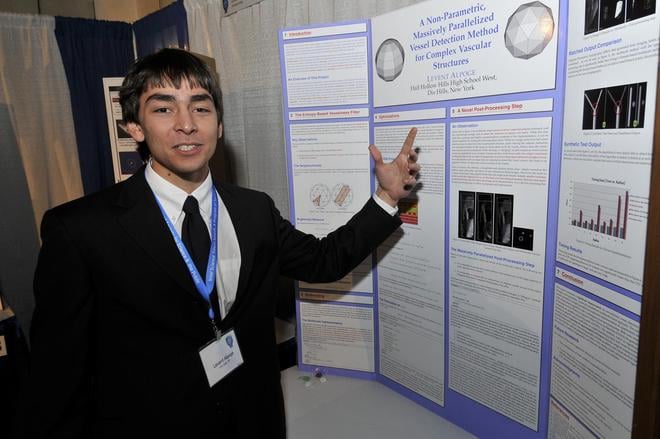
An Anthropic researcher has reportedly used an AI system to produce a proof of the Riemann Hypothesis, one of the most famous unsolved problems in mathematics. The claim, if validated, would mark a historic breakthrough in number theory and a major milestone for artificial intelligence in mathematical discovery. However, no mathematician has yet formally confirmed the proof, and the researcher, Alpöge, remains far from claiming the $1 million Millennium Prize offered by the Clay Mathematics Institute.
The Claim and the Caveats
The Riemann Hypothesis, first proposed by Bernhard Riemann in 1859, concerns the distribution of prime numbers and the non-trivial zeros of the Riemann zeta function. A proof would have profound implications for cryptography, number theory, and our understanding of prime distribution. While the AI-generated proof has generated excitement, the mathematical community is notoriously rigorous: any proof must withstand peer review, and history is littered with failed attempts. The Clay Institute requires a proof to be published in a reputable journal and to have survived two years of scrutiny before awarding the prize.
Implications for AI and Crypto
This development underscores the growing role of AI in solving complex problems, a trend that intersects with the crypto industry in several ways. AI agents are increasingly being deployed on-chain for tasks ranging from smart contract auditing to decentralized finance (DeFi) strategy optimization. If AI can tackle pure mathematics, its potential to enhance cryptographic security and blockchain scalability could be significant. However, the crypto community should remain cautious: unverified claims can lead to hype and misinformation, a pattern all too familiar in the space.
Forward Outlook
The next steps involve rigorous verification by the mathematical community. If the proof holds, it could accelerate research into quantum-resistant cryptography and AI-driven formal verification—areas of keen interest to blockchain developers. For now, the claim serves as a reminder of AI’s expanding capabilities and the importance of skepticism in both science and crypto.