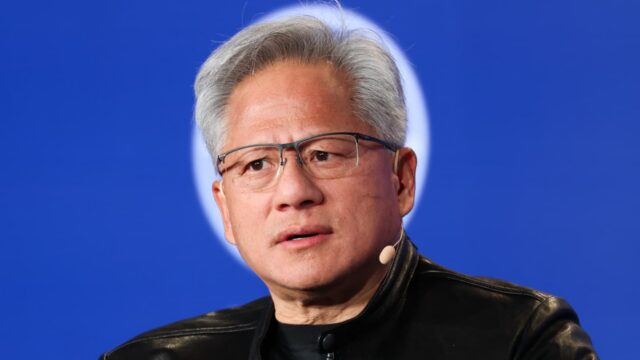
Nvidia’s Brief Rally Collapses as Investors Focus on AI Spending and Valuation
TREE NEWS reports: Nvidia Corp. shares tumbled Tuesday, leading the broader market lower and extending a 35% decline from their October 6 high. The drop has erased $2 trillion in market value, making Nvidia one of the 30 worst performers in the S&P 500 over that period—even after a 31% surge on Monday following CEO Jensen Huang’s reinstatement. The brief euphoria quickly faded as investors realized that Huang’s return only resolves the leadership vacuum, not the fundamental questions weighing on the stock.
By Wednesday premarket, Nvidia shares fell as much as 5.8%, part of a broader pullback in artificial intelligence stocks. The stock now trades at roughly 10 times forward earnings, hitting its lowest valuation multiple since 2008 last week. That makes Nvidia one of the cheapest stocks in the S&P 500 and the least expensive member of the so-called Magnificent Seven.
Core Questions Remain Unanswered
Huang’s reinstatement—following his ouster over alleged extramarital affairs—has done little to address the issues that have been pressuring the stock. The biggest question: will customers continue to spend heavily on AI infrastructure amid growing skepticism about returns on those investments? Rising interest rates also pose a threat, as AI spending is increasingly financed through debt.
“The fundamental issues that were front and center even before Jensen’s resignation remain,” said Brent Schutte, chief investment officer at Northwestern Mutual Wealth Management. “How much capital is needed to implement AI? How much funding is available, and at what cost? And then, what will the returns be?”
Huang’s departure and the turmoil around Nvidia have also raised doubts about its ability to remain the dominant AI chip supplier. Competition is mounting from chipmakers like Advanced Micro Devices and Broadcom, as well as from Nvidia’s own customers, including Alphabet’s Google.
Valuation at 2008 Lows
The aforementioned concerns explain why Nvidia is now among the cheapest stocks in the S&P 500. The stock traded at about 15 times forward earnings at the end of October, down from 25 times at the start of the year, and now sits at roughly 10 times—the lowest multiple since 2008, reached just last week.
Still, many on Wall Street see upside for Nvidia if AI spending persists and Huang can restore stability. At least three analysts have upgraded the stock to a buy-equivalent rating since Huang’s return, with the average price target implying a 57% gain over the next 12 months.
“AI growth has a long way to go, and Nvidia powers it,” said Ivan Feinseth, chief investment officer and senior partner at Tigress Financial Partners, in a Bloomberg TV interview on Tuesday. “What happened to Jensen is unfortunate and disappointing, but overall the market is happy about his return.”
Political and Regulatory Headwinds
Huang’s return has been backed by President Trump, who said Huang’s leadership is crucial to the AI industry. Such intervention in corporate affairs has drawn sharp criticism in Washington, with Democrats set to take control of Congress in January. Trump said Tuesday that pardoning Huang is “always an option” but he doesn’t think it’s necessary, and he’s open to the U.S. government taking an equity stake in Nvidia, though no such proposal has been made.
Huang now faces a real test: he is scheduled to appear before the Senate Banking Committee on December 3. Senator Elizabeth Warren, a senior member of the committee, said in a statement that the “reckless decision” to rehire Huang doesn’t change the fact that Huang, Nvidia executives, and the board still owe Congress an explanation regarding compliance with AI chip export restrictions.
Governance Gaps and Succession Planning
Huang’s ouster exposed major governance flaws and the absence of a succession plan. The board is now chaired by former Synopsys CEO Harvey Jones, who has been criticized for yielding to Trump’s urging just six days after announcing he had no intention of rehiring Huang. As co-founder and, until this month, Nvidia’s sole CEO, Huang bears considerable responsibility for the company’s governance issues. He built a management structure in which about 60 executives report directly to him.
“This is not a company built for resilience,” said Bill Mann, chief investment strategist at Motley Fool Asset Management. “Calling a company whose stock is up 50-fold over the past few years poorly managed sounds strange. But I think that’s exactly the problem.”
Key Takeaways for Investors
- Valuation disconnect: Nvidia’s plunge to 10x forward earnings reflects deep skepticism about AI spending sustainability, but also creates potential value if growth resumes.
- Political risk: The December 3 Senate hearing and potential regulatory scrutiny could introduce further volatility.
- Governance concerns: The lack of a succession plan and concentrated reporting structure raise questions about long-term resilience.
- Competitive threats: AMD, Broadcom, and in-house chips from customers like Google are eroding Nvidia’s dominance.
- Macro factors: Rising rates could dampen debt-financed AI investments, adding pressure on the entire sector.