News Summary
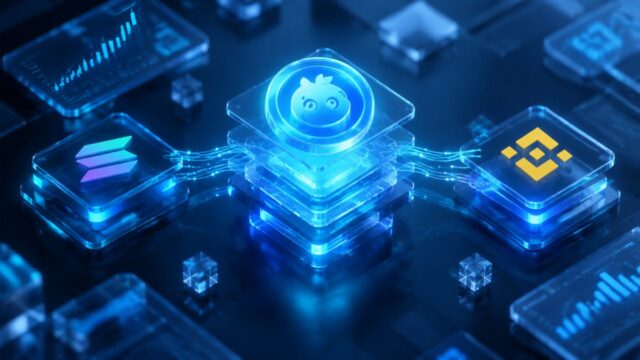
TREE NEWS reports: On August 19, B.AI announced that its DeepSeek-V4-Flash zero-barrier free access campaign surpassed 220 billion tokens in platform throughput within just 48 hours of launch. The platform reports surging activity, with all free compute resources fully utilized. Users can log in and immediately access unlimited calls to coding assistance, multi-agent orchestration, long-context processing, and high-concurrency API workflows — with B.AI covering all compute costs.
Industry Analysis
This milestone is not just a marketing win; it signals a strategic pivot in how AI infrastructure is being monetized and distributed in the Web3 ecosystem. By absorbing compute costs, B.AI is effectively commoditizing AI inference — a move that could reshape the economics of decentralized AI (DeAI) platforms.
- Compute as a Loss Leader: B.AI is betting that free AI access will drive user acquisition and token velocity, similar to how early DeFi protocols used yield farming to bootstrap liquidity.
- Tokenization of AI Resources: The integration of token incentives with AI compute hints at a future where GPU power, model access, and data are tokenized and traded on-chain.
- Competitive Pressure: Established players like Fetch.ai and Bittensor face new competition from platforms that prioritize user experience over technical decentralization.
Implications for Crypto Markets
The 220B token throughput demonstrates real utility — a key differentiator in a market often criticized for speculative excess. If sustained, this could attract institutional interest in AI+Web3 narratives, driving capital into related tokens and infrastructure projects.
Forward-Looking Perspective
B.AI’s strategy may accelerate the mainstream adoption of decentralized AI by removing cost barriers. However, sustainability remains the critical question: Can tokenomics offset the high costs of free compute? The next few quarters will reveal whether this is a sustainable business model or a temporary promotional stunt.
As AI and crypto converge, we are likely to see more platforms experimenting with hybrid models — where usage generates token rewards that fund compute, creating a self-sustaining loop. B.AI’s early success could be a blueprint for the next generation of DeAI applications.