Arbitrum’s Revenue Soars on Robinhood Chain Rent, But Gas Fee Debate Sparks Feud
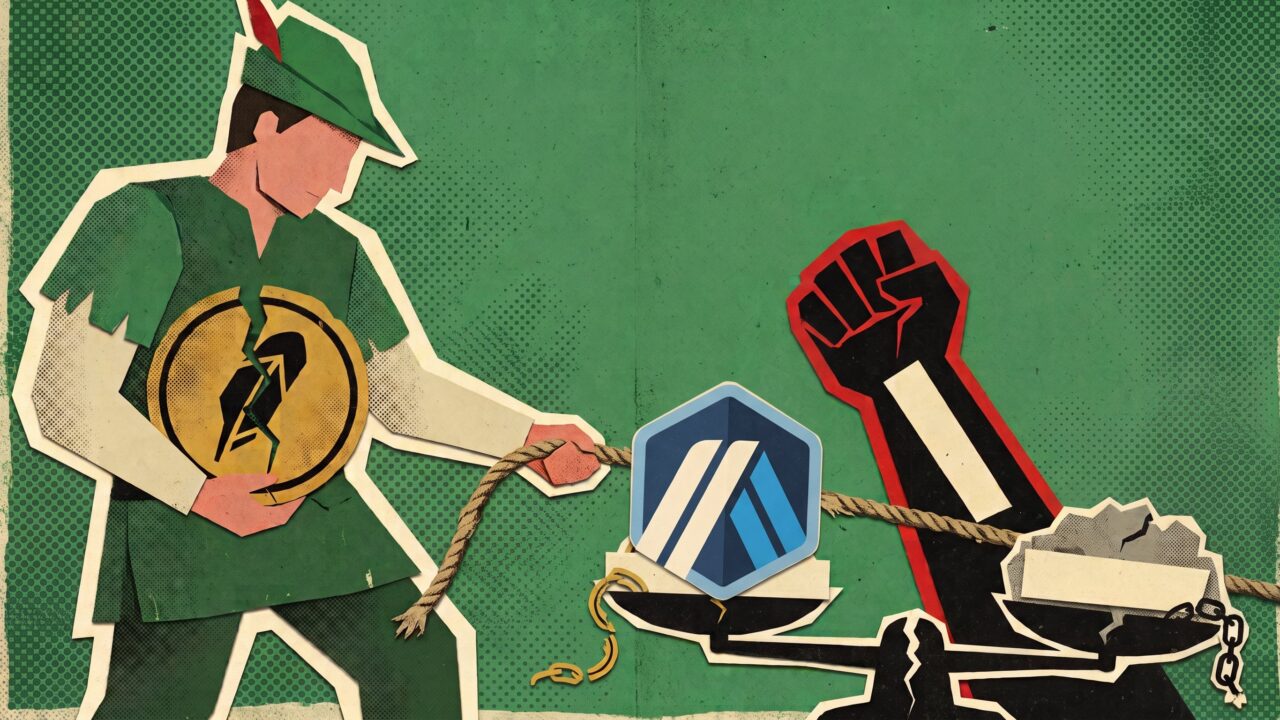
Arbitrum, the leading Ethereum layer-2 network, has seen its token price and protocol revenue skyrocket after Robinhood’s new blockchain, Robinhood Chain, began paying substantial ‘rent’ to settle transactions on Arbitrum. Over the past two months, this arrangement has generated nearly as much revenue as Arbitrum earned in the entire previous year, propelling ARB’s price up over 135% in a month.
News Summary
Robinhood Chain, launched by the retail trading giant, leverages Arbitrum’s technology for its settlement layer. In exchange, Robinhood pays Arbitrum a fee for each block or transaction batch settled, effectively renting Arbitrum’s security and decentralization. This unexpected revenue stream has transformed Arbitrum’s financial outlook, with daily fees and revenue metrics hitting all-time highs.
However, the high gas fees associated with Robinhood Chain have ignited a public spat between Solana and Arbitrum co-founders. Solana’s Anatoly Yakovenko criticized the business model as ‘brain-damaged’, arguing that charging high fees for basic settlement contradicts the ethos of open, low-cost blockchains. Arbitrum’s Steven Goldfeder defended the model, emphasizing that value creation and sustainability are essential for long-term protocol health.
Industry Analysis and Implications
This development underscores a growing trend: established platforms seeking to leverage existing blockchain infrastructure rather than building from scratch. Robinhood’s choice to piggyback on Arbitrum not only saves development costs but also instantly inherits a mature ecosystem and security guarantees. For Arbitrum, this represents a novel ‘B2B’ revenue model, distinct from traditional user-driven gas fees.
Yet, the controversy highlights a philosophical divide. Solana champions ultra-low fees to maximize user adoption, viewing high gas as a tax on innovation. Arbitrum, however, is demonstrating that layer-2 solutions can thrive by serving institutional clients who prioritize reliability and are willing to pay a premium. This could reshape how we value blockchain networks—not just by user activity, but by the quality and size of enterprise partnerships.
The ARB token’s rally reflects market approval of this revenue diversification. However, reliance on a single major client like Robinhood introduces concentration risk. If Robinhood were to migrate to a cheaper alternative or build its own chain, Arbitrum’s revenue could plummet just as quickly as it rose.
Forward-Looking Perspective
Looking ahead, this partnership may catalyze more traditional financial institutions to adopt existing layer-2 solutions, accelerating the tokenization of real-world assets and institutional DeFi. The debate between low-fee mass-market chains and premium enterprise-focused layers is likely to intensify as more players enter the space.
Arbitrum’s challenge will be to diversify its client base and ensure that its infrastructure remains attractive beyond the Robinhood honeymoon period. For the broader crypto ecosystem, this episode illustrates that sustainable revenue models can emerge beyond speculative trading, potentially paving the way for more robust valuation frameworks for layer-2 tokens.