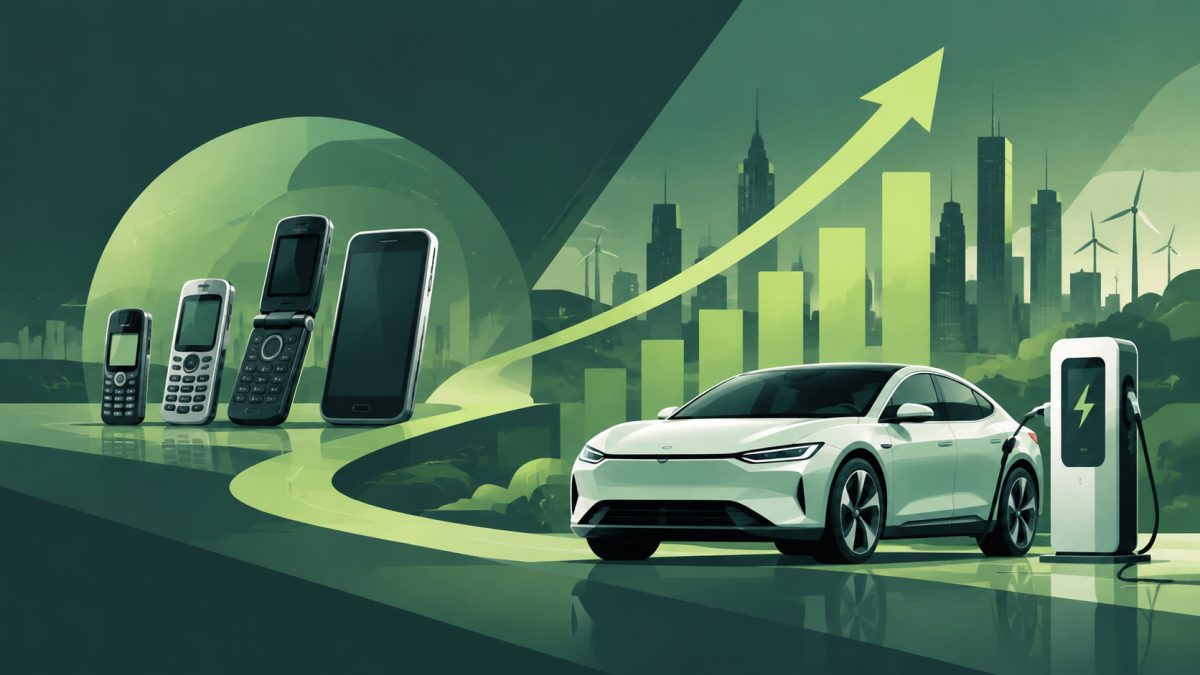
Smart Auto’s Chairman: China’s EV Industry Is Like the Handset Market in 2004-05, Structural Shift Just Beginning
TREE NEWS reports: In an exclusive interview with a leading financial media outlet, Guo Rui, chairman of Smart Auto (Zhipeng), argued that China’s intensely competitive electric vehicle (EV) market is still in its early structural transformation phase—comparable to the feature-phone industry in 2004-05, before smartphones rewrote the rules. His comments come as Smart Auto opened reservations for its new RX model, a vehicle designed with a focus on long-term value, chassis engineering, and AI-driven manufacturing rather than just exterior styling or price positioning.
What Is Smart Auto and Why Does It Matter?
Smart Auto, an EV brand backed by Huawei and Chery, has been positioning itself as a premium player in China’s crowded new-energy vehicle (NEV) market. The company’s chairman, Guo Rui, a former consumer electronics executive, draws direct parallels between the current EV landscape and the pre-smartphone era. He argues that just as feature phones competed on gimmicks (adding speakers, cameras, or extra accessories), many EV makers today are competing on superficial features—larger screens, more sensors, flashy designs—rather than foundational engineering and software integration.
Guo’s thesis is that the industry is at a turning point where the real competitive advantages will shift to areas like chassis dynamics, AI-driven manufacturing, and software-defined vehicle architecture. He emphasizes that Smart Auto’s RX model, which uses a four-ball-joint virtual kingpin suspension and advanced die-casting techniques, is built for this future—one where vehicles are not just transportation devices but spaces that adapt to changing human needs.
Market Impact: What Does This Mean for Investors?
Guo’s comments arrive at a time when China’s EV market is experiencing brutal price wars, thinning margins, and a wave of consolidation. His perspective offers several key signals for investors:
- Shift from Hardware to Software and AI: The next phase of competition in China’s EV market may move beyond battery range and autonomous driving features to include AI-driven manufacturing, over-the-air (OTA) updates, and integrated software platforms. Companies that can master these areas could see long-term margin expansion.
- Premiumization Through Engineering: Guo’s emphasis on chassis tuning, ride quality, and build integrity—rather than just price—suggests that consumer preferences are maturing. This could benefit automakers that invest in R&D and quality, potentially supporting higher price points and brand loyalty.
- AI’s Role in Production: The chairman’s discussion of using AI for vehicle testing and manufacturing processes highlights a growing trend: AI is not just for autonomous driving but also for improving production efficiency and reliability. This could lower costs over time, benefiting manufacturers that adopt these technologies early.
- Potential for Industry Consolidation: The comparison to 2004-05 handsets implies that many current EV players may not survive the transition. Investors should be cautious about companies that rely purely on cost-cutting or me-too features without a clear technological moat.
Broader Macro Context
This story is part of a larger narrative about China’s transition from a manufacturing economy to one driven by high-tech innovation. The EV sector is a key pillar of this strategy, with government support and aggressive corporate investment. Guo’s comments suggest that despite current overcapacity and price competition, the industry’s structural growth story remains intact—but the winners will be those who can navigate the shift from hardware-centric to software- and AI-centric value creation.
Key Takeaways for Investors
- Look Beyond the Hype: When evaluating Chinese EV makers, focus on their ability to integrate AI, software, and advanced manufacturing rather than just vehicle specs or sales numbers.
- Watch for Premiumization Trends: If consumers increasingly value driving dynamics and build quality, companies that can deliver these attributes may command better pricing power.
- Consider Supply Chain Implications: The emphasis on AI in manufacturing could boost demand for industrial AI solutions, robotics, and advanced materials, creating opportunities in adjacent sectors.
- Prepare for Volatility: As the industry shakes out, expect continued market volatility, but also long-term opportunities for well-positioned players.
Guo’s message is clear: the EV revolution is just beginning, and the next decade will reward those who build for the future, not those who merely mimic the present.



