Intel Raises CPU Prices Another 10%, Plans to Phase Out Low-Margin Products
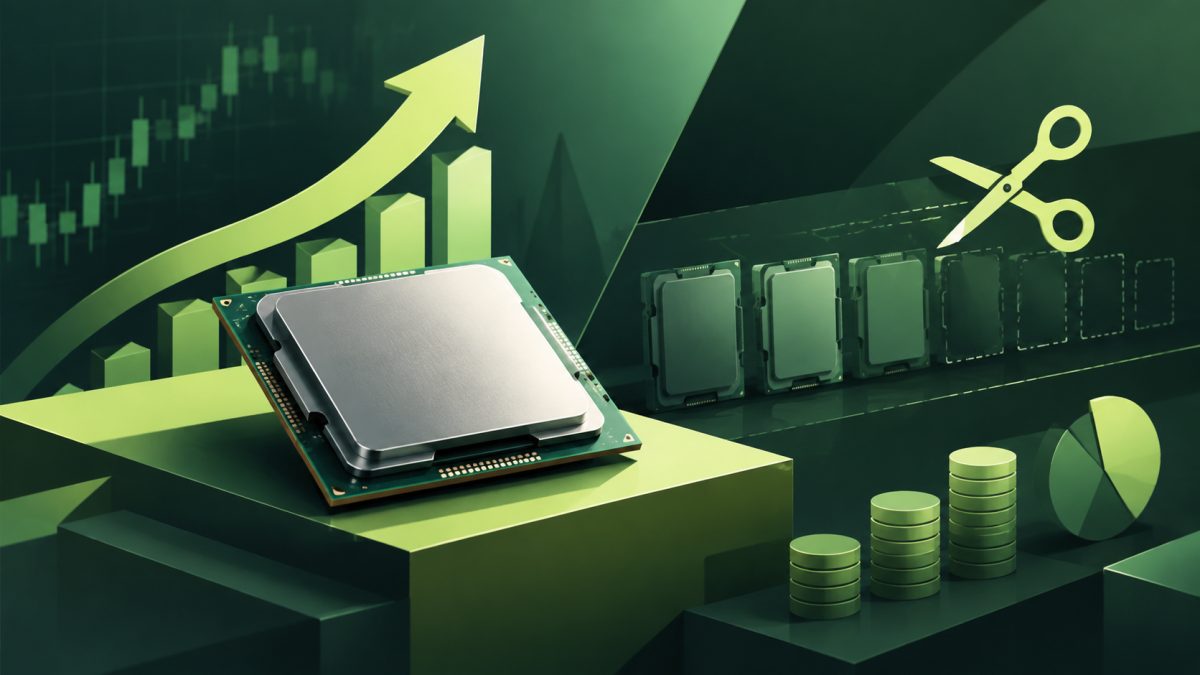
TREE NEWS reports: Intel is set to increase prices on its PC CPUs by approximately 10% on October 5, 2026. This marks the third round of price hikes since late 2025, following a ~10% increase in Q1 2026 and another rise in July affecting both consumer and server CPUs. Simultaneously, CEO Lip-Bu Tan is reviewing the low-margin Small Core product line, with some products potentially entering End-of-Life (EOL) status. These moves are aimed at boosting overall gross margins, signaling a strategic pivot away from a volume-at-all-costs approach.
Market Impact Analysis
Stocks: Mixed Signals for Intel and Competitors
Intel’s margin-focused strategy could improve its profitability metrics, potentially attracting investors who have been wary of its declining market share. However, the price hikes may further erode its competitive position against AMD and ARM-based rivals like Qualcomm and MediaTek. The decision to cut low-margin products in industrial PC (IPC), IoT, and embedded markets could open doors for these competitors, possibly impacting Intel’s long-term revenue diversification. For the broader semiconductor sector, Intel’s pricing power suggests strong demand in certain segments, which could be a positive signal for suppliers.
Bonds: Limited Direct Impact
Intel’s corporate bonds may see modest movement based on its financial outlook. A successful margin improvement could strengthen its credit profile, while potential market share losses might raise concerns. However, the immediate impact on the bond market is likely minimal.
Crypto and Commodities: Negligible Effect
This news has no direct bearing on cryptocurrencies or commodities. The indirect effect could come from shifts in tech sector sentiment, but it’s unlikely to move these markets significantly.
Currencies: Minor Influence
Given Intel’s global supply chain and sales footprint, its pricing strategy could have a slight impact on trade flows, particularly in Asia where many PC manufacturers are based. However, any currency movements would be overshadowed by broader macroeconomic factors.
Context and Investor Takeaways
Intel’s pivot to prioritizing margins over market share marks a significant strategic shift. The company is betting that a leaner, more profitable CPU business will better position it for long-term competition, especially as it navigates manufacturing challenges with its 18A and 14A process nodes. The global PC market is expected to remain stable at around 250-260 million units annually, and Intel aims to reclaim a ~78% market share while raising average selling prices.
For investors, key points to watch include: 1) Whether the price hikes stick without accelerating share losses to AMD and ARM-based competitors. 2) The success of Lip-Bu Tan’s organizational restructuring, which has already reduced management layers from 12 to 6 and cut headcount to ~75,000, with potential further reductions of 5-10%. 3) Intel’s ability to resolve the server CPU manufacturing dilemma—whether to allocate more in-house fab capacity or outsource to TSMC to meet demand.
The decision to exit low-margin product lines could create a vacuum in IPC, IoT, and embedded markets, which ARM-based SoCs are well-positioned to fill. This may lead to increased competition and innovation in those segments. Intel’s focus on high-margin server CPUs, where it faces a capacity crunch, will be critical to its financial performance. The staggered product launches with AMD in 2027 could help maintain PC market momentum, benefiting the broader supply chain.
In summary, Intel is undergoing a fundamental transformation aimed at restoring profitability and competitiveness. While the immediate market reaction may be mixed, the long-term success of this strategy will depend on execution and the evolving competitive landscape.