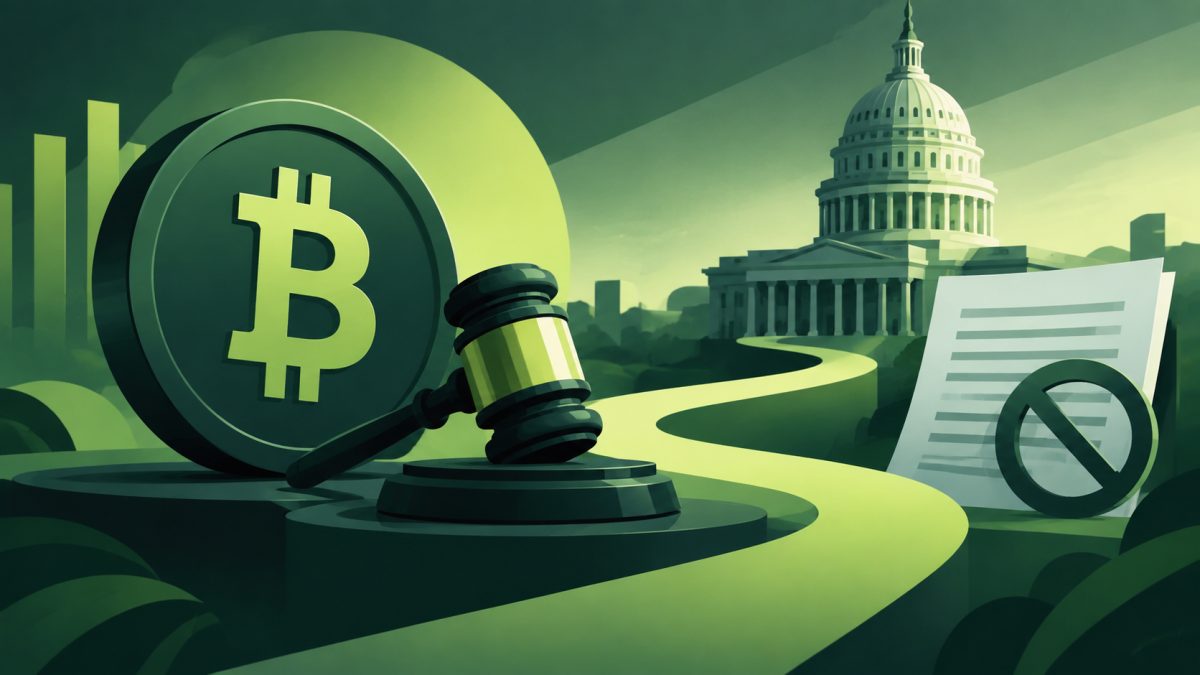
The CLARITY Act Faces a High Bar in the Senate
TREE NEWS reports: The US crypto market-structure bill known as the CLARITY Act is set for a procedural vote in the Senate on September 15, and it needs 60 votes to advance. With Republicans holding 53 seats, passage will require Democratic support. Prediction markets currently assign a low probability to the bill becoming law by 2026.
Grayscale research head Zach Pandl argues that a stalled CLARITY Act would not mean a stalled regulatory agenda. In his view, US crypto oversight is already becoming clearer across several fronts, even without comprehensive market-structure legislation.
Four Fronts Where the Rules Are Already Sharpening
- Payment stablecoins: The GENIUS Act has established a federal framework for payment stablecoins, giving issuers a defined compliance path.
- Token issuance: Proposed SEC rules could offer a clearer route for token fundraising, reducing reliance on case-by-case enforcement.
- Tokenized securities: Regulatory expectations around tokenized securities are gradually taking shape, bridging traditional finance and on-chain markets.
- Perpetual futures: The CFTC has opened regulated channels for perpetual futures through venues including Kalshi and Coinbase.
Why This Matters for the Market
The practical effect is that crypto businesses may no longer need to wait for one sweeping bill to plan products and compliance. Stablecoin issuers, tokenization platforms, and derivatives exchanges can increasingly build against existing or proposed frameworks. That reduces the binary risk that has long hung over US crypto policy, where a single legislative failure could freeze entire business lines.
It also shifts the political calculus. If regulators continue to advance rules through agencies and existing statutes, the CLARITY Act becomes less of a make-or-break event and more of a consolidation exercise. For institutional allocators, that is a meaningful change: the US is no longer a pure regulatory question mark, even if it remains a patchwork.
The Road Ahead
The September 15 vote will be closely watched, but its failure would not end the story. The more important trend is the accumulation of sector-specific rules — stablecoins, issuance, tokenized securities, and perpetuals — that together form a de facto framework. The next test is whether these piecemeal rules cohere into something durable that courts and future administrations will respect. Until then, expect US crypto regulation to keep advancing in fragments rather than in one grand bargain.