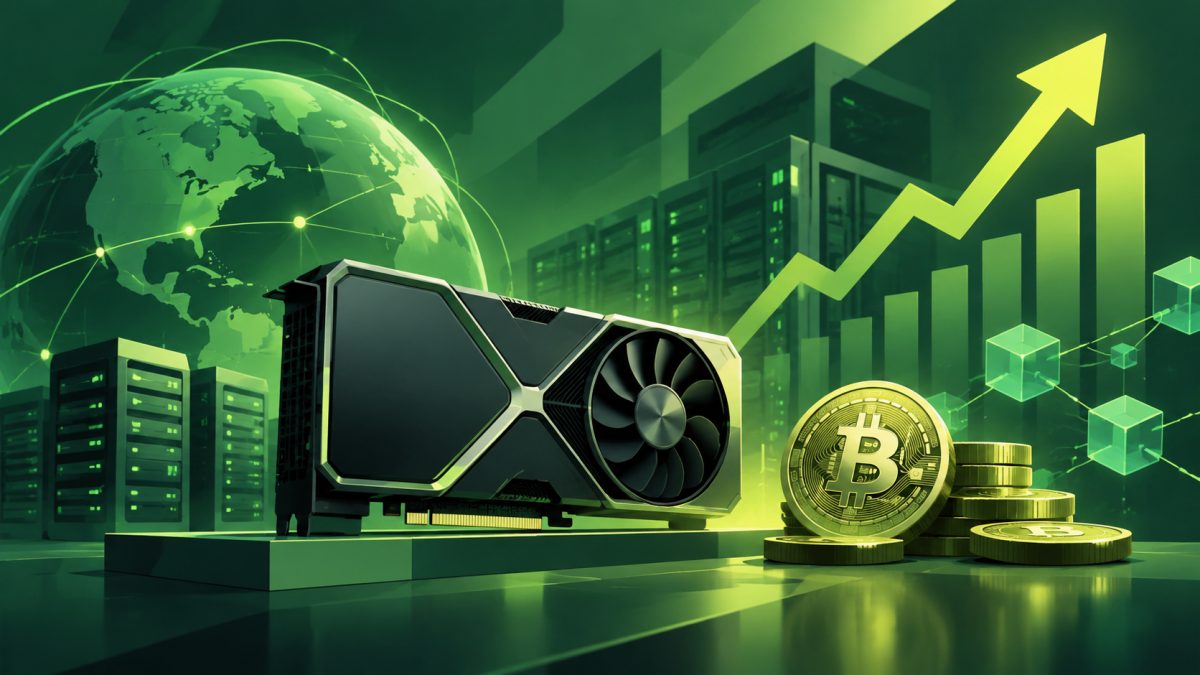
Huang: 70% Growth Is a Supply Ceiling, Not a Demand Ceiling
TREE NEWS reports: Nvidia CEO Jensen Huang used his appearance at a major Wall Street technology conference to push back hard against critics who describe the company’s sprawling AI investment ecosystem as circular financing, while reaffirming that AI infrastructure spending is accelerating rather than cooling. Speaking with analysts, Huang reiterated that the AI infrastructure market will reach $3 trillion to $4 trillion by 2030, and said Nvidia’s roughly 70% year-over-year revenue growth target for its fiscal 2027 is capped by supply, not demand. Analysts model Nvidia revenue near $400 billion this fiscal year, implying roughly $680 billion next year at that growth rate.
Addressing the Circular-Financing Question
The controversy stems from an Nvidia compute-financing platform announced in August with Apollo, BlackRock, Blackstone, Brookfield, Goldman Sachs and KKR, aiming to raise more than $500 billion in third-party capital for AI model developers to build infrastructure. Critics worry Nvidia invests in AI companies or cloud providers that then buy Nvidia hardware, blurring the line between investment and sales — a pattern that felled suppliers like Lucent in the last internet buildout. Huang countered with a blunt financial argument: “We put in $1 and get back $100. Is that circular financing? If so, let’s do more of it.” He said Nvidia verifies that investees hold real contracts generating customer revenue before committing capital, and that he has seen roughly $100 billion of such contracts.
SpaceX, Cybersecurity and the Broader AI Stack
SpaceX CFO Bret Johnsen positioned the company as an integrated AI infrastructure platform spanning rockets, power, compute, AI models and Starlink connectivity. He said compute economics are at the high end of a $30 billion to $50 billion per gigawatt range, that confidence in reaching a $100 billion annualized revenue run rate by year-end has strengthened, and that orbital AI satellites are planned for 2027, with orbital compute costs expected to approach ground-based parity sooner than previously thought. Compute scale is projected to exceed 2GW by end-2026 and reach 5-10GW by end-2027.
Cybersecurity emerged as the conference’s most repeated theme. Huang called it AI’s next major application, arguing that faster code generation accelerates exploitation and remediation demand. Palo Alto Networks CEO Nikesh Arora said the AI security industry “has not even been built yet,” citing 180 million deployed sensors processing 19PB daily. CrowdStrike CEO George Kurtz highlighted a decade-plus of proprietary labeled security data and a domain-specific model costing about $0.03 per remediation versus roughly $10 for frontier alternatives. Together the two firms carry a combined market value near $490 billion — a notable gap versus trillion-dollar AI names.
Semis, Storage and Cloud ROI
Lam Research CFO Doug Bettinger said the semiconductor equipment industry is “basically sold out,” with management more worried about missing upside than managing a downturn. Lam expects 2027 wafer fab equipment spending led by DRAM, with cleanroom availability a key constraint through 2027. Seagate CFO Gianluca Romano said AI-driven storage demand against limited supply will keep pricing rising, with per-exabyte prices up about 11% year over year. Uber, MongoDB and Mastercard executives each detailed AI-driven growth vectors, from autonomous commercialization targets to agent-driven developer workflows and digital-native payment flows.
Market Implications
- Equities: Affirmations of supply-constrained growth support semis, networking, memory and power infrastructure names, while the ROI debate keeps pressure on hyperscalers to show durable enterprise revenue.
- Rates and credit: A $500 billion private-credit financing platform ties AI capex deeper into credit markets, making spreads and refinancing conditions a new transmission channel for AI sentiment.
- Cybersecurity: The valuation gap versus mega-cap AI could invite re-rating if AI-driven attack surfaces translate into durable budgets.
- Commodities and power: Persistent bottlenecks in electricity, memory and data-center capacity imply sustained demand for power, cooling and grid equipment.
- Crypto: Decentralized compute and GPU networks may benefit rhetorically from scarcity narratives, but centralized capacity expansion remains the dominant force.
Key Takeaways for Investors
The AI trade is shifting from model capability to infrastructure scale, power and return on investment. Supply constraints through 2028 argue for pricing power across chips, memory and equipment, but the central test remains whether hyperscaler capex backlogs convert into persistent enterprise revenue, margins and cash flow. Investors should watch contract visibility, financing structures and power availability as the new leading indicators.