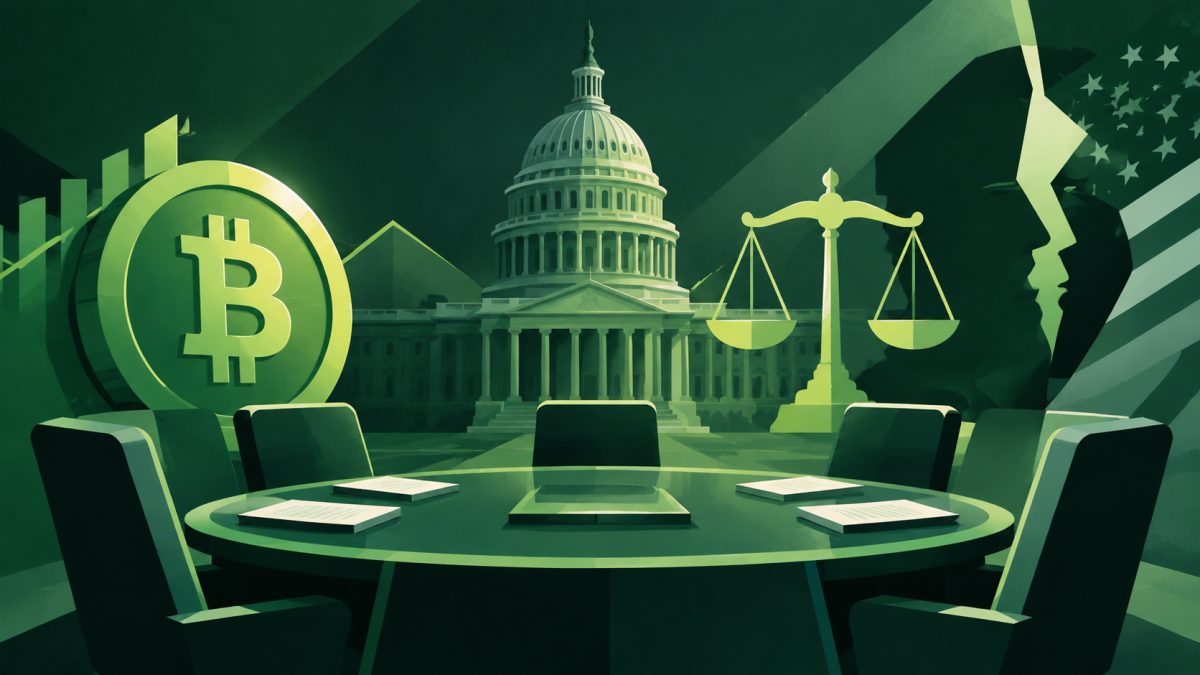
Senate Democrats Huddle on CLARITY Act as Trump Crypto Ethics Fight Threatens Key Vote
TREE NEWS reports: Senate Minority Leader Chuck Schumer has called a Sunday evening caucus meeting to discuss the CLARITY Act, the digital asset market-structure bill scheduled for a procedural vote on Tuesday. Convening the caucus before a major floor vote is standard practice, but the outcome of Tuesday’s vote remains uncertain.
Roughly a dozen Democrats have negotiated over the bill for months, yet three categories of issues remain unresolved, and it is unclear whether they can be settled before the vote. Democrats are demanding an ethics provision aimed at curbing President Donald Trump’s ability to profit from his family’s crypto ventures. Republicans counter that Democrats should vote to advance the bill and continue negotiating during full Senate consideration.
Why the Procedural Vote Matters
The CLARITY Act is the most consequential market-structure legislation for digital assets to reach the Senate floor. It would draw clearer lines between securities and commodities oversight, a question that has driven enforcement actions and compliance uncertainty across U.S. crypto markets for years. A successful procedural vote would keep the bill alive; a failed one could stall comprehensive crypto legislation into the next Congress.
The ethics standoff adds a political layer that is unusual for a technical market-structure bill. Democrats argue that any framework expanding digital asset markets must include guardrails against conflicts of interest at the highest levels of government. Republicans frame the demand as a delay tactic that could sink a bill with genuine bipartisan support.
Industry Implications
- Regulatory clarity at stake: Exchanges, token issuers and DeFi protocols have long sought statutory definitions for when a digital asset is a security versus a commodity. The CLARITY Act could provide that framework.
- Enforcement risk: Without legislation, agencies will continue to set policy through case-by-case enforcement, keeping compliance costs high and innovation offshore.
- Political risk premium: The Trump family crypto business angle means the bill is now entangled with election-season politics, raising the odds of last-minute amendments or a stalled vote.
- Market sentiment: Crypto markets have historically rallied on signs of U.S. regulatory progress. A failed procedural vote could weigh on sentiment, particularly for U.S.-listed exchanges and token issuers.
What to Watch
Tuesday’s vote is the immediate test. If the bill advances, expect amendments on ethics, DeFi treatment and stablecoin oversight during floor debate. If it fails, the focus shifts to whether leadership schedules a second attempt or pivots to narrower bills. Either way, the episode shows that crypto policy in Washington is no longer just a technical debate — it is now a partisan and ethical battleground.



