Derive Moves to Sunset Its Own Chain, Betting on zkVM and Ethereum L1 Settlement
TREE NEWS reports: The Derive community has introduced a new DIP proposal that would deploy and activate Derive V3, migrate all V2 positions and balances into the V3 genesis state, move bridge funds to L1, and gradually shut down Derive Chain. V3 is described as a zero-knowledge exchange built on zkVM that settles on Ethereum mainnet, using off-chain matching with ZK-proven risk and settlement mechanics.
What the Proposal Actually Changes
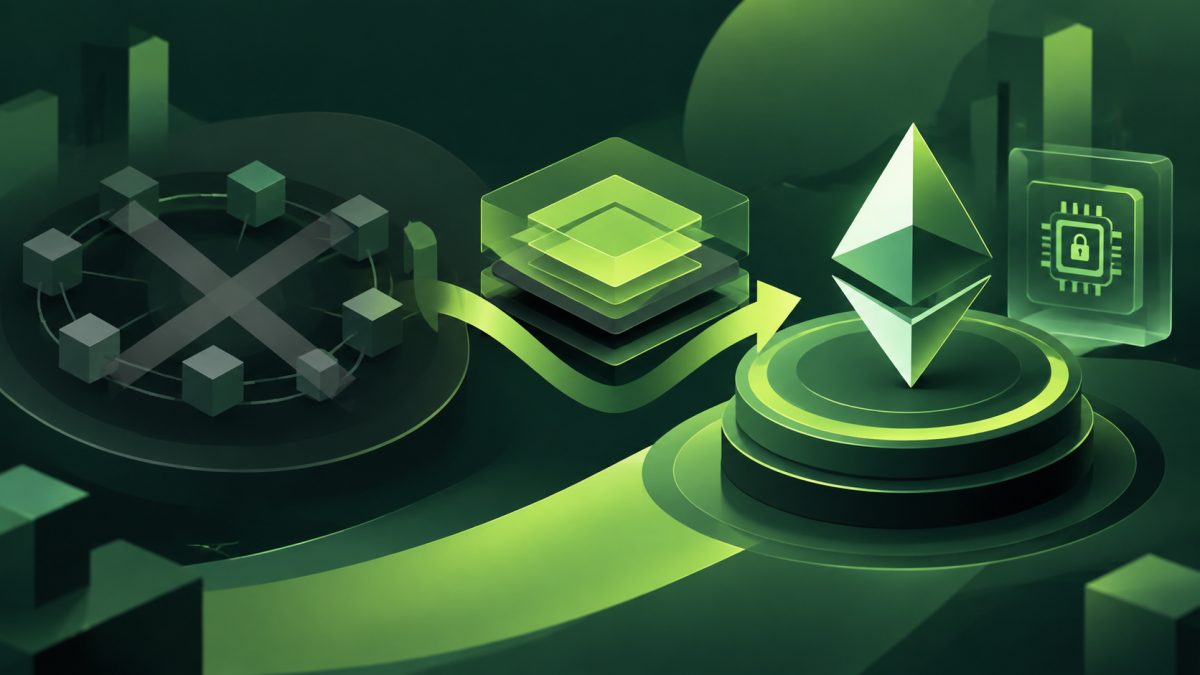
Under the plan, computationally intensive tasks — margin calculations, pricing, and settlement — would execute inside a zkVM and be proven off-chain. Ethereum L1 would only verify proofs, while state differences would be published to Celestia to guarantee data availability. The migration would fold all V2 positions and balances into a V3 genesis state, and bridge liquidity would be relocated to L1 rather than kept on a dedicated appchain.
Why This Matters for DeFi Infrastructure
Derive’s move is a notable reversal of the 2021–2023 appchain thesis, in which DeFi protocols launched sovereign chains to capture blockspace, fees, and validator economics. Instead, Derive is betting that zero-knowledge proofs have matured enough to let a derivatives venue keep its own execution environment while inheriting Ethereum’s security and liquidity. That trade-off matters for three reasons:
- Capital efficiency: L1 settlement and Celestia DA reduce the cost of bootstrapping a new chain’s validator set and bridge.
- Composability: Positions and collateral sitting closer to Ethereum L1 can plug into a broader DeFi liquidity base.
- Regulatory clarity: A single settlement layer may simplify compliance and audit trails compared with a fragmented multi-chain footprint.
The zkVM Bet
zkVM-based exchanges are still early. Proving margin and settlement logic off-chain introduces latency and prover-cost considerations that centralized order books do not face. If Derive can demonstrate that ZK-proven risk engines are fast and cheap enough for active derivatives trading, it could become a template for other perp DEXs weighing whether to abandon their own chains. If proving costs or latency remain high, the migration could expose V3 to throughput constraints during volatile markets.
Forward-Looking Perspective
The proposal is ultimately a governance test: can a protocol community agree to retire its own chain and re-platform onto Ethereum-centric infrastructure? If approved and executed cleanly, Derive V3 would be one of the clearest real-world validations of the zkVM thesis and a signal that appchain consolidation is accelerating. The key milestones to watch are the vote outcome, the V2-to-V3 genesis migration mechanics, bridge fund relocation to L1, and the timeline for winding down Derive Chain.