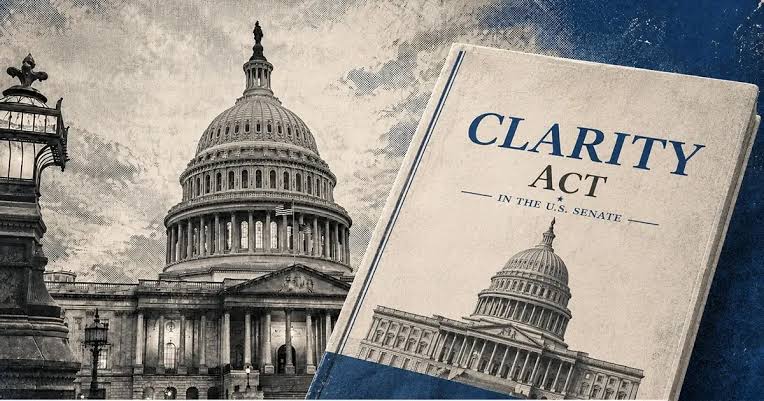
US Crypto Bill CLARITY Act Fails by 11 Votes as Industry Faces Regulatory Setback
The CLARITY Act, a landmark piece of US cryptocurrency legislation, has failed to advance after a crucial procedural vote ended debate on the bill. The motion fell just 11 votes short of the required threshold, delivering a significant blow to an industry that had hoped for long-awaited regulatory clarity. The bill, which aimed to establish a comprehensive framework for digital assets, had already undergone substantial revisions, including concessions from former President Donald Trump on ethics provisions.
What the Bill Proposed
The CLARITY Act sought to delineate the regulatory boundaries between the Securities and Exchange Commission (SEC) and the Commodity Futures Trading Commission (CFTC), providing a clear path for token classification. It also addressed stablecoin oversight, DeFi protocol definitions, and the treatment of crypto assets held by government officials. Despite bipartisan support in some quarters, the bill faced resistance over several unresolved issues.
Key Sticking Points
- Ethics and Official Crypto Holdings: Even after Trump agreed to compromise on roughly 80% of the ethics clauses, disagreements remained over how government officials should disclose and manage their crypto assets.
- Stablecoin Impact on Banks: Traditional financial institutions expressed concerns that stablecoin regulations could disrupt banking deposits and monetary policy transmission.
- DeFi Regulatory Boundaries: Defining which decentralized finance activities fall under federal oversight proved contentious, with industry advocates warning of overreach.
The failure to advance the bill leaves the US crypto market without a unified federal framework, forcing projects and exchanges to navigate a patchwork of state and agency-level rules. Market sentiment soured following the vote, with major tokens dipping as investors priced in prolonged uncertainty.
Industry Implications
The defeat underscores the difficulty of legislating in a polarized political environment, even with a high-profile advocate in Trump. Crypto firms that had delayed US expansion plans in anticipation of the bill may now reconsider their strategies. Meanwhile, regulatory agencies are likely to continue enforcing existing laws, creating a challenging environment for compliance teams.
Looking ahead, the bill’s supporters may attempt to revive it in a future session, but the narrow margin suggests that any renewed effort will require broader concessions. For now, the crypto industry must brace for continued regulatory ambiguity, with state-level initiatives and court rulings filling the void. The 11-vote shortfall will be remembered as a pivotal moment in the quest for US crypto clarity.