Zcash as the ‘Privacy Bitcoin’ — A Repricing Thesis
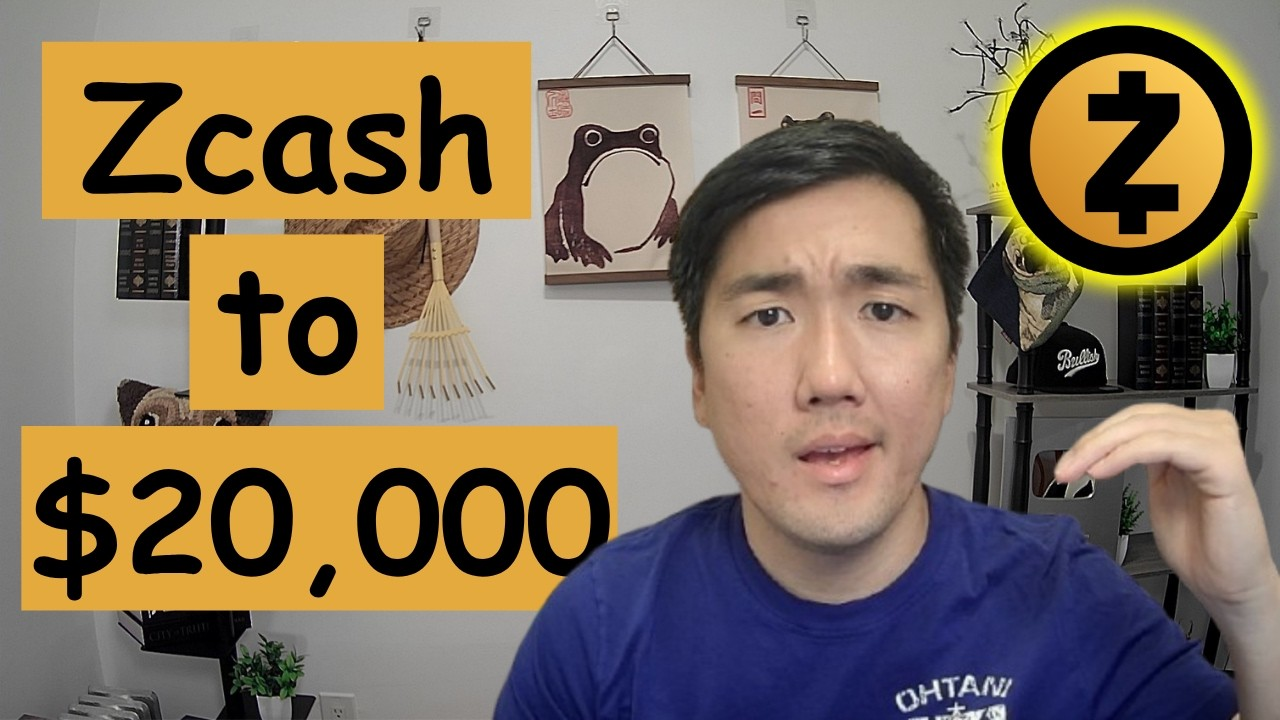
TREE NEWS reports: Veteran crypto trader Taiki Maeda, who runs the HFA Research YouTube channel, went on record this week with an aggressive bull case for Zcash (ZEC), arguing that privacy-preserving store-of-value assets are being systematically repriced. ZEC has already surged from roughly $800 to near $1,500 in a matter of weeks, and Maeda believes the move is only the beginning.
The Core Argument
Maeda’s thesis rests on a simple valuation gap: Zcash currently represents just 1.8% to 1.9% of Bitcoin’s market capitalization. He argues this should be repriced to 10%, 20%, or even 30% as the market matures and privacy becomes a premium feature rather than a niche concern.
- Bear case: ZEC reaches 5% of BTC’s market cap — about $5,000 if BTC hits $100,000
- Bull case: 20% of BTC’s market cap — $20,000 per ZEC
- Mania peak: 30-50% of BTC’s market cap, though Maeda cautions against ‘moon boy’ thinking
Historical Precedents
Maeda points to Litecoin’s peak at 8% of Bitcoin’s market cap and Bitcoin Cash’s sustained 10-20% range as evidence that alt-L1 store-of-value assets can command significant relative valuations. Silver, he notes, represents roughly 13% of gold’s market cap — a physical-world analogy for the monetary premium that privacy could command.
The Reflexivity of Shielded Pools
The most compelling part of the thesis is what Maeda calls ‘reflexivity.’ Zcash’s shielded pool — where transactions are private — becomes more useful as it grows larger. A billionaire trying to hide $10 million in a $100 million pool would expose themselves; in a multi-billion-dollar pool, they’re invisible. Higher prices attract more capital, which deepens privacy, which attracts more capital. ‘Price itself is the fundamental,’ Maeda argues, drawing a direct parallel to Bitcoin’s own reflexive adoption cycle.
Quantum Computing and the Ossification Problem
Maeda also frames Zcash as a hedge against Bitcoin’s ‘ossification’ — the deliberate conservatism that makes BTC resistant to change but also vulnerable to quantum computing threats. Zcash’s developer community has shown willingness to upgrade, making it a more adaptive long-term store of value.
Risk Management and the ‘Next 2x’ Rule
Maeda is careful to outline his exit strategy. He uses a ‘next 2x’ framework based on ZEC/BTC market cap ratios: 1% to 2% was easy, 2% to 4% is manageable, but 4% to 8% gets harder. His first take-profit target is 3-4% of BTC’s market cap (roughly $2,400-$3,200 if BTC reaches $80,000), where he plans to deleverage and hold spot for long-term capital gains.
Forward-Looking Perspective
The broader implication is that the market may be entering a ‘K-shaped recovery’ where most altcoins die while a handful of differentiated assets — privacy coins, high-revenue DeFi protocols like Hyperliquid, and niche infrastructure plays — enjoy independent bull markets. If Maeda is right, Zcash’s repricing could signal a wider re-evaluation of privacy as a fundamental crypto primitive. But investors should note his own warning: ZEC will likely spike and then drop 80-90%, making disciplined profit-taking essential.