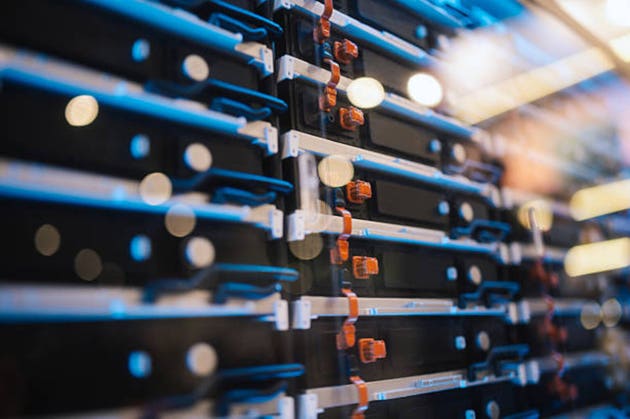
Anthropic in Talks to Cement Control Over Additional Data Centers
TREE NEWS reports: Anthropic is reportedly negotiating to secure control over additional data center capacity, a move that would deepen the AI developer’s grip on the physical infrastructure underpinning its large language models. The talks signal that leading AI labs are shifting from a pure software race to a land-grab for compute, power, and real estate — the scarce inputs of the generative AI era.
The reported discussions come as demand for training and inference capacity continues to outstrip supply across major cloud regions. Anthropic, which operates the Claude family of models, has relied on a mix of cloud partnerships and dedicated infrastructure to serve enterprise customers. Locking in more data center control would reduce its dependence on third-party providers and give it more predictable cost and performance characteristics.
Why This Matters Beyond Anthropic
This is not an isolated corporate maneuver. It reflects a broader structural trend: AI labs are vertically integrating into the compute stack. The companies that can secure long-term access to power, cooling, and advanced chips will be able to train larger models more cheaply and serve inference at scale. Those that cannot will face rising costs and capacity crunches.
For markets, the implications ripple across several asset classes:
- US equities: Data center REITs, power utilities, electrical equipment makers, and semiconductor suppliers stand to benefit from sustained AI capex. Hyperscalers and colocation providers may see pricing power strengthen. Conversely, any sign that AI infrastructure spending is slowing would hit these names hard.
- Bonds: The AI buildout is capital-intensive and increasingly financed with debt. Heavy issuance from data center operators and utilities could pressure credit spreads in the sector, though strong demand for AI-linked paper has so far absorbed supply.
- Commodities: Power is the new bottleneck. Natural gas, uranium, and copper — critical for generation, nuclear fuel, and wiring — are direct beneficiaries of data center expansion. Electricity prices in key hubs like Northern Virginia and Texas are already reflecting the strain.
- Crypto: Bitcoin miners with secured power contracts and land banks are increasingly positioned as AI hosting providers, converting their energy infrastructure into GPU-ready sites. This convergence has already re-rated several mining stocks and could accelerate if AI labs keep buying capacity.
- Currencies: The dollar remains the default funding currency for US tech capex, but sustained AI-driven investment could widen the US current account deficit over time, a slow-burn negative for the greenback.
The Compute Scarcity Trade
Investors have spent two years chasing AI software winners. The next phase may reward the owners of physical bottlenecks: power, land, cooling, and chips. Anthropic’s reported move is a reminder that the AI economy is ultimately an energy and infrastructure economy. Companies that control scarce capacity can dictate terms, while those that rent it face margin pressure.
Watch for follow-on deals from other labs. If Anthropic, OpenAI, and Google DeepMind are all racing to lock up capacity, the market for data center assets, power purchase agreements, and advanced packaging capacity will stay tight — and the associated equities will stay bid.
Key Takeaways
- Anthropic is reportedly negotiating to control more data center capacity, reinforcing the AI infrastructure land-grab.
- Beneficiaries span data center REITs, utilities, electrical equipment, semiconductors, uranium, natural gas, and copper.
- Bitcoin miners with power contracts are emerging as AI hosting plays, blurring the crypto-AI boundary.
- Rising debt issuance from AI infrastructure could become a credit story to monitor.
- The core investment thesis is shifting from AI software to AI bottlenecks: power, land, and compute.