Oil Prices Retreat as Traders Weigh a Phased End to Conflict
TREE NEWS reports: Oil prices fell on Friday as markets assessed the possibility of a US-Iran ceasefire, even as escalating Houthi attacks on Saudi Arabia raised concerns about disruptions to supply from the Middle East’s largest producer. The move followed a week of violent swings across energy markets.
People close to the discussions said negotiators meeting in New York this week explored a phased path to ending the conflict, including Tehran reopening the Strait of Hormuz and Washington lifting its economic blockade on Iran. Iranian President Masoud Pezeshkian said on Thursday that when the war ends still depends on decisions made in Washington.
Physical Flows Tell a Different Story
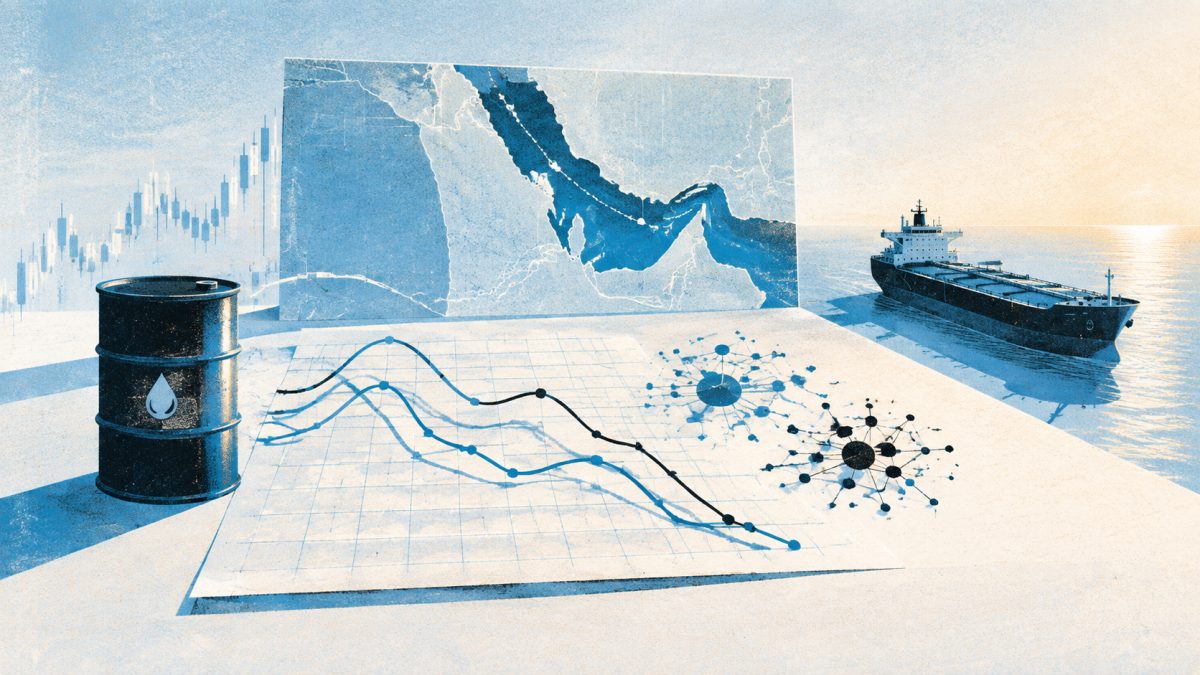
Whatever the diplomatic signals, the physical picture remains brittle. Ship-tracking data showed only 10 commodity vessels transiting the Strait of Hormuz on Wednesday, up from seven the previous day but still well below the roughly 17 per day averaged over the prior 10 days. That gap matters: Hormuz carries a substantial share of global seaborne crude and liquefied natural gas, and any sustained drop in transits translates quickly into higher freight and insurance costs.
The divergence between headline-driven price moves and real flows is the key tension for traders. Markets are pricing optimism about a deal, while tanker counts, war-risk premiums and rerouting behavior reflect caution. That mismatch tends to resolve violently in one direction or the other.
Why This Matters Beyond Energy
For digital-asset markets, the transmission channel runs through macro liquidity and risk appetite rather than direct exposure:
- Inflation and rates: A sustained oil spike revives headline inflation, complicating the rate-cut path and pressuring duration-sensitive assets, including crypto.
- Dollar and risk beta: Energy-driven dollar strength historically coincides with tighter conditions for high-beta assets. A credible de-escalation would do the opposite.
- Mining economics: Higher energy costs squeeze bitcoin miners’ margins, particularly operators with unhedged power contracts.
- Stablecoin and settlement flows: Gulf corridors are increasingly relevant for cross-border digital settlement, and shipping disruption raises the value of alternatives to traditional correspondent banking.
What to Watch
Three signals will determine whether Friday’s decline becomes a trend or a headwind. First, daily Hormuz transit counts — a return toward the 17-vessel average would validate the diplomatic track. Second, Houthi attack tempo against Saudi infrastructure, which could offset any Iranian de-escalation. Third, whether Washington offers concrete sanctions relief, since Tehran has tied its own steps to US decisions.
Until flows normalize, expect oil to trade headline-to-headline, with macro assets — crypto included — inheriting the volatility rather than driving it.