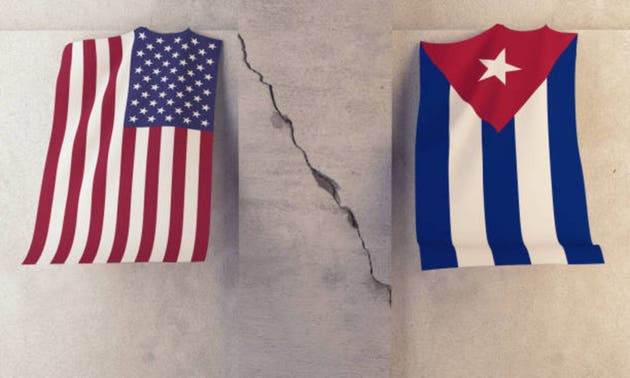
US Army Reserve Seeks Feedback on Potential Cuba Contingency
TREE NEWS reports: The U.S. Army Reserve has circulated an internal request for feedback on its potential readiness for operations related to Cuba. The inquiry, which appears to be a planning and assessment exercise rather than a deployment order, asks reserve units to evaluate their capacity to respond to a possible contingency in the Caribbean. The news lands at a moment of heightened geopolitical tension, with Washington already managing multiple foreign policy fronts and markets sensitive to any signal of new military engagement.
While no troop movements or formal mobilization have been announced, the mere fact that the Army Reserve is soliciting readiness input suggests the Pentagon is at least stress-testing scenarios involving the island nation. Cuba sits just 90 miles off the Florida coast, controls the Straits of Florida — a key shipping lane — and hosts a Russian naval presence that has made periodic port calls in recent years. Any escalation there would immediately touch U.S. national security, energy logistics, and hemispheric politics.
Why This Matters Now
The timing is notable. Markets have been focused on inflation data, central bank policy, and the trajectory of the U.S. dollar. A new geopolitical flashpoint in the Western Hemisphere would add a layer of uncertainty that portfolio managers have not had to price in for decades. Cuba-related tensions have historically been low-probability, high-impact events — the kind that generate volatility spikes without necessarily changing long-term fundamentals.
Investors should also note that this is a readiness assessment, not a combat order. The U.S. military routinely conducts contingency planning for dozens of scenarios. The signal here is not imminent conflict, but rather that policymakers are actively modeling a wider set of risks.
Market Implications
- Equities: Defense contractors could see modest bid interest if tensions escalate, particularly shipbuilders, aerospace, and logistics firms with Navy exposure. Broad indices would likely take a short-term hit on any headline suggesting military action, with cyclical and travel-related names most exposed.
- Bonds: Treasuries would be a natural safe-haven destination. A flight-to-quality move could push yields lower, especially at the front end of the curve, even as the Fed remains data-dependent.
- Crypto: Bitcoin and major tokens have increasingly traded as risk assets, though they can also act as a geopolitical hedge in certain regimes. Expect short-term correlation with the Nasdaq, with possible decoupling if the dollar weakens on risk-off flows.
- Commodities: Oil and refined products would be the most sensitive. Any disruption to Caribbean or Gulf shipping lanes, or a perceived threat to regional stability, would lift crude and freight rates. Gold would likely catch a safe-haven bid.
- Currencies: The U.S. dollar could strengthen on safe-haven demand, pressuring emerging-market currencies, particularly those in Latin America and the Caribbean. The Mexican peso and Brazilian real would be among the first to react.
Context for Investors
Cuba has been a recurring irritant in U.S. foreign policy for over sixty years, but it has rarely been a primary driver of global markets. That could change if the current assessment evolves into something more concrete. The key question for investors is not whether the U.S. will act, but whether the market begins to price in a higher probability of disruption.
For now, the appropriate response is measured: monitor headlines, avoid overreacting to a single report, and consider whether existing portfolios have adequate exposure to safe-haven assets. Defense, energy, and gold have historically performed well during geopolitical escalations, while emerging-market and travel-linked equities tend to underperform.
Key Takeaways
- The U.S. Army Reserve is assessing readiness for a potential Cuba contingency — a planning signal, not a deployment order.
- Geopolitical risk in the Western Hemisphere could add volatility to equities, bonds, crypto, commodities, and currencies.
- Safe-haven assets — Treasuries, gold, the dollar — are likely to benefit if tensions escalate.
- Defense and energy names could see upside; travel and emerging-market assets are most at risk.
- Investors should treat this as a tail-risk event to monitor, not a reason to overhaul portfolios.



