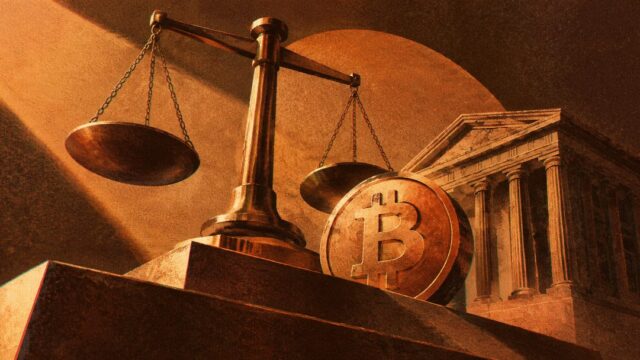
The Architect of Crypto’s Regulatory Bridge Departs
Hester Peirce, the SEC commissioner known across the industry as “Crypto Mom,” has left the agency after nearly eight years, returning to academia. Her departure leaves the Securities and Exchange Commission with just two sitting commissioners—a striking reduction in bandwidth for an agency now tasked with overseeing the most consequential regulatory pivot in digital asset history.
Peirce’s tenure was defined by dissent. Long before Bitcoin ETFs were approved, before token classification frameworks entered mainstream debate, and before the current administration signaled a friendlier stance toward digital assets, she was filing statements objecting to enforcement-first approaches and calling for clear, workable rules.
From Lonely Dissent to Regulatory Blueprint
Peirce’s most enduring contribution may be the intellectual scaffolding she built in dissent. Her proposed safe harbor for token projects—offering a three-year window for networks to reach sufficient decentralization—became a reference point for later policy discussions. She consistently argued that applying 1940s securities law to open-source networks without adaptation would push innovation offshore.
Her fingerprints are on the current regulatory thaw. The approval of spot Bitcoin and Ethereum ETFs, the SEC’s retreat from several aggressive enforcement positions, and the emergence of dedicated crypto task force efforts all reflect arguments Peirce made when she was a minority of one.
Implications: A Thinner SEC at a Pivotal Moment
- Reduced institutional capacity: With two commissioners, the SEC’s ability to process rulemaking, review enforcement actions, and engage with international counterparts is constrained.
- Policy continuity risk: Peirce’s departure removes the most experienced crypto-literate voice from the commission at precisely the moment comprehensive market structure legislation is being debated.
- Signaling effect: Her exit could be read as either a natural end to a long public service term or a sign that the hardest cultural battles inside the agency remain unresolved.
Industry participants should not assume the regulatory pendulum has permanently swung. A two-person commission is inherently unstable—quorum requirements will shape what can be accomplished, and future appointments could reset priorities.
What Comes Next
Peirce’s return to academia likely preserves her influence through scholarship, commentary, and the pipeline of lawyers and policymakers she will train. The crypto industry, meanwhile, must navigate a regulatory environment where its most sympathetic insider is now an outsider.
The real test is whether the frameworks she championed can survive without her in the room. If they can, her legacy is institutional. If they cannot, her eight years of dissent will be remembered as a warning about how fragile policy progress can be.