OKX Unveils Standalone ‘OKX Money’ App at Singapore Summit
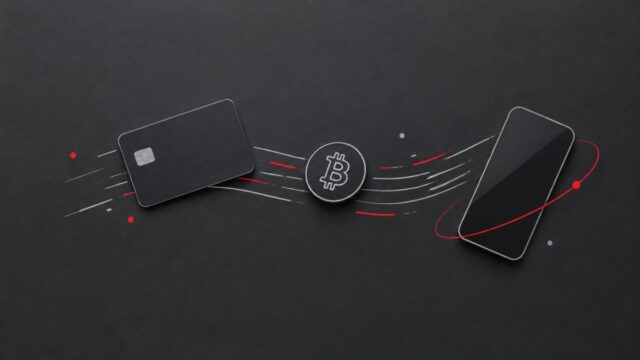
TREE NEWS reports: OKX has launched OKX Money, a standalone application built around four core financial scenarios — transfers, spending, savings, and asset custody — designed to serve both crypto-native users and the broader non-crypto public. Announced on stage at the OKX NOW summit in Singapore, the app is built on X Layer and uses self-custodial smart accounts to enable round-the-clock digital asset transfers. It is now live in more than 30 countries.
What the Product Does
- Transfers: Always-on settlement via smart accounts, removing banking-hour constraints.
- Spending: A consumer-facing payments layer intended to make digital assets usable at the point of sale.
- Savings: Yield-bearing features, including Pay Boost for European users, which is powered by Aave and lets users earn yield while keeping funds spendable.
- Custody: Self-custody via smart accounts, positioning OKX between a bank app and a DeFi wallet.
Why It Matters: The Self-Custodial Payments Race
The launch places OKX in direct competition with a growing field of exchanges and fintechs racing to turn crypto balances into everyday money. The strategic bet is that consumers will accept self-custody if the interface feels like a neobank. By anchoring the product on X Layer, OKX also drives activity to its own network rather than relying solely on third-party chains — a playbook increasingly common among large exchanges seeking to internalize settlement and fee capture.
The Pay Boost feature is notable because it bridges DeFi yield with spendable balances. Historically, users had to choose between earning yield in a lending protocol and keeping funds liquid for spending. Aave-backed yield inside a payments app narrows that trade-off, though it also raises questions about how yield is sourced, how risk is disclosed to retail users, and whether such hybrid products will attract regulatory scrutiny in Europe, where MiCA already governs crypto-asset services.
The AI Angle and What Comes Next
OKX says OKX Money will eventually let AI craft investment strategies based on user needs and execute small transactions in-app with user authorization. That points to a future where agentic finance — AI acting on a user’s behalf within pre-approved limits — becomes a standard feature of consumer crypto apps. It also introduces new questions around liability, authorization design, and how self-custodial smart accounts enforce guardrails when software, not the user, initiates trades.
For the industry, the significance is less about any single feature and more about the direction of travel: exchanges are moving from trading venues toward full-stack financial platforms that combine payments, yield, custody, and automation. If OKX Money gains traction across its 30-plus markets, expect competitors to accelerate similar launches — and regulators to take a closer look at where self-custody ends and financial advice begins.