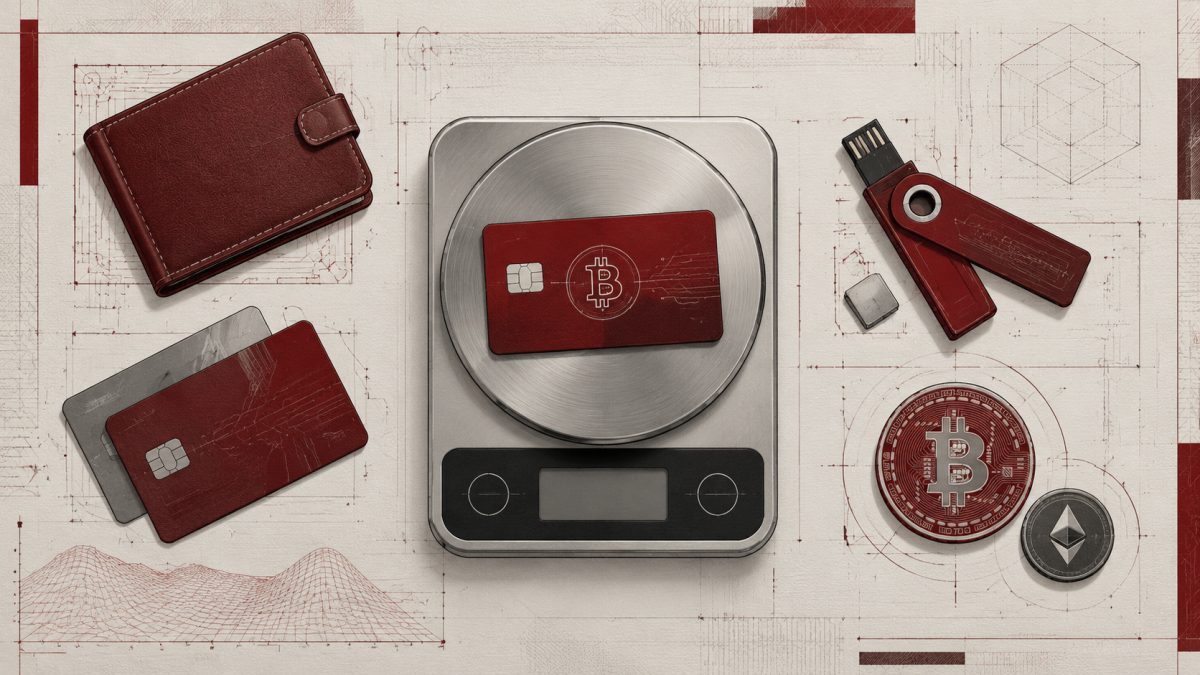
Weighing Your Wallet: Can a Kitchen Scale Really Detect a Tampered Ledger?
TREE NEWS reports: A hardware wallet’s job is to keep private keys offline and tamper-evident. After a supply-chain implant case involving a Ledger device distributed through CryptoBilis, some holders are turning to an unlikely forensic tool: the kitchen scale. The idea — “proof of weight” — is that a genuine device has a known mass, and a tampered unit with added chips, wiring, or replacement components would weigh slightly more or less. The logic is intuitive, and the ritual is cheap. The security guarantee, however, is close to zero.
What the Scale Can and Cannot Prove
A digital scale accurate to 0.1 grams can establish one narrow fact: the device’s total mass. It cannot tell you whether the firmware is authentic, whether a secure element has been swapped, whether an intermediate device intercepted the package, or whether a malicious actor reflashed the bootloader. An attacker sophisticated enough to implant hardware can trivially compensate for a few grams — by removing a screw, shaving plastic, or choosing a lighter battery. A matching weight is therefore consistent with both a clean device and a well-engineered compromised one.
- Proves: gross physical mass at one moment in time.
- Does not prove: firmware integrity, secure-element authenticity, or chain of custody.
- Trivially defeated by: ballast adjustment, component substitution, or a resealed box.
Why the Ritual Persists Anyway
Proof of weight spreads because it is a proxy for something users genuinely lack: a verifiable chain of custody. Buyers who purchase from resellers, marketplaces, or regional distributors have no cryptographic way to confirm the device traveled from the manufacturer untouched. A scale reading feels like evidence because it is physical and repeatable. But security theater that produces false confidence can be worse than no check at all, since it may discourage stronger practices.
What Actually Reduces Supply-Chain Risk
The controls that matter are procedural and cryptographic. Buy directly from the manufacturer where possible. Verify the device’s genuineness through the vendor’s official app or attestation flow. Generate the seed phrase yourself on the device and never accept a pre-initialized wallet. Cross-check the address displayed on the hardware screen against the one shown in your software wallet before signing. For high-value holdings, consider multisignature setups or a self-built air-gapped signer, which remove single points of supply-chain trust.
The Bigger Picture
The scale debate is a symptom of a maturing market: self-custody adoption is rising, reseller channels are multiplying, and attackers are following the hardware. Expect vendors to respond with stronger attestation, tamper-evident packaging, and signed firmware verification baked into setup flows. Until then, treat any single physical check as a weak signal, not a verdict. Weigh the box if it makes you feel better — then verify the firmware, generate your own keys, and never trust a device you did not initialize yourself.