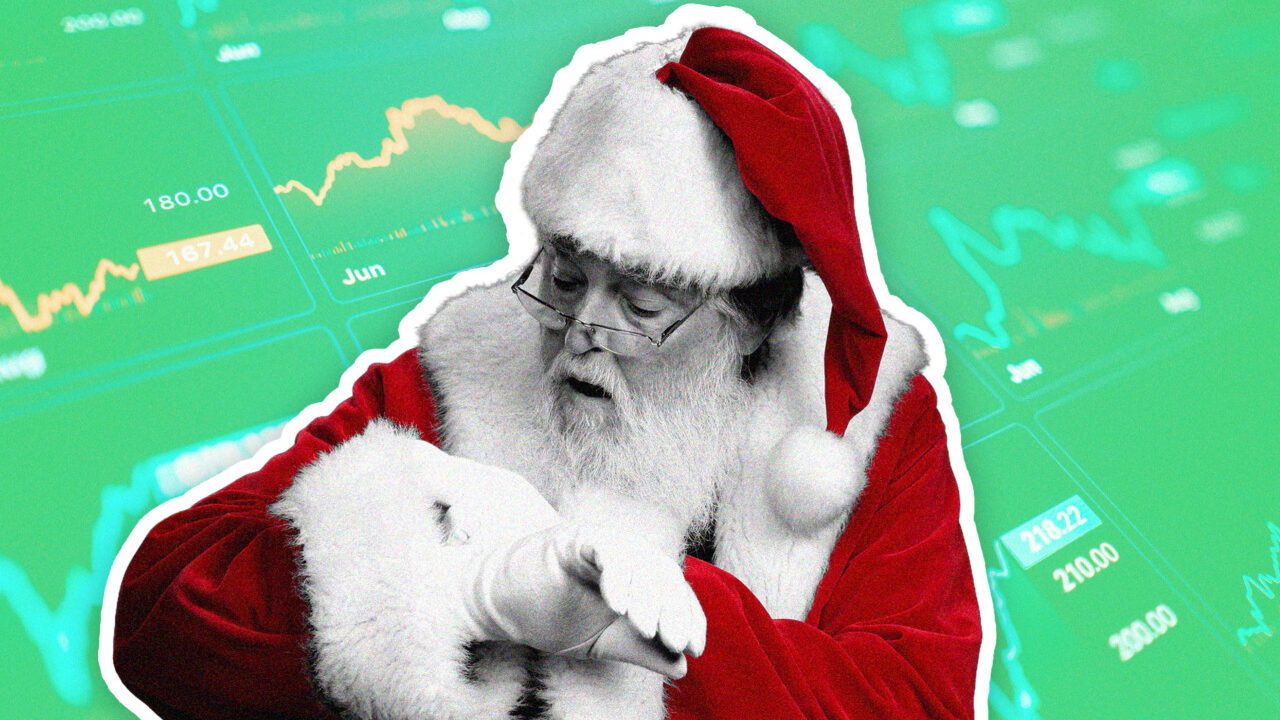
Sorry, Investors: The ‘Santa Claus Rally’ Hype Is Premature—Here’s When the Real Gains Happen
TREE NEWS reports: As autumn leaves fall and pumpkin spice fills the air, Wall Street analysts often start whispering about an early “Santa Claus rally.” The idea is tempting: a pre-holiday surge that lets investors stuff their stockings with gains before year-end. But according to a growing chorus of market strategists, this narrative is more fiction than fact. The numbers, they argue, show that Santa only arrives once a year—and it’s not in October or November.
The term “Santa Claus rally” traditionally refers to the tendency for stocks to rise in the final five trading days of December and the first two of January. However, in recent years, analysts have stretched the definition to include any bullish move in the fourth quarter, fueling premature excitement. This overhype can lead investors to make emotional decisions, chasing rallies that lack historical backing.
What the Data Actually Shows
Historical analysis reveals that the real Santa Claus rally is a narrow, well-defined window. Since 1950, the S&P 500 has posted an average gain of about 1.3% during that seven-day period. Outside that window, December performance is more mixed. Early December often sees volatility as mutual funds and hedge funds engage in tax-loss selling and window dressing, while mid-December can be choppy ahead of the Federal Reserve’s final meeting of the year.
“The hype around an early Santa rally is a classic case of recency bias,” said one veteran strategist. “People remember the big years and forget the many years when November and early December were flat or negative. The data is clear: the real gains are concentrated in that late-December window.”
Market Implications: Stocks, Bonds, Crypto, Commodities, and Currencies
For equity investors, the takeaway is to temper expectations for a smooth ride higher in the coming weeks. While the broader trend may remain positive, volatility is likely to persist. Sectors sensitive to interest rates, such as technology and real estate, could see sharp swings as investors react to economic data and Fed commentary.
In the bond market, any premature rally in stocks could push yields higher if investors interpret it as a sign of economic strength, potentially delaying rate cuts. Conversely, if stocks stumble, bonds may benefit as a safe haven.
Cryptocurrencies, often correlated with risk appetite, might see amplified moves. A false sense of holiday cheer could lead to a short-lived crypto pump, followed by a correction when the real Santa rally fails to materialize. Commodities, particularly gold, could attract safe-haven demand if equity volatility rises. The dollar, meanwhile, may strengthen if global growth concerns persist, putting pressure on emerging market currencies.
Why This Matters for Investors
The key lesson is to avoid letting seasonal narratives drive investment decisions. Instead, focus on fundamentals: earnings growth, interest rate trajectories, and economic indicators. The real Santa Claus rally is a statistical anomaly, not a guaranteed gift. By recognizing the hype for what it is, investors can avoid chasing false rallies and position themselves for the actual year-end opportunities.
As one analyst put it: “Santa doesn’t come early. He comes on time—and only if you’ve been good.”
- Key Takeaways: The traditional Santa Claus rally is confined to the last five trading days of December and first two of January, not the entire fourth quarter.
- Analysts often overhype early rallies, leading to emotional investing and potential losses.
- Expect volatility in November and early December due to tax-loss selling and Fed uncertainty.
- Focus on fundamentals rather than seasonal narratives to make sound investment decisions.