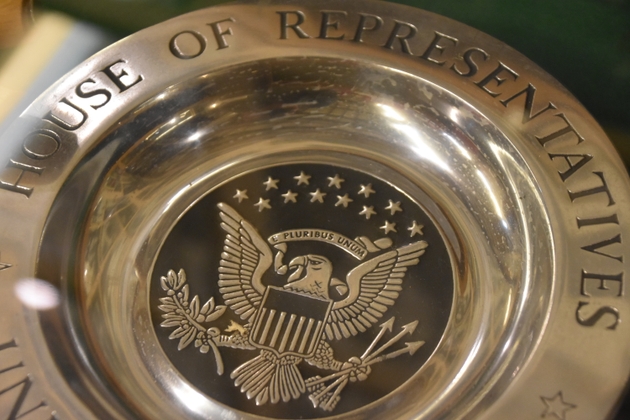
Democrats Take Control of House: What a Divided Congress Means for Markets
TREE NEWS reports: Democrats have won control of the House of Representatives, ending unified Republican control of Washington and ushering in an era of divided government. The outcome, while still being finalized in some districts, marks a significant political shift that investors are already beginning to price in. With the Senate remaining in Republican hands and the White House occupied by a Republican president, the result sets up a legislative landscape defined by gridlock, oversight, and a reduced scope for major policy changes.
What Happened
The Democratic victory in the House follows a contentious midterm cycle in which voters delivered a split verdict. While Republicans retained the Senate, Democrats flipped enough seats to secure a majority in the lower chamber. The result is not a wave election but a clear rebuke of unified control, reflecting voter concerns over inflation, economic uncertainty, and governance style. For markets, the immediate takeaway is that the era of sweeping partisan legislation—whether on taxes, spending, or regulation—is effectively over for the next two years.
Market Implications
The most direct impact is likely to be felt in fiscal policy. A divided Congress means that major tax reform, large-scale spending packages, or dramatic changes to entitlement programs are off the table. This reduces the risk of fiscal shock in either direction, but it also raises the probability of government shutdowns and debt-ceiling brinkmanship. Investors should expect heightened volatility around budget deadlines and borrowing-limit negotiations.
For equities, the initial reaction is often modestly positive in a gridlock scenario, as it removes the tail risk of aggressive policy shifts. Sectors that are highly sensitive to regulation—such as technology, healthcare, and financials—may see relief from the threat of sweeping new rules, though House Democrats are expected to pursue aggressive oversight and investigations, particularly in areas like tech antitrust, drug pricing, and bank supervision. Defense stocks may face pressure if Democratic budget priorities lead to a reallocation of spending, but a divided government makes major cuts unlikely.
Bond markets could benefit from the reduced risk of fiscal expansion. With large new spending programs unlikely, the supply of Treasury debt may grow more slowly than under unified control, easing upward pressure on yields. However, the debt ceiling remains a wild card; a prolonged standoff could roil short-term funding markets and weigh on risk assets.
The dollar is likely to react to the reduced probability of fiscal stimulus. A less expansionary fiscal path may remove some upward pressure on the currency, particularly if growth expectations moderate. Emerging market currencies could find some relief as a result.
Commodities, particularly oil, may see limited direct impact, but a divided government reduces the likelihood of major energy policy shifts. That said, House Democrats could push for stricter environmental oversight, which might affect pipeline approvals and drilling permits, though such actions would be constrained by the Republican Senate.
For crypto, the picture is more nuanced. A divided Congress reduces the chance of comprehensive digital-asset legislation, leaving regulatory clarity in the hands of agencies like the SEC and CFTC. House Democrats may be more inclined to hold hearings on crypto consumer protection and stablecoin risks, but without Senate cooperation, substantive legislation is unlikely. This could mean continued regulatory uncertainty, which has been a drag on institutional adoption.
Key Takeaways for Investors
- Gridlock is the baseline: Expect no major tax or spending legislation, reducing fiscal tail risks but increasing the probability of budget standoffs.
- Oversight intensifies: House committees will likely ramp up investigations into tech, healthcare, and financial sectors, creating headline risk for specific companies.
- Debt ceiling is the key risk: Markets may experience volatility around the next debt-limit deadline; short-term Treasuries and credit markets are most exposed.
- Crypto regulation remains piecemeal: Without a unified Congress, digital-asset rules will continue to be shaped by agencies, sustaining uncertainty for the sector.
- Position for range-bound yields: Reduced fiscal expansion may cap yield rises, favoring duration-sensitive assets.
Overall, the Democratic takeover of the House reinforces a status quo of political gridlock. For investors, that means a lower probability of policy shocks but a higher frequency of political noise. Navigating the next two years will require attention to oversight headlines, budget deadlines, and the slow grind of agency-driven regulation rather than grand legislative bargains.