Trump Escalates Iran Pressure with ‘Iron Gate’ Task Force and Naval Blockade
TREE NEWS reports: President Donald Trump announced on Saturday that a new interagency task force, dubbed “Iron Gate,” is fully operational and, combined with what he called the “largest naval blockade in history,” has left “almost no goods able to enter or exit Iran.” The task force, ordered by U.S. Central Command chief Gen. Cooper on Friday, comprises about 20 civilian and military personnel based in Tampa, Florida, and aims to stop the overland flow of advanced weapons, dual-use technologies, sanctioned goods, and illicit funds across Iran’s land borders and the Caspian Sea.
In a separate statement, Trump said the likelihood of renewed U.S. military strikes on Iran is “very low” as long as negotiations over Tehran’s nuclear program and the reopening of the Strait of Hormuz make progress. He stressed that any deal must be “very strong” but warned that the U.S. military remains ready, with three aircraft carriers deployed in the region and 38 bridges identified as targets that could be destroyed within an hour. The mixed signals come amid a stalemate in U.S.-Iran talks, with an Iraqi delegation reportedly shuttling messages between Washington and Tehran.
Market Implications: Energy, Safe Havens, and Risk Assets
The tightening blockade and persistent military rhetoric inject fresh uncertainty into global markets already sensitive to Middle East tensions. The most immediate impact is likely to be felt in energy markets. Any perceived disruption to Iranian crude exports—already constrained by sanctions—could push oil prices higher, with Brent crude potentially testing recent ranges. Natural gas markets may also react, particularly given the Caspian Sea dimension of the blockade.
Safe-haven assets could see renewed demand. Gold, which has been hovering near record highs, may attract further buying as investors hedge against geopolitical escalation. The U.S. dollar could strengthen against emerging-market currencies, particularly those of oil-importing nations, while the Japanese yen and Swiss franc may also benefit from risk-off flows.
Equity markets face a mixed picture. Defense stocks could outperform on expectations of sustained military spending, while airlines and transportation companies may come under pressure from higher fuel costs. Energy majors with exposure to the region could see volatility. Broader indices may experience short-term dips as traders price in a higher geopolitical risk premium, but the “very low” probability of strikes, if believed, could limit the downside.
Bond markets may see a flight to quality, with U.S. Treasuries and German bunds likely to rally. However, if oil prices spike and feed into inflation expectations, longer-dated yields could rise, creating a tug-of-war. Emerging-market bonds, especially those of oil importers, could come under strain.
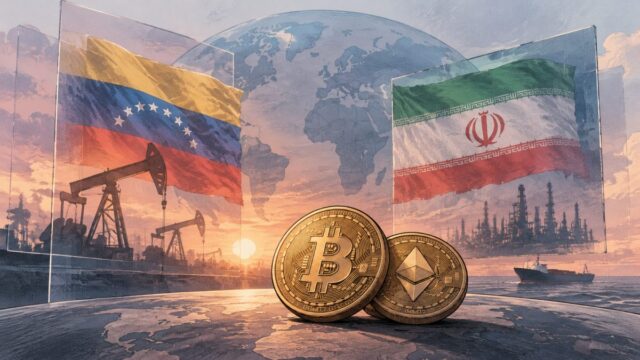
In crypto markets, bitcoin and other digital assets have increasingly behaved like risk assets, but they also offer a hedge against currency debasement and geopolitical turmoil. A sustained escalation could drive some investors toward bitcoin as a “digital gold,” though volatility is likely to remain high. Stablecoins could see increased usage in cross-border payments if traditional channels are disrupted.
Why This Matters for Investors
The Iran standoff is a classic geopolitical risk event that can ripple across asset classes. For investors, the key is to distinguish between rhetoric and action. The “Iron Gate” task force is a concrete step, but its small size suggests a targeted rather than sweeping approach. The naval blockade, while significant, may be more about signaling resolve than enforcing a total embargo.
Portfolio positioning should account for higher volatility in energy and safe-haven assets. Diversification remains crucial, and investors may consider hedging exposure to Middle East risk through options or inverse ETFs. The situation also underscores the importance of monitoring diplomatic channels—any breakthrough in talks could quickly reverse market moves.
Longer term, the confrontation highlights the fragility of global supply chains and the potential for energy price shocks. Investors with exposure to emerging markets should watch for currency volatility and potential capital outflows. For crypto investors, the episode reinforces the narrative of bitcoin as a geopolitical hedge, but also serves as a reminder that correlations can shift rapidly.
- Oil and gas prices may rise on supply fears, with Brent crude sensitive to headlines.
- Safe-haven demand could lift gold, Treasuries, and the dollar; emerging-market assets may weaken.
- Defense stocks may benefit; airlines and transport could lag.
- Bitcoin may attract hedge demand but remains volatile; stablecoins could see increased cross-border use.
- Watch for diplomatic progress—any easing of tensions could reverse these moves quickly.