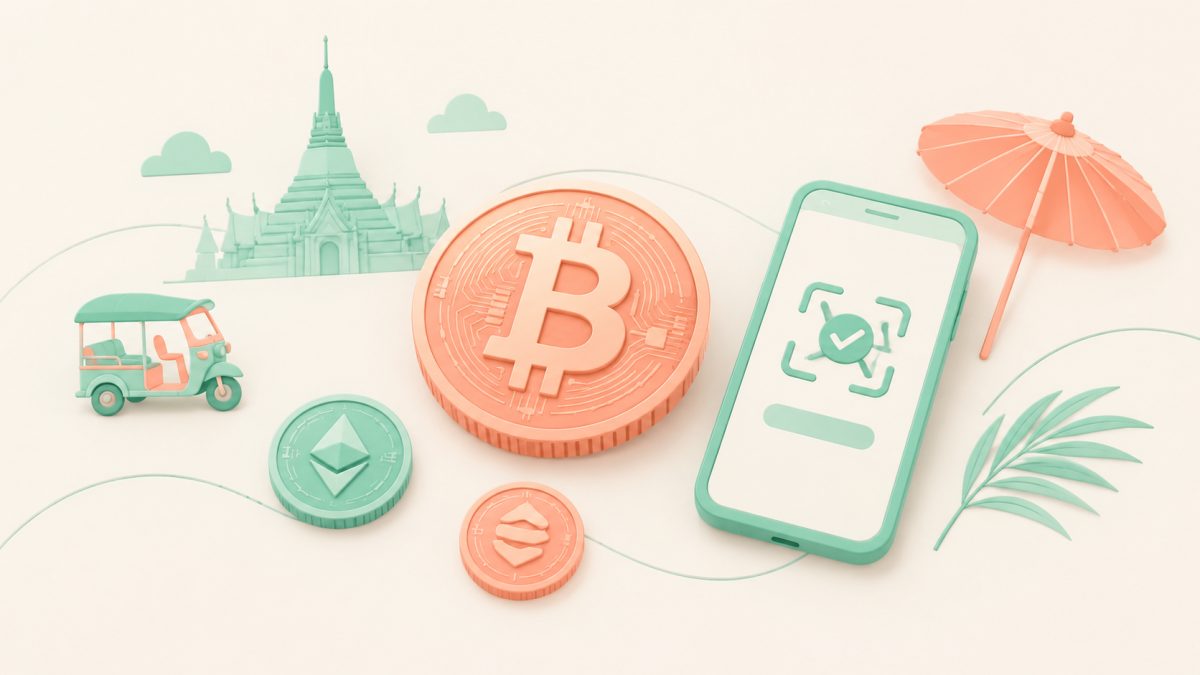
Thailand’s WORPT App Turns Crypto Into Baht for Tourists via PromptPay
TREE NEWS reports: Thailand has taken a significant step toward integrating digital assets into its tourism economy with the launch of WORPT, a payment application that allows foreign visitors to convert cryptocurrencies such as USDT and USDC into Thai baht and spend the funds at local merchants through PromptPay QR codes. The service targets the millions of tourists who arrive in the country each year and may prefer to use crypto holdings for everyday purchases rather than traditional currency exchange.
Bridging Crypto and Local Commerce
WORPT’s model is designed to be simple for end users: a tourist deposits stablecoins into the app, converts them to baht at the prevailing rate, and then scans a PromptPay QR code at any participating shop or service provider. The funds settle in local currency, meaning merchants receive baht without needing to handle crypto directly. This removes a major friction point that has historically limited crypto adoption in retail environments.
The use of PromptPay, Thailand’s national interbank payment infrastructure, is particularly notable. By piggybacking on an existing, widely accepted rail, WORPT avoids the chicken-and-egg problem of building a new merchant network from scratch. It also positions the service as a complement to, rather than a replacement for, the country’s traditional payment system.
Regulatory and Market Implications
Thailand has been relatively progressive in its approach to digital assets, with the Securities and Exchange Commission establishing licensing regimes for exchanges and brokers. The launch of a tourism-focused payment app suggests regulators are comfortable with limited, use-case-specific crypto applications that do not threaten financial stability. This could serve as a template for other jurisdictions looking to test crypto payments in controlled environments.
For the broader crypto industry, the development is a reminder that stablecoins are increasingly being used for real-world payments rather than just trading. The tourism sector is a natural testing ground because it involves cross-border value transfer, a use case where crypto’s speed and low cost can offer tangible advantages over traditional remittance and exchange services.
Forward-Looking Perspective
If WORPT gains traction, it could encourage similar initiatives in other tourism-dependent economies in Southeast Asia, such as Vietnam, Indonesia, and the Philippines. The key challenge will be scaling merchant adoption and ensuring compliance with anti-money laundering rules. Success will depend on whether tourists find the service convenient enough to use regularly, and whether merchants see enough volume to justify participation. For now, WORPT represents a pragmatic experiment in connecting crypto assets to everyday spending, one that could inform how digital currencies are integrated into mainstream commerce.