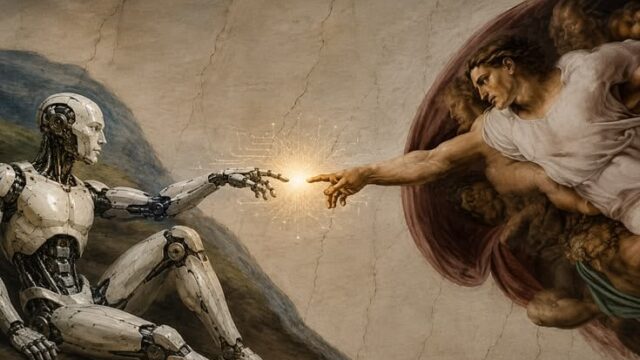
Lean Community Achieves Milestone in Formal Verification
In a striking demonstration of decentralized collaboration, the Lean community has completed formal verification of 17 million lines of code in just 24 hours, lending credence to a proof of the Riemann Hypothesis attributed to an Anthropic mathematician. The effort, which would traditionally take years, was powered by a global network of contributors and automated tools, showcasing the growing synergy between AI and formal methods.
Background: The Riemann Hypothesis and AI
The Riemann Hypothesis, one of the most famous unsolved problems in mathematics, concerns the distribution of prime numbers. A proof by an Anthropic mathematician—whose identity remains undisclosed—has been circulating in the Lean community. To validate it, the community embarked on a massive formal verification campaign, translating the proof into Lean’s dependent type theory and checking every logical step.
Implications for Crypto and Blockchain
This achievement has significant implications for the crypto industry. Formal verification is crucial for smart contract security, and the ability to verify millions of lines of code rapidly could revolutionize how blockchain protocols are audited. Projects like Lean are increasingly used in DeFi to prove correctness of contracts, reducing the risk of exploits. The involvement of AI in generating proofs also hints at a future where AI agents autonomously write and verify code on-chain.
Decentralized Verification and AI Agents
The Lean community’s feat underscores the potential of decentralized networks for complex computational tasks. It aligns with the vision of decentralized AI, where compute and verification are distributed across participants. As AI models become more capable, the need for trustworthy verification grows. This event may accelerate the adoption of formal methods in crypto, especially for high-stakes applications like cross-chain bridges and lending protocols.
Forward-Looking Perspective
While the Riemann Hypothesis proof itself awaits broader mathematical acceptance, the verification process demonstrates the power of combining AI with formal methods. In the crypto space, this could lead to standards for AI-generated code verification, on-chain proof markets, and decentralized science (DeSci) initiatives. As AI and blockchain converge, such milestones will likely become more common, reshaping trust in digital systems.