AI Cracks a 100-Year-Old Math Problem, But Does It Understand It?
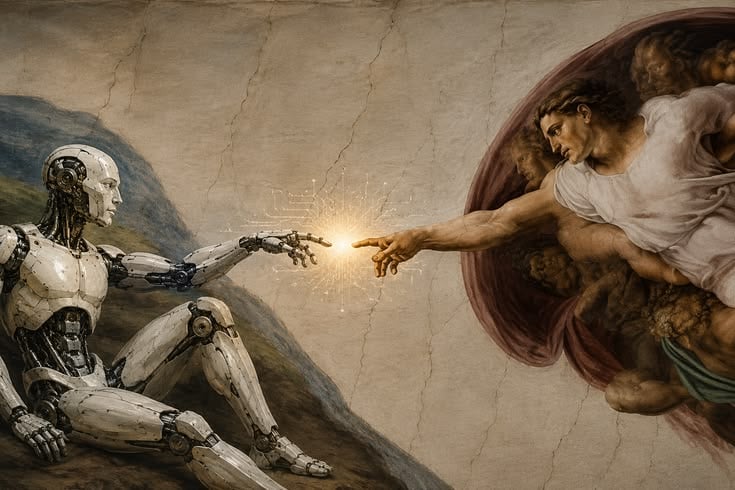
In a breakthrough that has sent shockwaves through both the AI and mathematics communities, a large language model has produced a valid proof for a notorious open problem that has resisted human attack for over a century. The result, announced by researchers at a leading AI lab, demonstrates that machine intelligence can now generate novel mathematical truths. But the achievement raises a profound question: if AI can prove theorems without comprehending them, what is the role of the human mathematician?
The Proof Is in the Machine
The problem in question—a complex conjecture in number theory—had been a graveyard for generations of mathematicians. The AI system, using a combination of formal verification and creative search, found a proof that human reviewers have since verified as correct. It is not merely a brute-force enumeration but a genuinely novel argument that leverages unexpected connections between disparate fields. This is not the first time AI has assisted mathematics, but it is the first time a machine has independently solved a problem of this stature.
Proof vs. Understanding
The distinction between proving and understanding is central to the debate. A proof is a sequence of logical steps that establishes truth; understanding is the human capacity to grasp why those steps work, to generalize, to intuit, and to build new mathematics. As one philosopher of mathematics put it, “A proof is a certificate of truth, but understanding is the map that lets you navigate the territory.” The AI has produced the certificate, but it cannot explain its own reasoning in a way that human mathematicians find satisfying. This gap—between formal correctness and conceptual insight—is where the future of the discipline lies.
Implications for Mathematics and Beyond
The implications extend far beyond academia. In cryptography, where security rests on the assumed hardness of certain mathematical problems, AI-generated proofs could accelerate the discovery of vulnerabilities—or, conversely, help design more robust systems. In the blockchain world, where zero-knowledge proofs and formal verification are increasingly critical, AI mathematicians could become invaluable auditors and protocol designers. But the same capabilities could also be weaponized to break existing cryptographic assumptions, underscoring the urgent need for post-quantum and AI-resistant cryptography.
The Human Element
Rather than rendering mathematicians obsolete, the AI breakthrough may redefine their role. Just as calculators did not eliminate mathematicians but freed them from drudgery, AI proof-finders could handle the mechanical search for proofs while humans focus on the deeper questions: which problems are worth solving, what the proofs mean, and how to integrate new truths into a coherent mathematical worldview. The mathematician of the future may be less a calculator and more a curator, interpreter, and visionary.
Forward Look
As AI systems grow more capable, the boundary between human and machine mathematics will blur. The real challenge is not whether AI can prove theorems—it clearly can—but whether we can develop frameworks for trusting, understanding, and integrating machine-generated knowledge. The answer will determine not only the future of mathematics but also the integrity of the cryptographic and computational infrastructures on which the digital economy depends.