First-of-its-kind Conviction Sets New Legal Precedent
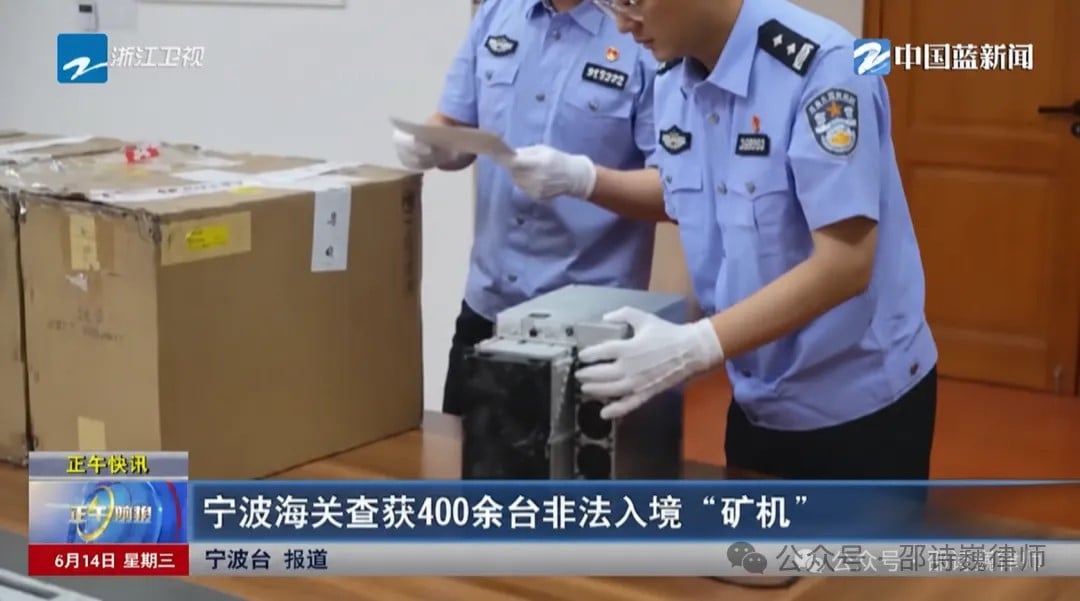
In a landmark case reported by Ningbo Customs in July 2026, a Chinese court has convicted individuals for smuggling cryptocurrency mining hardware under the charge of ‘smuggling goods prohibited from import/export’ — marking the first publicly reported judgment of its kind. The defendants, led by a certain Liao, used misdeclared product names and disassembled concealment tactics to bring specialized miners such as Antminer L9 and IceRiver KS3 into China, with an illicit value exceeding 17 million yuan. The Ningbo Intermediate People’s Court sentenced core members to prison terms ranging from three to seven years.
Legal Shift with Industry-Wide Implications
Previously, smuggling mining equipment was typically prosecuted under the lesser charge of ‘smuggling ordinary goods,’ which focuses on evading customs duties. The new ruling reclassifies these machines as ‘nationally prohibited import goods,’ a designation that triggers stricter penalties and a different legal framework. This pivot reflects China’s broader policy stance against cryptocurrency mining, which was effectively banned in 2021 due to energy and financial stability concerns. By treating miners as prohibited items, the judiciary aligns criminal enforcement with administrative bans, closing a loophole that allowed smugglers to argue they were only evading tariffs.
Legal experts, however, have voiced dissent. Attorney Shao, cited in the original report, contends that while mining machines are administratively classified as prohibited imports, this does not automatically warrant criminal liability under the same category. He argues that the distinction between administrative violation and criminal offense should be more carefully drawn, especially when the equipment itself is not inherently illegal in other jurisdictions.
Market and Regulatory Outlook
For the global crypto mining industry, this ruling underscores the risks of operating in or transacting with China. It may accelerate the relocation of mining operations to more friendly jurisdictions, while also prompting miners to review supply chain compliance. Domestically, the judgment sends a clear signal that China’s prohibition on mining extends to hardware procurement, not just operational activities. As other countries grapple with similar issues, this case could influence how they classify and regulate the cross-border movement of mining equipment. The legal debate also highlights the tension between administrative bans and criminal justice, a topic likely to evolve as more cases emerge.