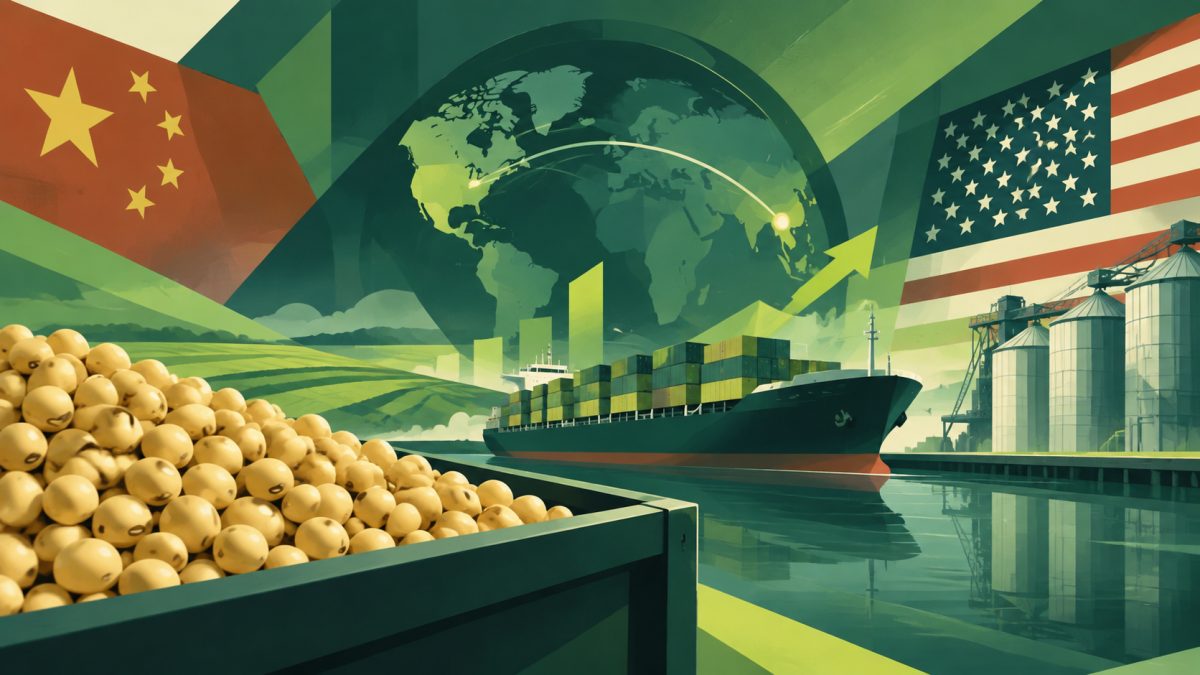
China Buys 1M Tons of U.S. Soybeans Ahead of Expected Xi-Trump Meeting
TREE NEWS reports: China has purchased approximately 1 million metric tons of U.S. soybeans, a significant agricultural trade development that comes just ahead of an anticipated meeting between Chinese President Xi Jinping and U.S. President Donald Trump. The timing of the purchase signals a potential thaw in trade relations between the world’s two largest economies, which have been engaged in a protracted trade war characterized by tariffs and retaliatory measures.
The soybean purchase is notable not only for its size but for its timing. Agricultural commodities, particularly soybeans, have been a central bargaining chip in the U.S.-China trade dispute. China is the world’s largest importer of soybeans, and the U.S. is one of its primary suppliers. During periods of heightened trade tensions, China has often curtailed purchases of American agricultural goods, turning instead to Brazil and other suppliers. A resumption of large-scale buying is typically interpreted as a signal of de-escalation.
Market Implications
The news carries meaningful implications across multiple asset classes:
- Equities: U.S. agricultural stocks, particularly seed and fertilizer companies, could see a positive reaction. Deere & Co., Corteva, and Archer-Daniels-Midland are among the names likely to benefit. A broader trade thaw would also lift sentiment for multinationals with significant China exposure, including technology and industrial firms. Chinese equities, especially those tied to agriculture and consumer staples, may also find support.
- Commodities: Soybean futures on the Chicago Board of Trade are likely to spike on the news. The purchase could also support prices for corn and wheat if it signals broader agricultural buying. Conversely, Brazilian soybean premiums may come under pressure as demand shifts back toward the U.S.
- Bonds: A reduction in trade tensions could modestly reduce safe-haven demand for U.S. Treasuries, though the impact is likely to be secondary to Federal Reserve policy and inflation data. If the meeting leads to a broader trade agreement, it could improve the global growth outlook and push yields slightly higher.
- Currencies: The U.S. dollar could strengthen against the Chinese yuan if trade relations improve, as reduced uncertainty typically supports risk-on flows into U.S. assets. However, a comprehensive deal might also include currency provisions, adding complexity to the outlook.
- Crypto: Digital assets have become increasingly sensitive to macroeconomic and geopolitical developments. A risk-on environment spurred by trade de-escalation could support Bitcoin and other cryptocurrencies, though the direct impact is likely to be limited. Crypto markets may take their cue more from broader risk sentiment than from the soybean purchase itself.
Why This Matters for Investors
The soybean purchase is a small but symbolically important step. It suggests that both sides are willing to engage ahead of the Xi-Trump meeting, which could pave the way for a broader trade agreement or at least a temporary truce. For investors, the key takeaway is that trade policy remains a major swing factor for global markets. A sustained de-escalation would be bullish for equities, particularly cyclical and export-oriented sectors, and could reduce volatility across asset classes.
However, caution is warranted. Previous rounds of trade talks have collapsed, and a single purchase does not guarantee a lasting resolution. Investors should watch for follow-through: additional agricultural purchases, tariff reductions, or joint statements from the meeting. Without concrete policy changes, the market impact may be short-lived.
Key Takeaways
- China’s 1 million ton soybean purchase signals potential trade de-escalation ahead of the Xi-Trump meeting.
- U.S. agricultural and China-exposed equities, soybean futures, and risk-sensitive assets like crypto could benefit.
- The move is symbolic but not definitive; investors should watch for concrete policy follow-through.
- Trade policy remains a key driver of market volatility and asset allocation decisions.