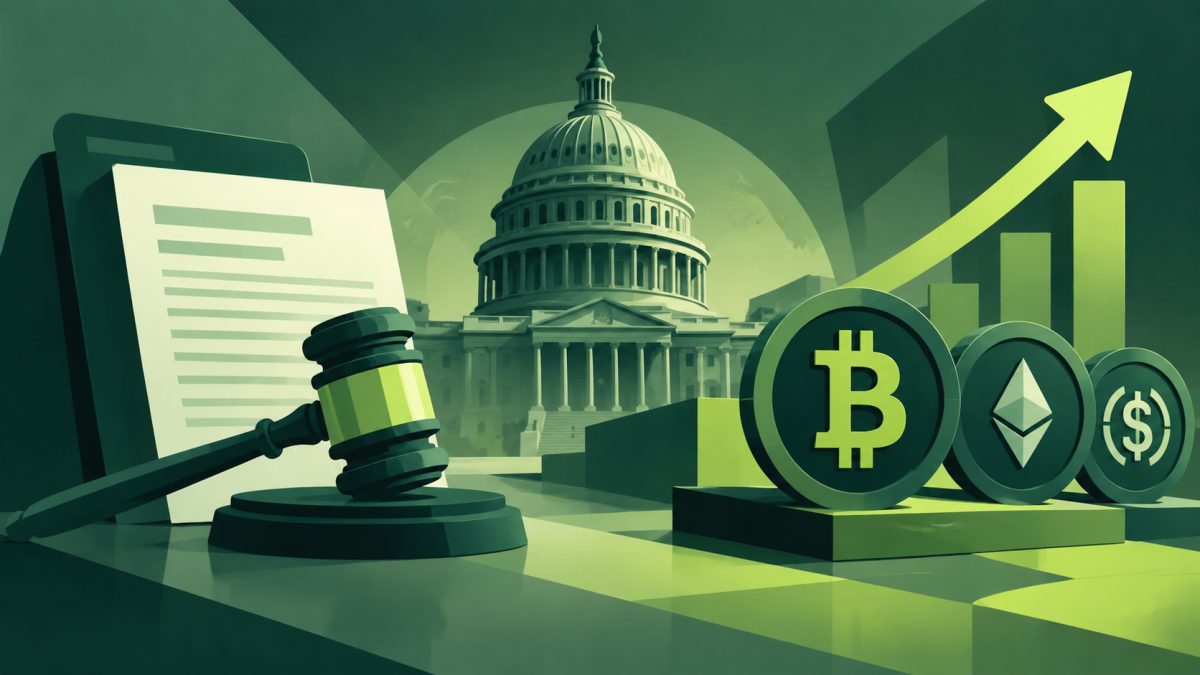
Senate Procedural Vote Tests the Future of US Crypto Legislation
TREE NEWS reports: The CLARITY Act heads to a procedural vote in the Senate on September 15, requiring 60 votes to advance. With Republicans holding 53 seats, Democratic support will be decisive. Grayscale research head Zach Pandl noted that prediction markets assign a low probability to the bill passing in 2026, and a failed vote would narrow this year’s path — though lawmakers could revisit it during a post-election lame-duck session or in a future Congress.
Regulatory Clarity Is Arriving Without Congress
Pandl’s core argument is that the CLARITY Act is not the sole source of US regulatory clarity. Even without it, frameworks are steadily taking shape across stablecoins, token issuance, tokenized securities, and perpetual contracts. That matters because markets often conflate legislative progress with regulatory progress. In practice, agencies, courts, and market structure are already resolving many of the questions the bill was meant to answer.
The distinction is between durable statutory authority and incremental guidance. Only Congress can draw a comprehensive, lasting boundary between the SEC and CFTC. Agency rules can be reversed by a new administration; a statute is harder to unwind. That is why CLARITY remains important even if near-term passage looks unlikely.
Why This Matters for Tokenized Assets and Stablecoins
- Stablecoins: Federal and state frameworks are converging, giving issuers clearer reserve and disclosure expectations.
- Token issuance: Enforcement-driven precedents are defining when a token is a security, reducing guesswork for projects.
- Tokenized securities: Custody, settlement, and broker-dealer questions are being addressed through existing securities law rather than new legislation.
- Perpetual contracts: Offshore venues dominate, but US-compliant structures are emerging as regulators signal tolerance for regulated derivatives.
Forward Outlook
If the September 15 vote fails, expect the narrative to shift from “waiting for Congress” to “building under existing rules.” That favors compliant issuers, regulated custodians, and tokenization platforms that can operate within current frameworks. A 2026 failure would not stop regulatory progress — it would simply delay the one thing only lawmakers can deliver: a permanent jurisdictional split between the SEC and CFTC. For now, the market should price policy evolution, not legislative rescue.