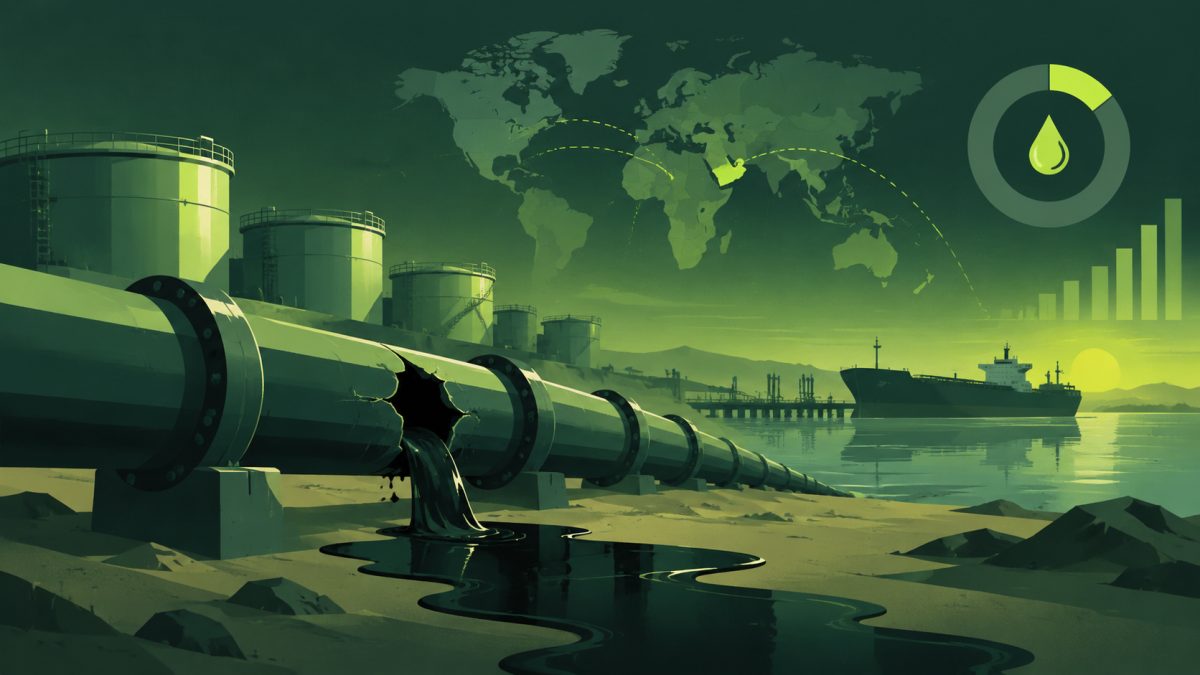
Saudi Arabia’s East-West Pipeline Halt Puts Global Oil Supply at Risk
TREE NEWS reports: A drone attack has forced Saudi Arabia to shut down its East-West pipeline, a critical artery that normally carries about 4 million barrels per day (bpd) of crude oil from eastern oil fields to the Red Sea port of Yanbu. With the pipeline offline, storage at Yanbu can sustain exports for only five to seven days, according to multiple industry sources familiar with Saudi export operations. Additional stockpiles at Egypt’s Ain Sukhna and Sidi Kerir terminals could buy a few more days, but those too will be depleted if the pipeline does not resume operations.
The attack, which occurred on September 10, targeted sections of the pipeline near Riyadh and Medina. Saudi Arabia’s Energy Ministry described it as a “precautionary closure” and confirmed injuries but provided no details on the assailants or a timeline for repairs. The pipeline is a vital alternative route for Saudi crude, especially as traffic through the Strait of Hormuz remains disrupted.
Market Implications: A Looming Supply Shock
The loss of 4 million bpd represents roughly 4% of global oil supply. In the context of an already tight market, this is a significant escalation. The International Energy Agency (IEA) reported last week that Saudi oil supply had already fallen to its lowest level in over three decades in August, with global oil supply set to drop by about 5.7 million bpd (6%) this year. Saudi Arabia’s own production has plummeted from 10.9 million bpd in February to just 6.2 million bpd in August.
If the pipeline remains offline for weeks, the supply gap could widen dramatically. Repair estimates vary widely, from five to six weeks to a faster partial restart. This uncertainty is the single biggest risk factor for oil markets right now.
- Oil: Crude prices are likely to spike further, with Brent and WTI benchmarks potentially testing new highs. The market is already pricing in a risk premium, but a prolonged outage could push prices well above recent ranges.
- Bonds: Rising oil prices feed directly into inflation expectations, pressuring bond yields. US Treasury yields have already climbed to their highest since the 2008 financial crisis, and further increases could weigh on fixed-income portfolios.
- Stocks: Energy sector stocks may benefit from higher oil prices, but broader equity markets could suffer as input costs rise and consumer spending weakens. Airlines, transport, and manufacturing sectors are particularly vulnerable.
- Currencies: Commodity-linked currencies like the Canadian dollar and Norwegian krone may gain, while the US dollar could strengthen on safe-haven flows. The Saudi riyal remains pegged but faces pressure if oil revenues decline.
- Crypto: Digital assets have shown mixed correlations with geopolitical risk. Bitcoin could see safe-haven demand, but a broader risk-off sentiment might also weigh on crypto markets.
Context: A Fragile Energy Landscape
This pipeline disruption comes at a perilous moment. The Houthi movement in Yemen recently seized an island at the entrance to the Red Sea, further threatening Saudi oil tanker routes. The Strait of Hormuz, through which about 20% of global oil passes, is already seeing reduced traffic. The combination of these factors creates a perfect storm for energy markets.
For investors, the key takeaway is that geopolitical risk is back with a vengeance. Portfolios should be stress-tested against a scenario where oil prices remain elevated for an extended period. Energy exposure may offer a hedge, but broader diversification and inflation-protected assets are prudent. The uncertainty around repair timelines means volatility will remain high, and markets will react sharply to any news of escalation or resolution.
All eyes are now on the pipeline’s repair progress. A quick fix could calm markets, but a prolonged outage would test the resilience of the global economy.