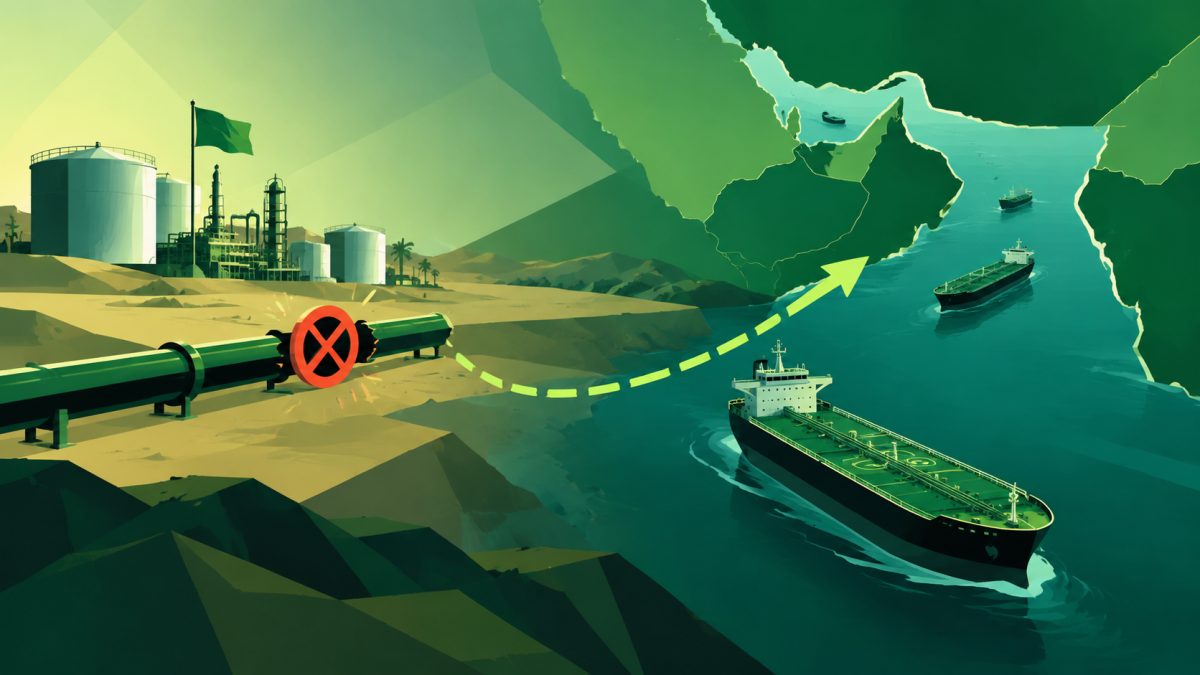
Saudi Arabia Pivots to Strait of Hormuz Exports After Key Bypass Pipeline Shuts
TREE NEWS reports: Saudi Arabia is seeking to increase crude oil exports through the Strait of Hormuz to offset the loss of a critical pipeline that was forced offline after attacks last week. The kingdom’s crude shipments through the strait during the first ten days of September already exceeded August levels, and officials are now pushing for further increases, people familiar with the matter said.
The development follows the closure of the East-West Pipeline, a roughly 1,200-kilometer artery linking Saudi Arabia’s eastern oil fields to the Red Sea port of Yanbu. The line had a maximum capacity of 7 million barrels per day, with about 5 million bpd available for export — equivalent to roughly 4% of global oil supply. At least two facilities along the route were struck last week, prompting the shutdown. Saudi Arabia has not disclosed the extent of the damage or a timeline for repairs; market estimates range from several days to several weeks.
Why This Matters
The East-West Pipeline was Riyadh’s principal hedge against disruption in the Strait of Hormuz, through which roughly one-fifth of global oil trade normally flows. With the bypass offline, Saudi Arabia must route more barrels through the very chokepoint it was designed to avoid — at a moment when maritime security risks in the strait remain elevated.
The logistics are daunting. The Middle East shipping market is contending with a severe shortage of tankers, and the cost of moving crude from Saudi Gulf ports to major East Asian buyers approached $1 million per day on Friday, a record high. Riyadh maintains a large domestic fleet but frequently charters external vessels. Meanwhile, the Red Sea alternative is also under pressure as Houthi forces advance along Yemen’s western coast toward the Bab el-Mandeb strait, leaving two of Saudi Arabia’s most important export corridors simultaneously stressed.
Diplomatic efforts to stabilize shipping through Hormuz suffered a setback as well. A planned meeting in Oman between Iran and other Gulf states was postponed. Iranian officials attributed the delay to requests from regional countries, and later said Saudi Arabia had asked for the postponement.
Market Implications
- Oil: Brent crude briefly traded above $108 per barrel as the pipeline closure, continued Houthi attacks, and the postponed talks converged. The risk premium now embeds a persistent supply-disruption scenario rather than a transient shock. Watch for volatility around any repair timeline or diplomatic breakthrough.
- Equities: Energy majors and oilfield services firms stand to benefit from elevated prices and higher tanker utilization. Airlines, chemicals, and transport names face margin pressure. Broader indices remain sensitive to any escalation that pushes crude toward $120.
- Bonds: A sustained energy price spike complicates the inflation outlook for major central banks, potentially delaying rate cuts and steepening yield curves. Safe-haven demand should support Treasuries and German bunds on escalation headlines.
- Currencies: Commodity-linked currencies such as the Norwegian krone and Canadian dollar tend to outperform in oil rallies. The dollar may draw haven flows, while Asian importers’ currencies — particularly the Japanese yen and Indian rupee — face terms-of-trade headwinds.
- Crypto: Digital assets have traded largely as a liquidity and risk-sentiment proxy. A geopolitical risk-off episode could weigh on bitcoin in the near term, though persistent inflation pressure and fiscal expansion narratives may reinforce the longer-term store-of-value thesis.
Key Takeaways for Investors
- The loss of the East-West Pipeline removes Saudi Arabia’s most reliable hedge against Hormuz disruption — a structural tightening of the supply-risk calculus.
- Record tanker freight rates signal that physical logistics, not just crude prices, are the binding constraint on Saudi exports.
- Dual pressure on Hormuz and Red Sea routes raises the probability of sustained elevated risk premiums across energy markets.
- Diplomatic postponement suggests near-term de-escalation is unlikely; position for continued volatility.
- Monitor pipeline repair announcements and any resumption of Oman-hosted talks as the two most important catalysts.