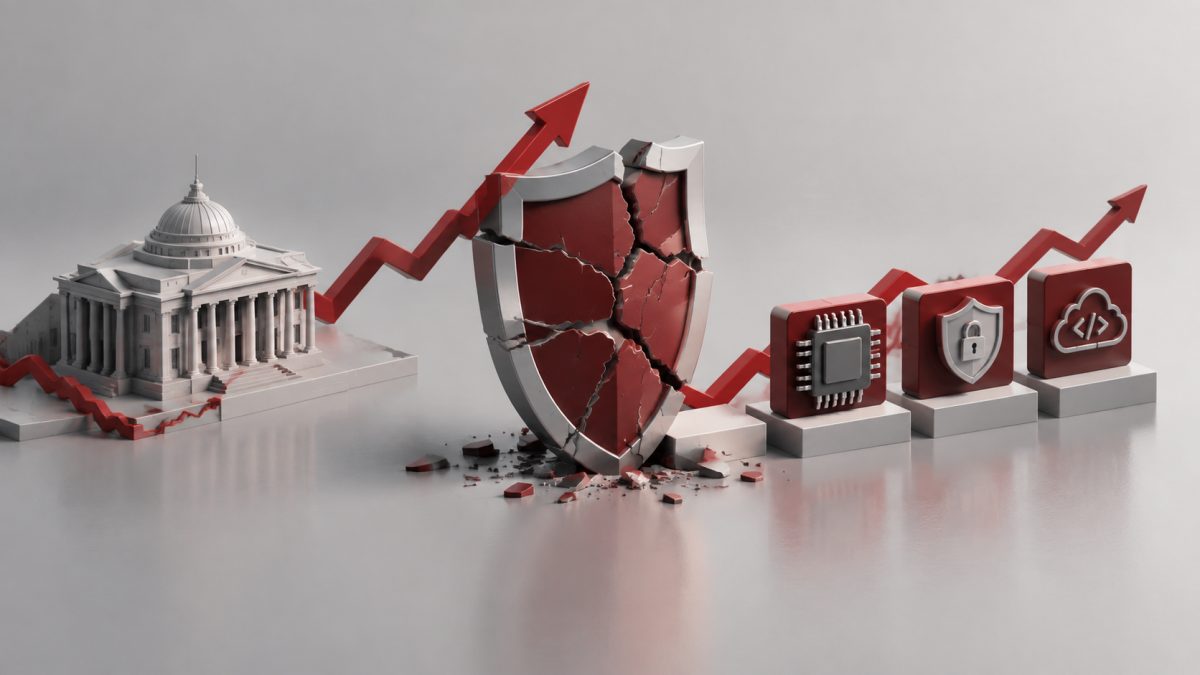
10-Year Treasury Yield Breaks 5% as AI Trade Stalls
The 10-year U.S. Treasury yield has pushed above the 5% threshold, a level last seen during the 2023 banking stress and one that is now forcing a broad reassessment of equity valuations. The move comes as the market digests a narrative shift: the AI capital-expenditure boom may be entering a slower phase, with hyperscalers signaling more disciplined spending on GPUs and data-center buildouts.
Why 5% Matters
The 10-year yield is the global benchmark for discounting future cash flows. When it crosses 5%, long-duration assets — especially unprofitable growth names and speculative technology bets — face mechanical valuation compression. The immediate casualties have been semiconductor stocks, which had priced in years of uninterrupted AI-driven demand. Nvidia, AMD and their supply-chain peers have seen sharp drawdowns as investors rotate out of the AI trade.
At the same time, capital is rotating into safety and software. Utilities, consumer staples, cybersecurity and enterprise software names are attracting inflows because their cash flows are nearer-term and more resilient to rate shocks. This is a classic late-cycle rotation: from momentum to quality, from hardware to recurring revenue.
The Inflation and Oil Wildcard
The critical question is whether 5% is a short-term peak or the start of a structurally higher rate regime. If oil prices and inflation data continue to surprise to the upside, the Fed’s ability to cut rates diminishes, and the term premium embedded in long bonds expands further. In that scenario, a roughly 10% correction in U.S. equities becomes a realistic base case rather than a tail risk.
- Rate sensitivity: Every 25bp rise in the 10-year compresses high-multiple tech valuations by roughly 3-5%.
- Rotation signal: Defensive sectors and software are outperforming semis for the first time in over a year.
- Macro risk: Sticky inflation plus elevated oil could push the 10-year toward 5.25-5.5%.
Forward-Looking Perspective
For crypto and digital-asset markets, a sustained high-rate environment is a double-edged sword. It pressures risk assets broadly, but it also strengthens the case for non-sovereign stores of value and for tokenized real-world assets that offer yield. If the AI trade continues to cool, capital may rotate toward infrastructure plays — including blockchain settlement layers and tokenized Treasuries — that benefit from, rather than depend on, rate volatility. The next few inflation prints will determine whether this is a pause or a regime change.