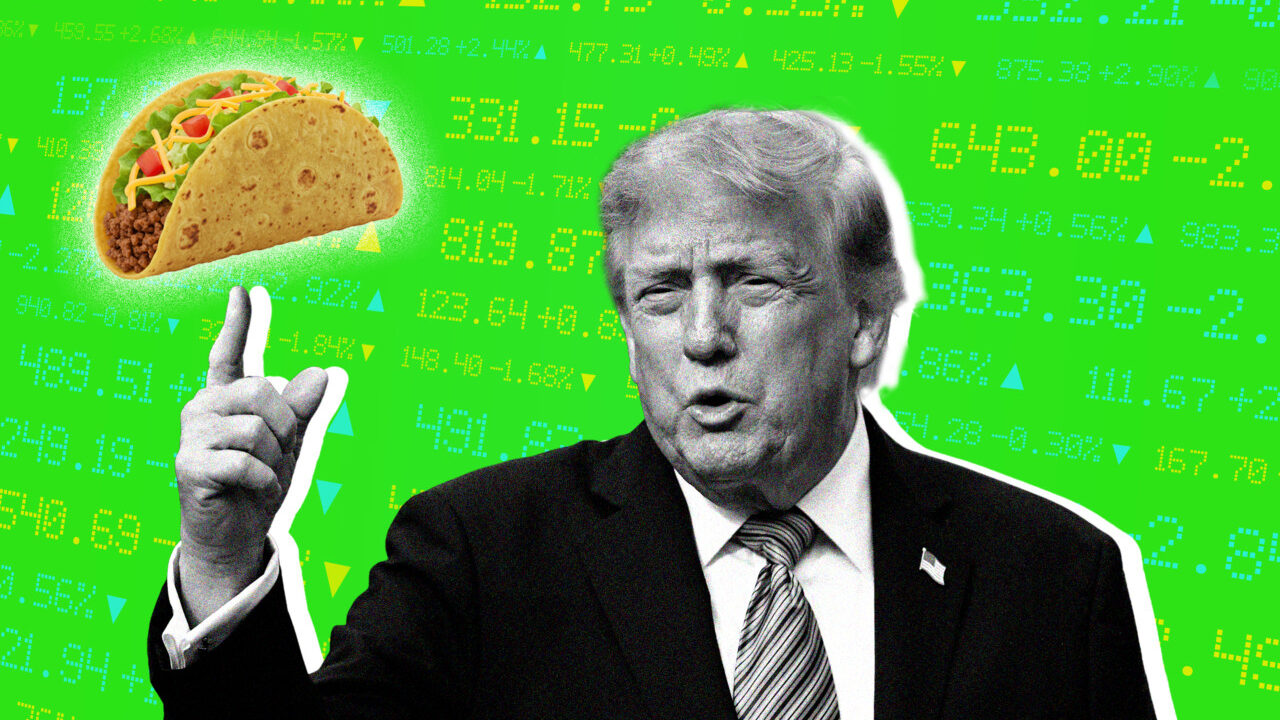
Wall Street’s Iran ‘TACO’ Trade Breaks Down as Trump’s Threat Playbook Fails
TREE NEWS reports: For six months, investors had a remarkably simple and profitable playbook: when President Trump threatened Iran, buy the dip. The assumption — captured in the market nickname ‘TACO’ (Trump Always Chickens Out) — was that the president would escalate rhetorically but ultimately back down before any conflict materialized. That assumption is now being tested in a way that could reshape positioning across every major asset class.
In September, the playbook stopped working. Escalation between Washington and Tehran moved beyond threats into concrete action, and markets that had been conditioned to treat geopolitical risk as a buying opportunity suddenly faced genuine uncertainty. The question now gripping traders is whether the TACO trade is merely delayed or permanently broken.
Why This Time May Be Different
The original TACO logic rested on a rational-actor framework: Trump’s threats were leverage for negotiation, not genuine intent to engage militarily. Each cycle of escalation ended with de-escalation, rewarding traders who bought weakness. But when the pattern breaks, the market must re-price a fat tail that had been systematically underpriced.
Several dynamics make this episode structurally different. First, the geopolitical stakes have moved from rhetorical to operational. Second, oil market positioning had grown complacent, with speculative short positioning building on the assumption of contained risk. Third, and most importantly, the reflexive nature of the trade itself — everyone knowing to buy the dip — means the unwind, if it comes, will be violent and crowded.
Market Implications Across Asset Classes
Equities
US equities, particularly energy-sensitive and defense names, face a regime shift. The low-volatility, buy-the-dip reflex that has supported every geopolitical dip since 2023 depends on the assumption of mean reversion. If September’s escalation proves durable, the ‘buy the dip’ bid weakens, volatility term structure steepens, and hedging demand rises. Cyclicals and airlines face margin pressure from fuel costs; defense contractors could be a rare beneficiary.
Bonds and Rates
A sustained Middle East risk premium is inflationary at the margin via energy prices, complicating the Federal Reserve’s path. If oil spikes, the Fed faces a worse trade-off between growth and inflation, potentially delaying cuts. That pushes yields higher at the long end and steepens the curve — bad for duration, bad for rate-sensitive growth stocks.
Commodities
Crude is the primary transmission channel. A genuine escalation scenario — particularly any threat to Strait of Hormuz transit — could add a substantial risk premium to Brent and WTI. Gold, already supported by central bank buying and rate-cut expectations, would likely extend gains as a geopolitical hedge. Natural gas and refined products would follow.
Currencies
The dollar typically benefits from safe-haven flows during geopolitical shocks, though the current fiscal backdrop complicates that reflex. The euro, yen, and Swiss franc would all be in play. Emerging market currencies with energy import dependence — Turkey, India, parts of Southeast Asia — face the sharpest pressure.
Crypto
Bitcoin’s role as a geopolitical hedge remains contested. In prior risk-off episodes, crypto has traded as a high-beta risk asset rather than digital gold, selling off alongside equities before recovering. A sustained Iran escalation would likely trigger the same initial de-risking, though any dollar-weakness or inflation-hedge narrative could support a later bid. Stablecoin flows and exchange volumes would be key indicators to watch.
Key Takeaways for Investors
- The reflex trade is broken until proven otherwise. Do not assume the September escalation reverses on the old timeline. Wait for concrete de-escalation signals before re-establishing dip-buying.
- Volatility is cheap relative to the new regime. Hedges that looked expensive in August may look cheap now. Consider optionality over directional bets.
- Energy is the transmission mechanism. Watch crude, not headlines. A sustained move above recent ranges is the signal that matters.
- Diversification matters again. Portfolios built on the assumption that geopolitical risk is always transitory are structurally exposed. Gold, energy, and defensive positioning deserve a fresh look.
- Positioning is the risk. The most dangerous scenario is not escalation itself but a crowded market forced to unwind a consensus trade. Crowded trades fail violently.
The TACO trade worked because it was self-reinforcing. Its failure, if it comes, will be self-reinforcing in the opposite direction. Investors should prepare for the possibility that the market’s most reliable playbook has quietly expired.



