Global Bond Rout Accelerates as Treasury Yields Reach Multi-Decade Peaks
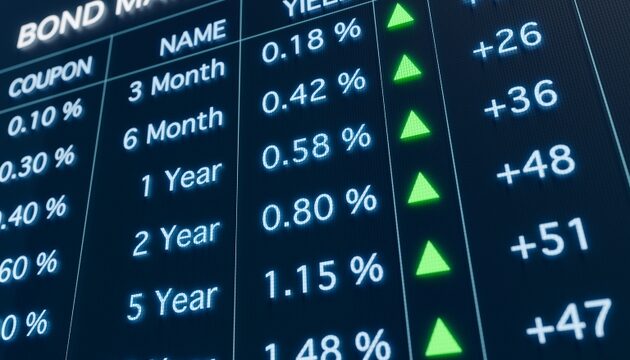
TREE NEWS reports: A synchronized global bond selloff intensified on Thursday, driving 10-year U.S. Treasury yields to 5.14%, the highest since 2007, while 30-year yields climbed to levels last seen in 2004. The move followed a disappointing $70 billion five-year Treasury auction and stronger-than-expected U.S. economic data, which together forced markets to reprice the Federal Reserve’s rate path.
Equity futures fell in response. Nasdaq futures dropped 1% intraday, with Meta down over 2% premarket, and chipmakers Micron and SanDisk each falling more than 2%. Nvidia slipped over 1%. European stocks opened lower, with the Stoxx 50 down 0.53% and Germany’s DAX off 0.57%. MSCI’s Asia-Pacific index declined 0.6%.
The pain was not confined to U.S. markets. Japan’s 10-year government bond yield surged 10 basis points to 3.075%, the highest since August 1996, as the market caught up after a holiday. Five-year and 30-year JGB yields rose to 2.37% and 4.134%, respectively. Australian, New Zealand, and emerging-market bonds also sold off.
Why This Matters: A True Re-Tightening Cycle
“The market is telling us we’ve entered a genuine re-tightening cycle,” said Tony Miano of Wells Fargo Investment Institute. “The entire yield curve is repricing simultaneously, which means higher discount rates for equities, higher mortgage and corporate borrowing costs, and a higher hurdle for risk assets.”
The yield surge reflects a confluence of factors: resilient U.S. economic data that has dampened rate-cut expectations, a rebound in oil prices feeding inflation concerns, and the weak five-year auction signaling reduced demand for U.S. debt. The selloff then propagated globally.
In Japan, the Bank of Japan’s rate hike last week failed to convince markets of a clear tightening path, leaving the yen vulnerable. The dollar-yen pair quickly rose above 158, approaching the 160 level that previously triggered intervention. The yen’s two-week slide has reignited intervention risk.
Commodities and Currencies: Oil Up, Gold Down
Brent crude rose 2.48% amid geopolitical tensions. An Iranian official suggested that conflict with the U.S. could expand, potentially extending to the Indian Ocean. Meanwhile, U.S. diesel prices hit a record $6.50 per gallon, becoming a political liability ahead of midterm elections. President Trump expressed support for banning diesel exports, though senior officials questioned its effectiveness.
Spot gold fell 0.12% to $4,281.90 an ounce as rising yields reduced the appeal of non-yielding assets. The Bloomberg Dollar Spot Index hovered near its highest since July, with traders betting on further Fed tightening.
Investor Takeaways
- Equities face valuation pressure: Higher discount rates compress price-to-earnings multiples, particularly for long-duration growth and tech stocks.
- Bond markets are repricing globally: The synchronized selloff suggests investors should reassess duration risk across all fixed-income portfolios.
- Currency volatility is rising: The yen’s weakness near 160 raises intervention odds, while dollar strength may persist on rate differentials.
- Commodities are bifurcated: Oil gains on geopolitics and supply concerns, while gold struggles against rising real yields.
- Policy uncertainty remains high: The Fed’s next moves will depend heavily on incoming data, but markets are now pricing a higher-for-longer scenario.
With global borrowing costs resetting higher, investors should brace for continued volatility across asset classes. The re-tightening cycle, if sustained, could challenge the soft-landing narrative that has supported risk assets for much of the year.