SEC Reportedly Prepares KYC Overhaul for Tokenized Securities
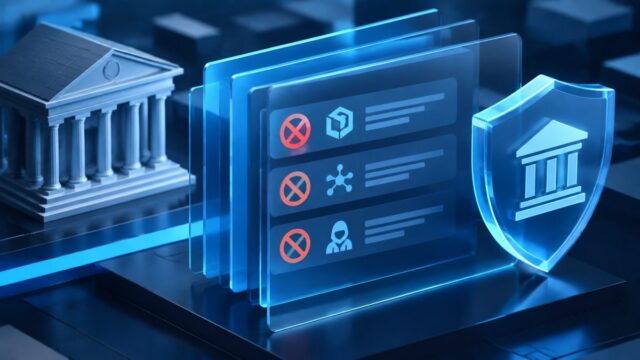
TREE NEWS reports: The U.S. Securities and Exchange Commission is preparing to revise its know-your-customer requirements so that users need only complete identity verification once to access tokenized securities across on-chain venues, according to people familiar with the matter cited by The Rollup founder Andy.
The change, if enacted, would let users move between different on-chain trading venues and tokenization platforms without repeating KYC checks at each one — a step that would unlock composability across the tokenized securities ecosystem.
Why a Single KYC Pass Matters
Today’s compliance model is fragmented. Each broker-dealer, alternative trading system, and tokenization platform runs its own onboarding, so an investor verified at one venue is a stranger at the next. That friction is one of the biggest structural barriers to tokenized securities achieving the liquidity and network effects that make DeFi markets efficient.
A single, reusable credential would change the economics of the sector:
- Portability: A verified identity travels with the user, not the platform.
- Order splitting: Users could route a single large order across multiple venues to reduce market impact.
- Composability: Smart contracts could interact with tokenized equities, bonds, and funds the way they do with stablecoins.
The Zero-Knowledge Angle
The report specifically points to zero-knowledge proof-based identity systems as the mechanism. ZK credentials let a user prove they are verified — without exposing the underlying personal data to every counterparty or venue. That preserves the privacy that public blockchains otherwise strip away, while giving regulators an auditable compliance trail.
This is a meaningful shift in regulatory posture. For years, the SEC treated on-chain trading as a compliance problem to be contained. A reusable KYC framework implies the agency is beginning to treat blockchain rails as a legitimate venue for regulated securities — provided identity is handled correctly.
What to Watch
Nothing is final. The proposal is still described as a plan, not a rule, and the SEC has not confirmed it publicly. Key questions remain: Which credential issuers would be recognized? How would the SEC handle liability if a ZK proof is forged? And would state regulators and FINRA align their own KYC rules?
If the framework lands, it could be the most consequential piece of U.S. securities infrastructure since the advent of electronic trading — turning tokenized securities from a walled-garden experiment into a genuinely composable market.