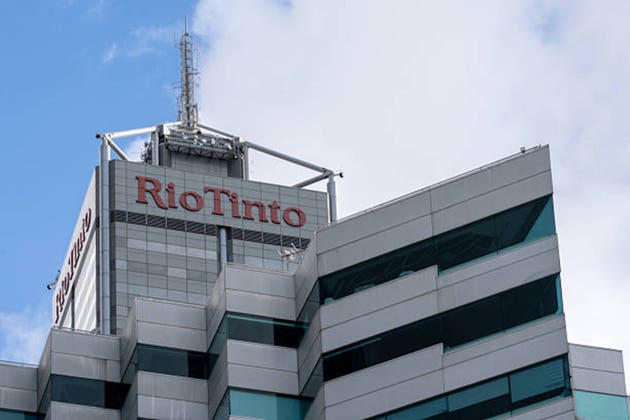
Rio Tinto Secures Major U.S. Defense Logistics Mandate
TREE NEWS reports: Rio Tinto, the Anglo-Australian mining giant, has been awarded a defense logistics contract worth up to $995 million, marking a significant expansion of the company’s relationship with the U.S. government and its defense industrial base. The deal positions the miner as a strategic supplier to American military and defense-related logistics operations, a role that carries both financial and geopolitical weight.
The contract value of up to $995 million suggests a multi-year, potentially multi-award structure typical of U.S. defense procurement, where initial obligations are often smaller and ceiling values are reached only if all options are exercised. For Rio Tinto, whose core business centers on iron ore, aluminum, copper and other industrial minerals, the agreement represents a meaningful diversification of revenue streams tied to national security priorities.
Why This Matters Beyond the Headline Number
Defense logistics contracts are prized for their revenue visibility. Unlike commodity sales, which swing with global pricing cycles, government contracts typically offer predictable cash flows over defined periods. For a company of Rio Tinto’s scale — with annual revenues in the tens of billions — a sub-$1 billion award is not transformative on its own. But it signals a strategic pivot toward critical minerals and defense-adjacent supply chains, an area Western governments are actively reshoring.
The broader context is the escalating race among major economies to secure supplies of copper, lithium, rare earths and other materials deemed essential to defense, energy transition and semiconductor manufacturing. Washington has been channeling funding into domestic and allied mining capacity through legislation and executive action, and major producers are positioning themselves to capture that spending.
Market Implications
- Equities: Rio Tinto’s U.S.-listed shares and its London and Sydney listings could see modest positive sentiment from the announcement, though the contract’s size relative to the company’s market capitalization means the move is likely incremental rather than dramatic. Defense-linked suppliers and critical-minerals peers may also draw attention.
- Commodities: Copper and aluminum — both central to Rio Tinto’s portfolio and to defense manufacturing — remain the key price drivers for the company. The contract reinforces the strategic value of these metals but is unlikely to move global benchmark prices on its own.
- Bonds: Minimal direct impact. Defense procurement spending is a small component of overall fiscal flows, and the contract does not alter the broader rate or inflation outlook.
- Crypto: No direct transmission channel. However, the broader theme of government-directed industrial policy and strategic resource stockpiling can influence risk sentiment and narratives around hard assets, including bitcoin, in periods of fiscal expansion.
- Currencies: The U.S. dollar may see negligible effect. Australian dollar sensitivity could be marginally positive given Rio Tinto’s Australian operations and the country’s role as a critical-minerals supplier to Western defense supply chains.
The Strategic Read-Through
This contract fits a clear pattern: Western governments are treating mining and materials as national security assets, not just commercial commodities. Companies with scale, allied-jurisdiction operations and processing capabilities stand to benefit from this shift. Rio Tinto’s diversified footprint across Australia, Canada and the United States makes it a natural partner for defense logistics and critical-minerals programs.
Investors should watch for follow-on announcements — additional awards, partnership expansions or capacity investments tied to defense and strategic supply chains. Such developments would reinforce the thesis that major miners are becoming quasi-strategic entities, with implications for valuation multiples and long-term contracts.
Key Takeaways for Investors
- The up-to-$995 million defense logistics award adds revenue visibility and strategic positioning for Rio Tinto, though it is not a game-changer relative to the company’s overall scale.
- The deal underscores the growing convergence of mining, critical minerals and national security — a theme likely to drive government spending and corporate strategy for years.
- Watch for follow-on contracts and capital allocation toward defense-adjacent capacity, which could influence long-term valuation and dividend policy.
- Commodity prices, especially copper and aluminum, remain the dominant swing factor for Rio Tinto’s earnings; the contract is a supporting narrative, not a primary earnings driver.
- Broader market impact is limited, but the story reinforces the strategic-asset framing of major resource companies.